

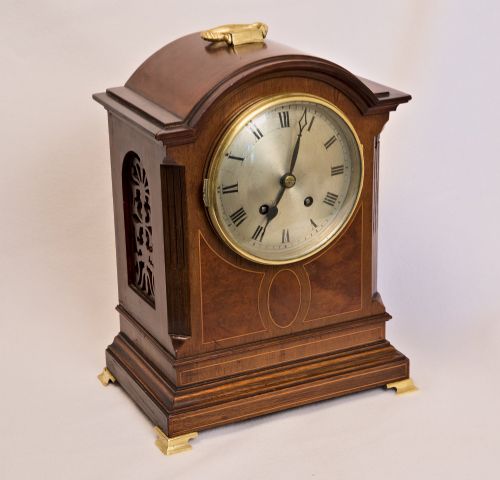


Edwardian Brass Inlay Clock
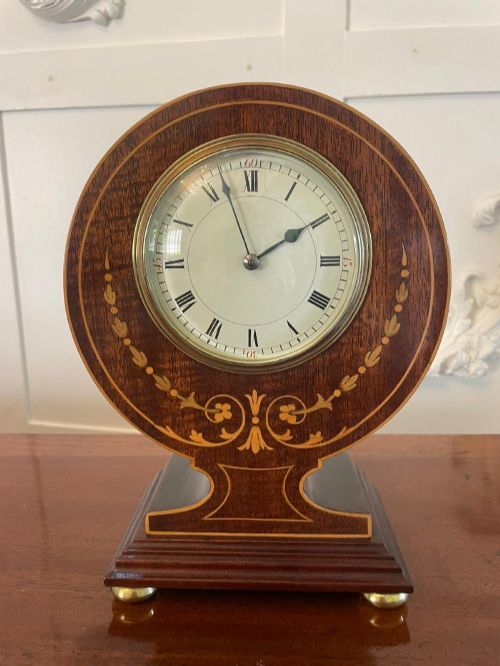
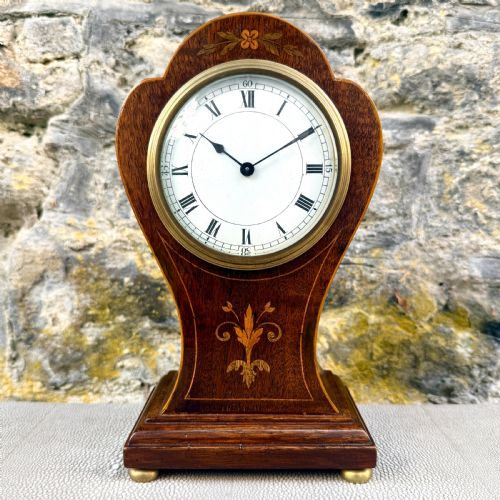
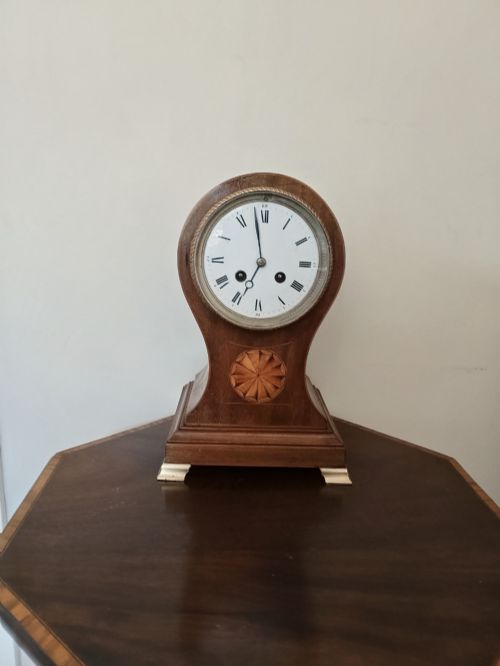
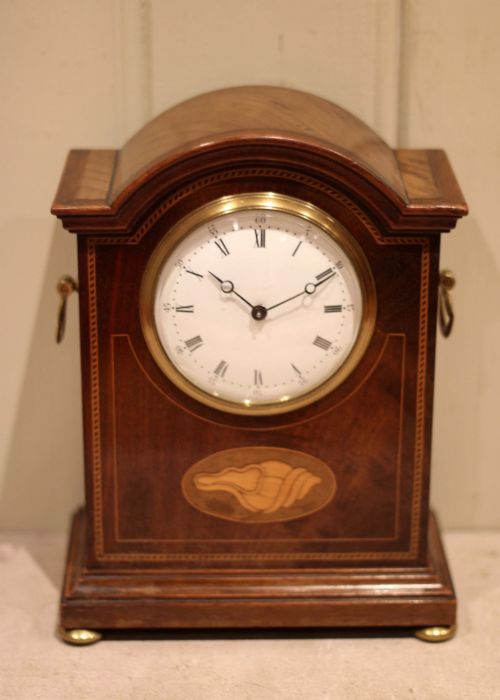
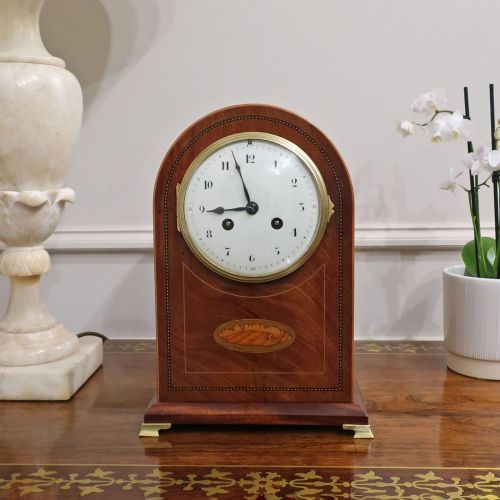
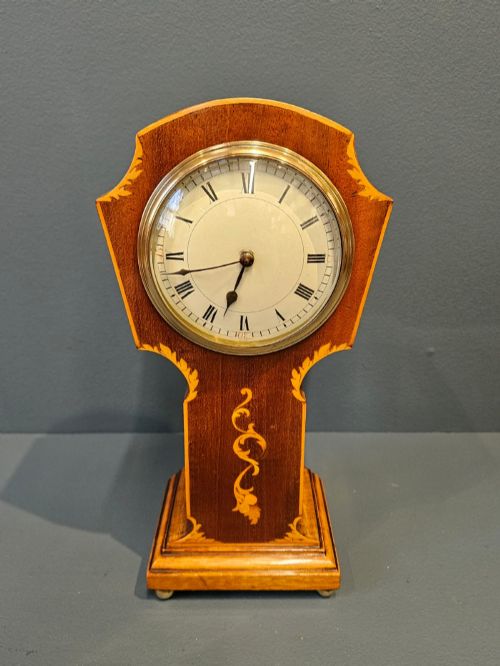
An edwardian brass inlay clock brings warmth to a mantelpiece through rich mahogany cases and delicate contrasting stringing.
Edwardian Brass Inlay Clock
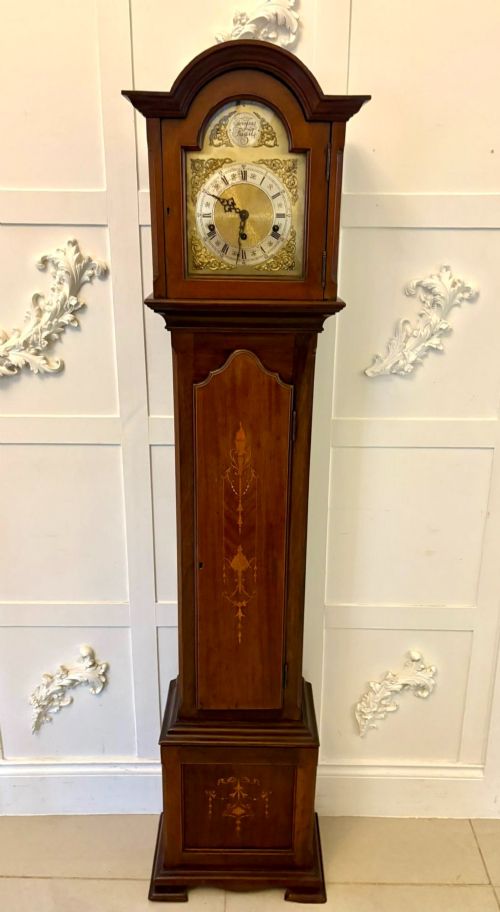
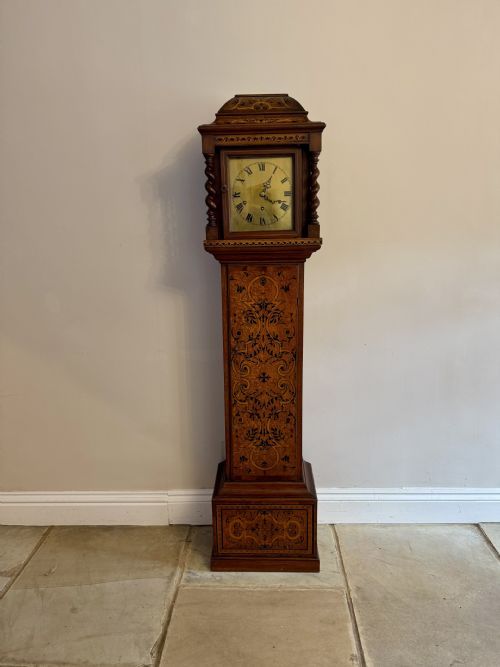
Beyond the standard mantel clock, the listings include taller floor-standing variations like miniature grandmother and grandfather longcase clocks. These taller pieces bring striking chimes and architectural presence into a domestic interior.
While the majority of examples date from the Edwardian era, related pieces span from the late Victorian period through to the nineteen-twenties. French and German movements frequently appear alongside English examples within these mahogany housings.
Assessing the Craftsmanship
The refinement of the inlay work largely distinguishes standard production from superior pieces. Crisp, tightly fitted brass stringing and detailed marquetry require exceptional skill, whereas careless execution leaves visible gaps around the metal insertions.
Movement complexity also elevates a piece, shifting simple timepieces toward eight-day striking mechanisms, musical barrels, or twin fusee configurations. Furthermore, the crispness of the dial markings and the weight of the cast brass bezels reflect the original maker's commitment to durability.
Edwardian Brass Inlay Clock Retail Price Guide 2026
Typical asking prices for edwardian brass inlay clock among the pieces listed under this phrase on Sellingantiques today, from the lower quarter to the upper quarter. They describe what is for sale here now, not the wider market.
W. Burton·Dent of London·Seikosha
The Edwardian Brass Inlay Clock Glossary
- Fusee
- A conical pulley connected to the mainspring by a chain or cord, designed to equalise the driving force as the spring unwinds. This mechanism ensures more consistent timekeeping throughout the running period.
- Ting Tang
- A striking mechanism that sounds two distinct notes on the quarters or half hours using two hammers and two bells or gongs. It provides a melodic chime without a full hour strike.
- Marquetry
- The art of applying pieces of veneer to a structure to form decorative patterns and pictorial designs. Artisans cut various woods, metals, and shells to fit tightly together before gluing them to the carcass.
- Lancet Top
- A pointed, gothic-arch case silhouette popular on mantel clocks. This architectural shape draws the eye upward and balances the heavy wooden base below.
- Bracket Clock
- A portable clock originally designed to sit on a wall bracket or a tabletop. Many surviving examples retain their brass carrying handles and flat plinths.
Edwardian Brass Inlay Clock: Frequently Asked Questions
How do I wind my clock?
Most mechanical clocks require a key inserted into the dial holes to tension the springs or lift the weights.
Turn the key gently until you feel resistance, avoiding over-winding to protect the internal brass gears.
Where should I place a mantel clock?
Select a sturdy, level surface away from direct sunlight, draughts, and damp environments. A stable mantelpiece or sideboard prevents vibrations that can disrupt the pendulum or balance wheel.
Ensure the room temperature remains relatively constant to keep the wooden case from expanding.
What is a fusee movement?
A fusee movement uses a conical drum and a chain to regulate the power delivered from the mainspring.
This clever mechanical addition keeps the driving force steady as the spring loses tension, resulting in superior timekeeping accuracy.
How do I tell an Edwardian clock apart from a Victorian one?
Edwardian cases generally favour lighter, more restrained satinwood and brass inlay against warm mahogany surfaces. Victorian pieces often display heavier proportions and darker finishes with more robust carving.
Examining the dial style and interior movement signatures helps confirm the manufacturing decade.