



Vintage Schoolhouse Wall Clock
A vintage schoolhouse wall clock brings dependable institutional timekeeping and clean circular dials into domestic and commercial rooms.
Vintage Schoolhouse Wall Clock
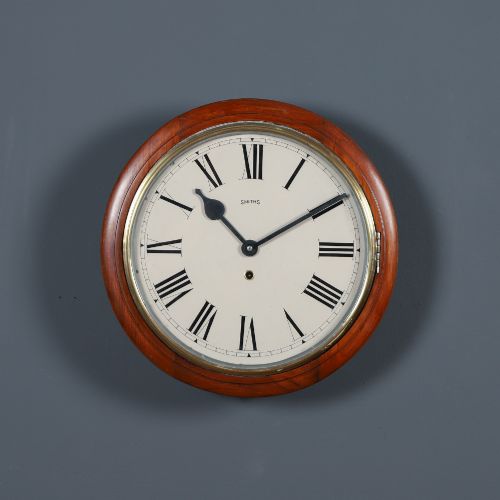
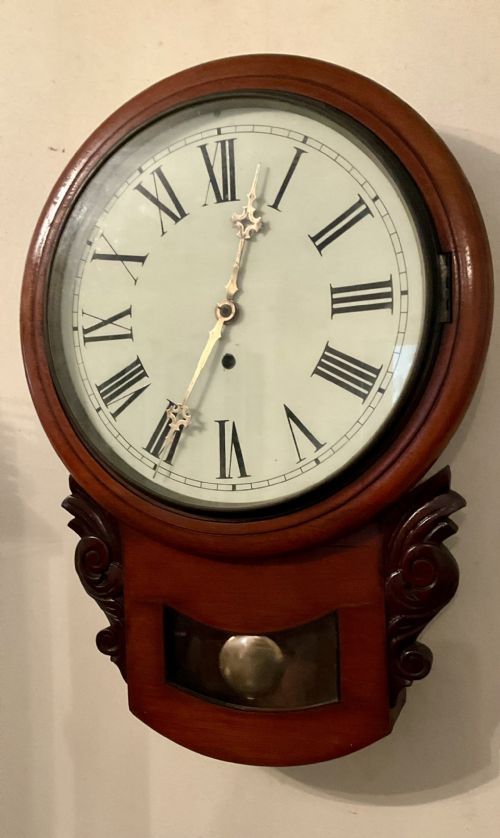
A vintage schoolhouse wall clock takes several traditional forms, ranging from English drop-dial wall clocks in mahogany or oak to railway station variants and institutional G.P.O. timepieces. These round dial clocks appear across periods spanning the Victorian era, Regency, 1890, 1900, 1930, and up to 1950.
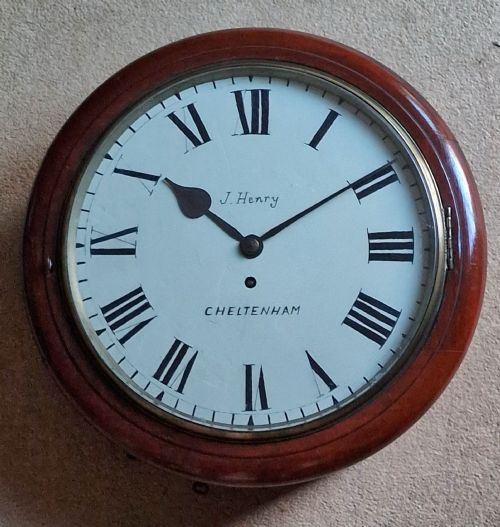
The most common version encountered here is the fusee mechanism dial clock, often housed in a timber case with a glazed door for reading hours from a distance. Specimens bear connections to makers and places such as J Henry Cheltenham, Payne of Tunbridge Wells, the London County Council, and Tokyo.
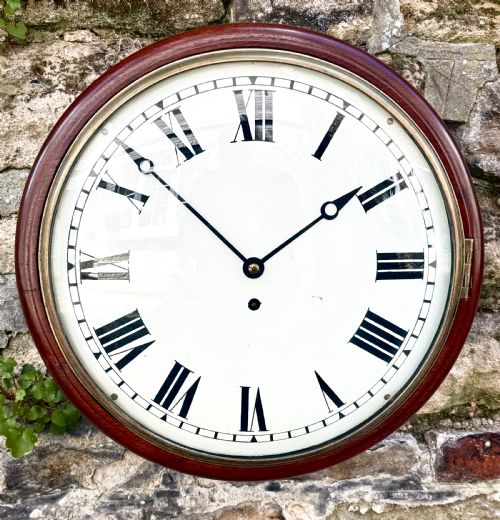
Buyers look for these pieces to anchor a room with clear geometry and traditional timber framing, whether choosing an eight-inch light oak case or a larger fifteen-inch mahogany railway station clock.
Materials and construction
Cases rely on solid timbers such as mahogany, oak, and walnut, often formed into round dials with drop-dial lower boxes that enclose the pendulum swing.
Timekeeping relies on mechanical fusee movements and eight-day movements, protected behind brass bezels and glass covers, with paper or painted dials marking the hours.
Vintage Schoolhouse Wall Clock Retail Price Guide 2026
Typical asking prices for vintage schoolhouse wall clock among the pieces listed under this phrase on Sellingantiques today, from the lower quarter to the upper quarter. They describe what is for sale here now, not the wider market.
Certain clocks served on the London County Council and postal networks, keeping time for workers who definitely watched the seconds tick.
Judging quality and character
Quality rests in the crispness of the timber case joinery, the fidelity of the dial markings, and the integrity of the fusee mechanism within.
Pieces bearing signatures from known makers or institutional services like the G.P.O. or London County Council carry distinct provenance that elevates the work above standard commercial timepieces.
J Henry Cheltenham·Payne of Tunbridge Wells·London County Council·G.P.O.
The Vintage Schoolhouse Wall Clock Glossary
- Fusee
- A conical pulley used in mechanical clocks to maintain even driving force as the mainspring unwinds. This mechanism ensures steady timekeeping across the eight-day duration.
- Drop Dial
- A clock case featuring a circular dial at the top and an extended lower trunk below. This drop case accommodates the drop of the pendulum.
- Railway Station Clock
- A robust round dial clock designed for high visibility in public transit hubs. These pieces often feature larger diameters and straightforward numeric layouts.
- Dial Clock
- A wall clock dominated by a prominent circular face with minimal surrounding cabinetwork. The design prioritises legibility over decorative carving.
Vintage Schoolhouse Wall Clock: Frequently Asked Questions
What is a fusee dial clock?
A fusee dial clock relies on a specialised conical pulley and chain mechanism to equalize the power delivered by the mainspring as it runs down.
This traditional arrangement helps the clock maintain consistent accuracy throughout its running period between winds.
How do I wind an eight day wall clock?
Winding involves using a matching key inserted into the dial face to tension the mainspring once a week.
Careful turns restore power to the movement without straining the internal mechanical components.
Where should I hang a drop dial clock?
These clocks suit prominent wall spaces in kitchens, hallways, or studies where their circular faces remain easily visible from across the room.
Selecting a stable interior wall ensures the pendulum swings freely without interference from vibrations.
How do I date a Victorian school clock?
Dating relies on examining the timber case materials, the style of the dial lettering, and any maker signatures inscribed on the movement or face.
Reference points include Victorian and Edwardian design conventions alongside specific institutional markings.