

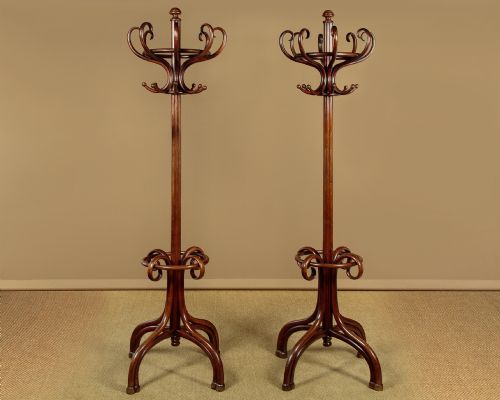
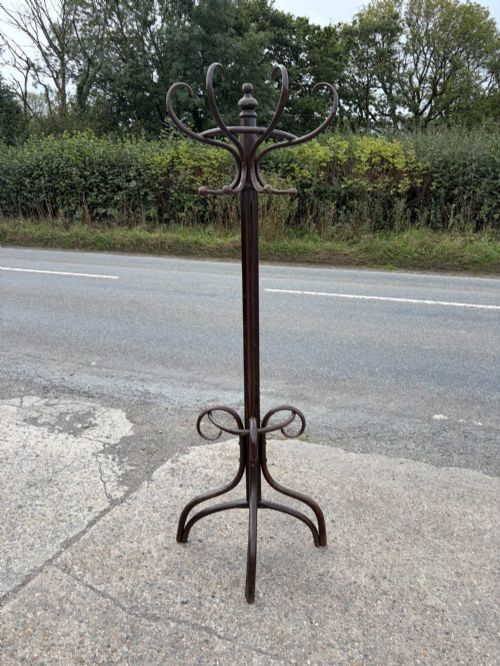
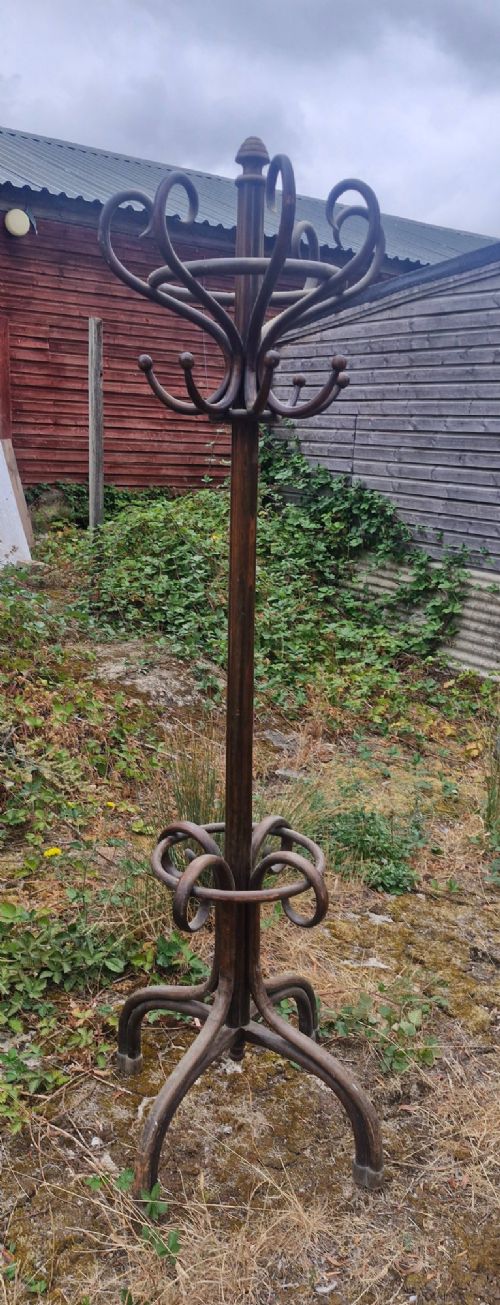
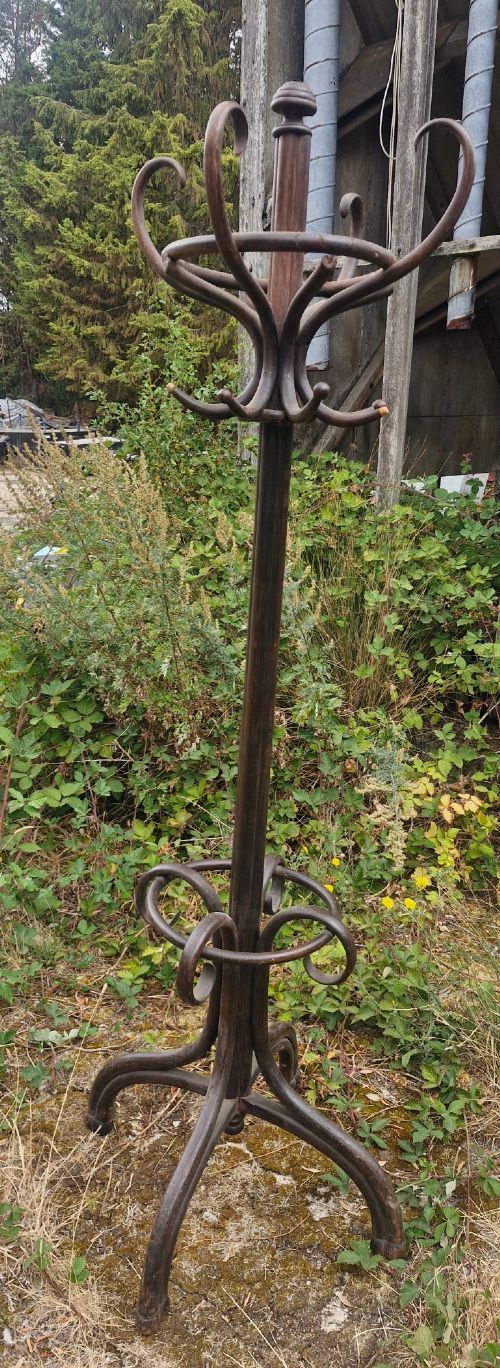
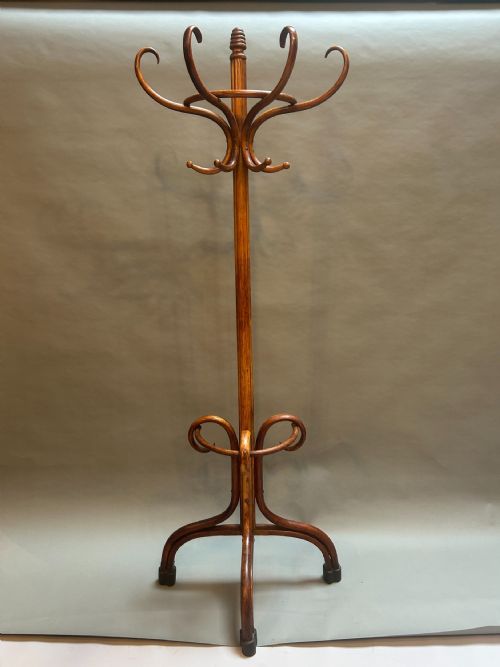
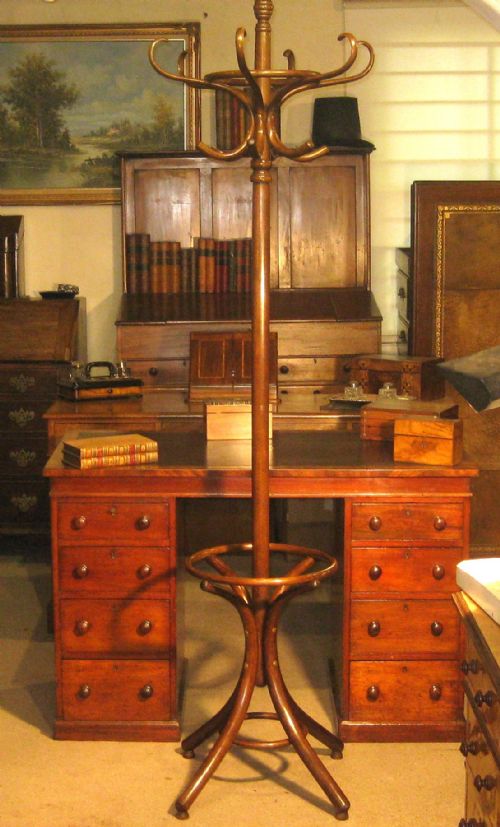
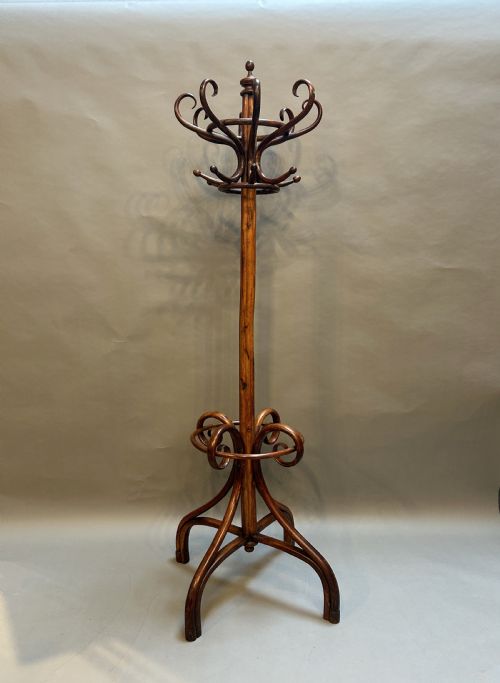
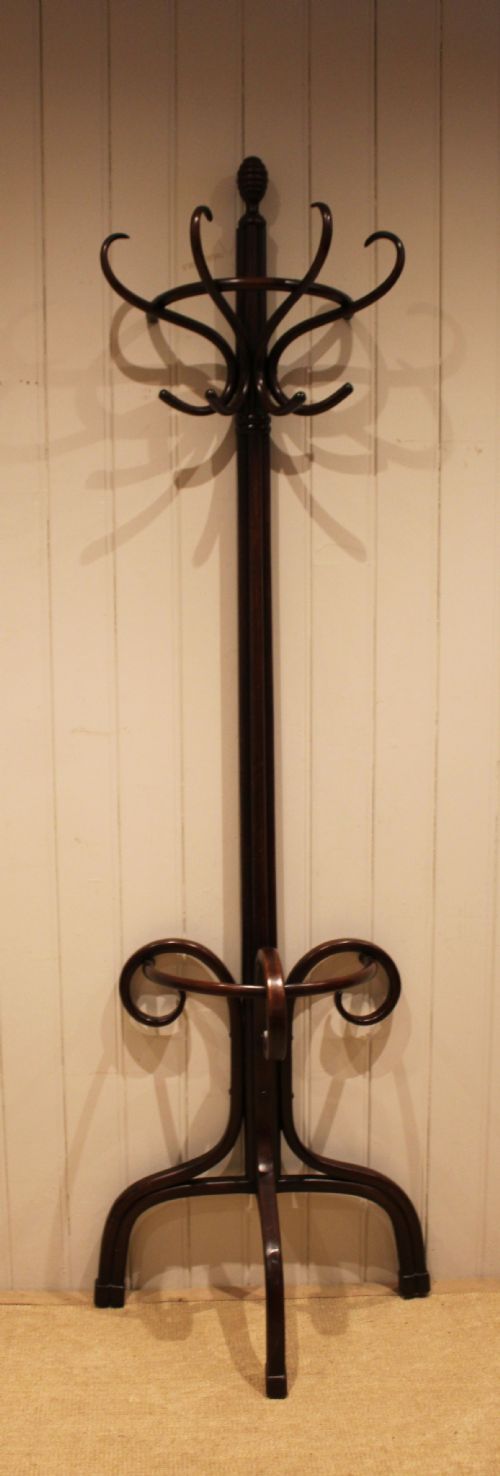


Edwardian Bentwood Hat Rack
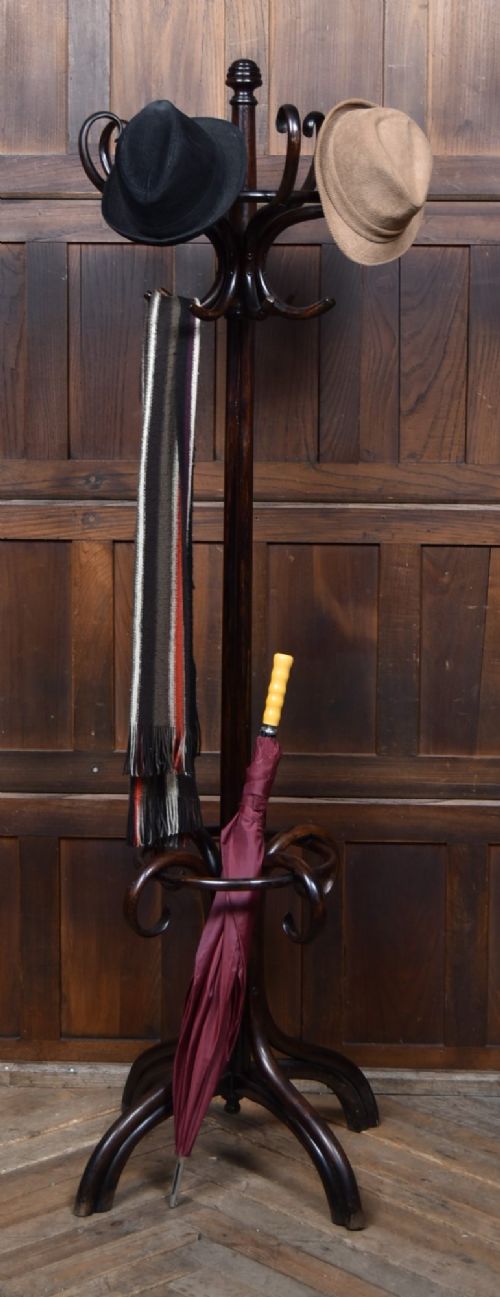
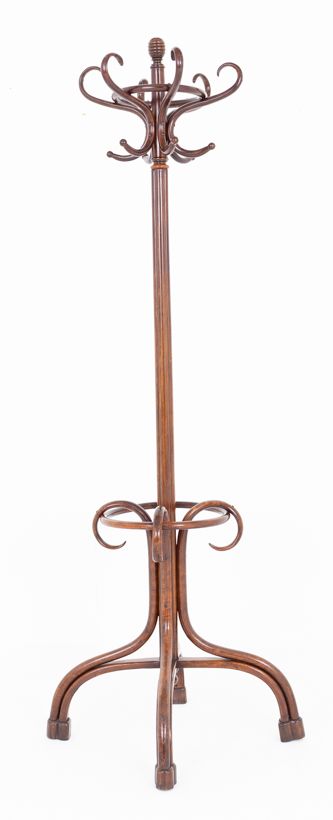
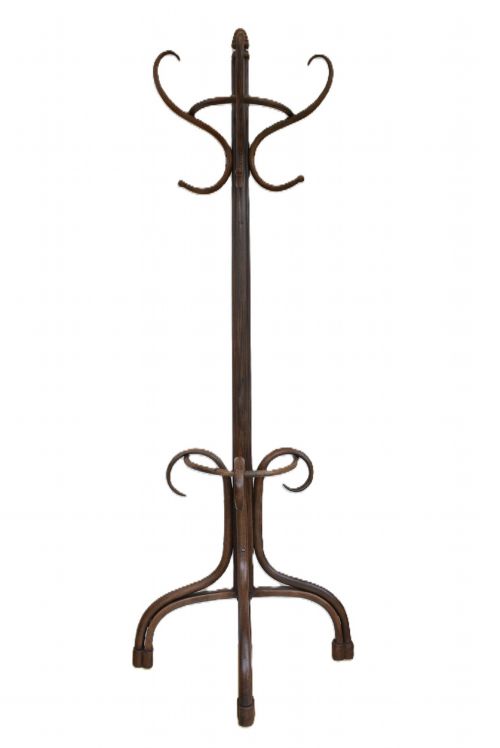
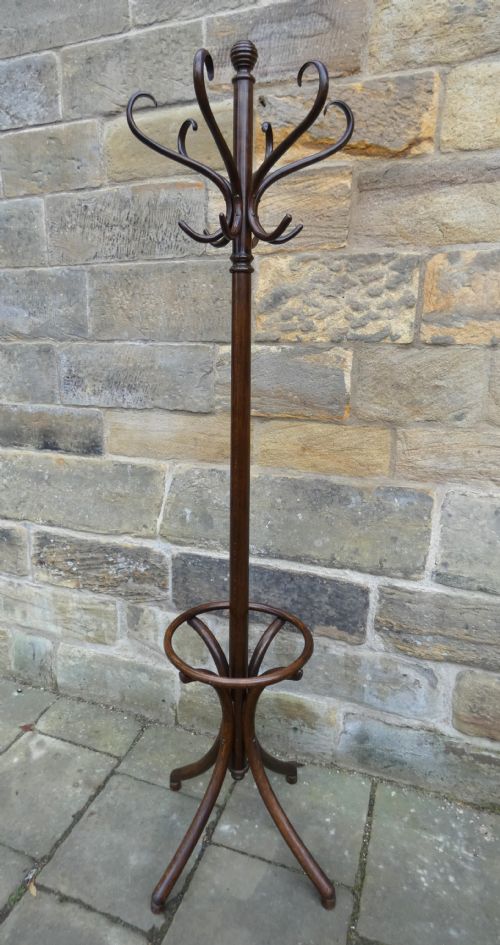
An Edwardian bentwood hat rack brings curving warmth and practical engineering to an entryway.
Edwardian Bentwood Hat Rack
An edwardian bentwood hat rack is a freestanding hall piece designed to hold outerwear, scarves, and headwear in a hallway or vestibule. You will most frequently encounter standing coat and hat trees featuring multiple curved hooks and central umbrella rings from the early twentieth century.
The material form follows the method, utilising steam-bent timber to create sweeping structural loops without heavy joinery. These vertical stands serve narrow spaces efficiently while offering substantial hanging capacity.
Pieces span late nineteenth-century origins through the Edwardian era and into the interwar period. The primary construction relies on steamed beechwood shaped into characteristic concentric circles and arched hooks.
What varies in quality
The distinction between standard utility items and superior examples lies in the heft of the timber and the complexity of the scrollwork. Heavier sectioned beech and double-top configurations denote greater stability and more ambitious design.
Makers such as Thonet and Fischel achieved higher refinement through crisper turning on the central column and more complex forming of the hat rings. The integrity of the original screwed joints and the depth of the applied wood stain also separate mass production from finer workshop output.
Edwardian Bentwood Hat Rack Retail Price Guide 2026
Typical asking prices for edwardian bentwood hat rack among the pieces listed under this phrase on Sellingantiques today, from the lower quarter to the upper quarter. They describe what is for sale here now, not the wider market.
Some stands feature a revolving top ring so you can spin your fedora collection like a lazy Susan.
Thonet·Fischel
The Edwardian Bentwood Hat Rack Glossary
- Bentwood
- Wood that has been rendered pliable via steam and bent into curves. This technique defines the entire category of furniture.
- Thonet
- The pioneering firm associated with mass production of steam-bent furniture. Their innovations set the standard for the style.
- Demi-lune
- A half-round shape designed to sit flush against a wall. This profile saves floor space in narrow hallways.
- Hall tree
- An alternative term for a freestanding stand incorporating hooks and umbrella storage. These pieces anchor hallway organisation.
- Beechwood
- A dense, pale hardwood prized for its elasticity under steam. It serves as the primary material for bentwood construction.
Edwardian Bentwood Hat Rack: Frequently Asked Questions
How do I clean a bentwood hat rack?
Dust the curved surfaces regularly with a dry cloth to prevent grime accumulation in the steam-formed crevices. Avoid excessive moisture, which can degrade historic wood stain and loosen the timber grain.
Condition the beech periodically with a mild furniture wax to nourish the finish. Keep the stand away from direct heat sources to prevent the steamed wood from warping.
Can these stands support heavy winter coats?
Most standing designs handle standard coats and hats securely when weight is distributed evenly across the upper hooks. Heavier multi-hook versions provide greater ballast at the base.
Utilise lower umbrella rings and lower tiers for bulkier items to maintain overall balance. Placing heavier garments on one side only can cause the vertical column to lean.
How do I distinguish Thonet pieces from other makers?
Makers often stamped their beech components or applied paper labels underneath the central bases or scroll brackets. Inspect the joints for characteristic screw fittings and the smoothness of the bent arcs.
Thonet and Fischel pieces typically display superior finishing on the turned central column and more precise curvature in the double top rings.
Are wall-standing designs different from freestanding ones?
Wall-standing and demi-lune designs feature flat backs intended to rest securely against a corridor wall. Freestanding circular models offer 360-degree access to hooks and umbrella compartments.
Both types utilise the same steam-bent beech construction principles. Choose based on your hallway footprint and traffic flow.