

Hallway Coat and Umbrella Stand
A hallway coat and umbrella stand keeps hats, coats and sticks organised near the front door while setting the tone for the house.
Hallway Coat and Umbrella Stand
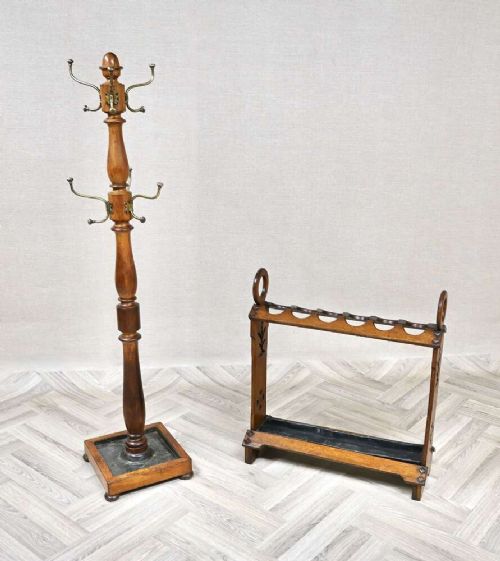
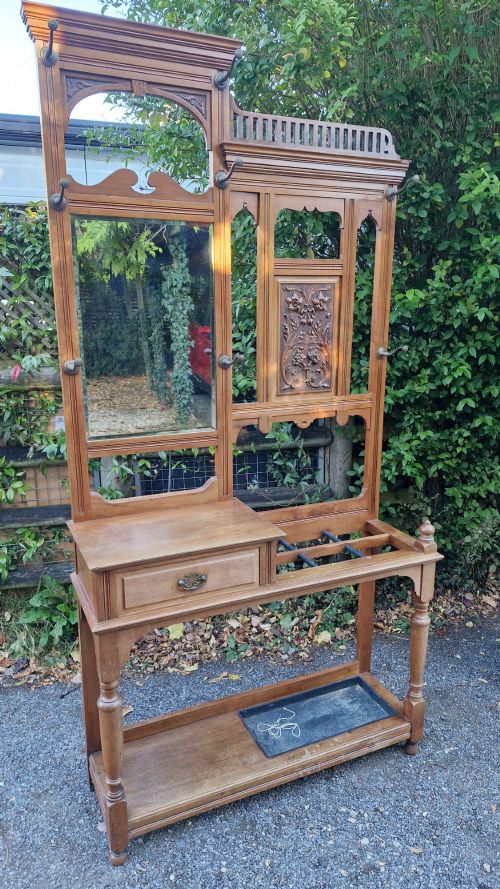
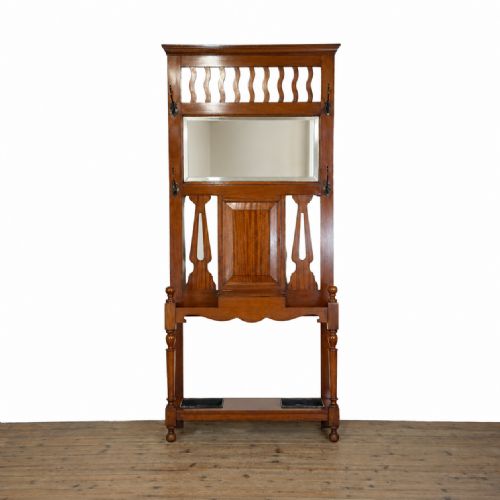
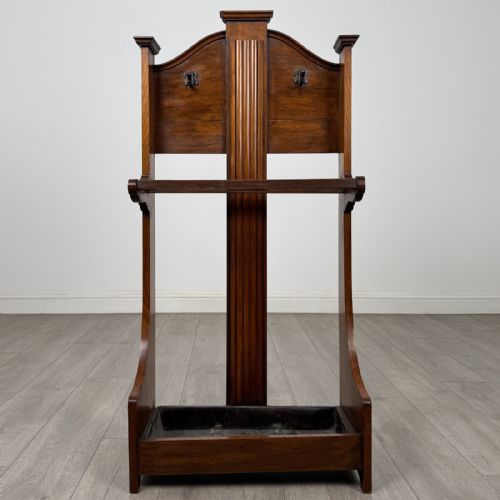
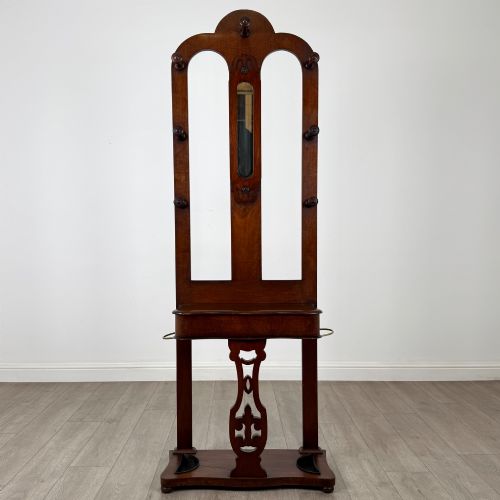
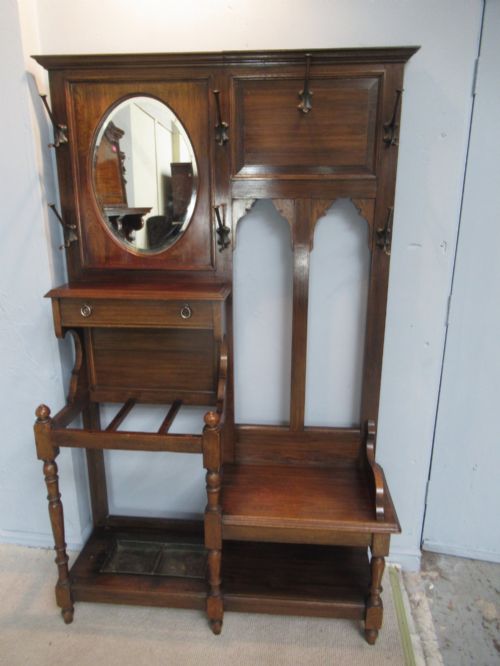
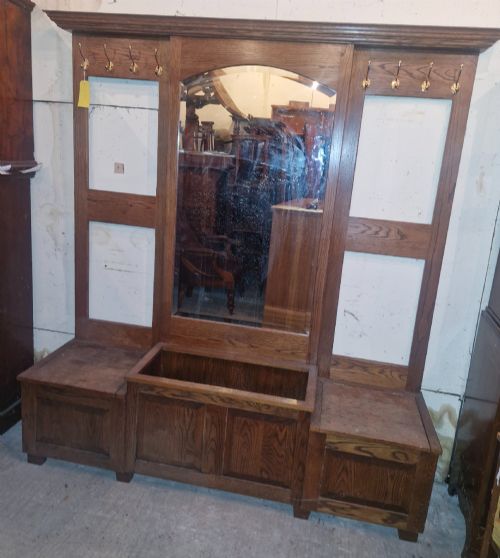
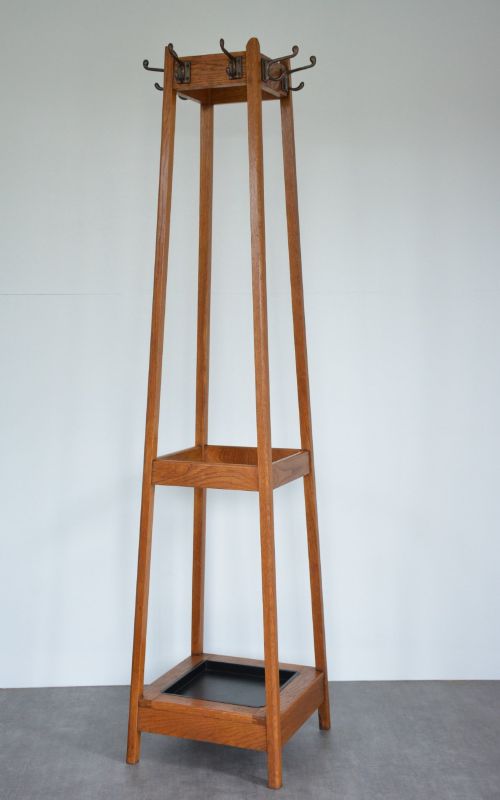
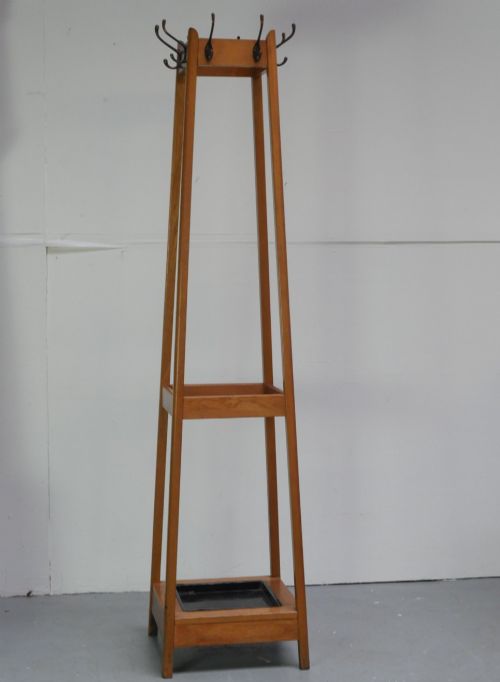
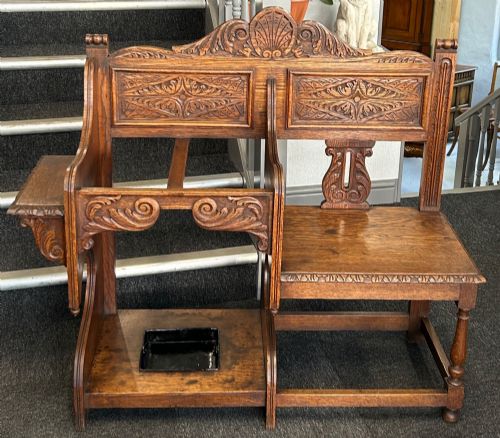
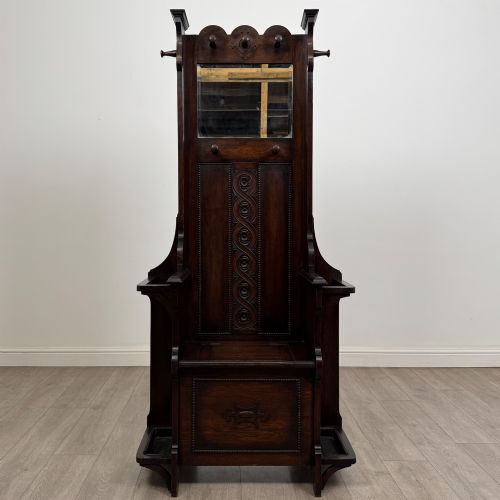
A hallway coat and umbrella stand combines hooks for hats and coats with holders and drip trays for walking sticks and umbrellas, often incorporating a central mirror and a bench seat. The examples seen here range from substantial carved timber furniture to light steam-bent frames.
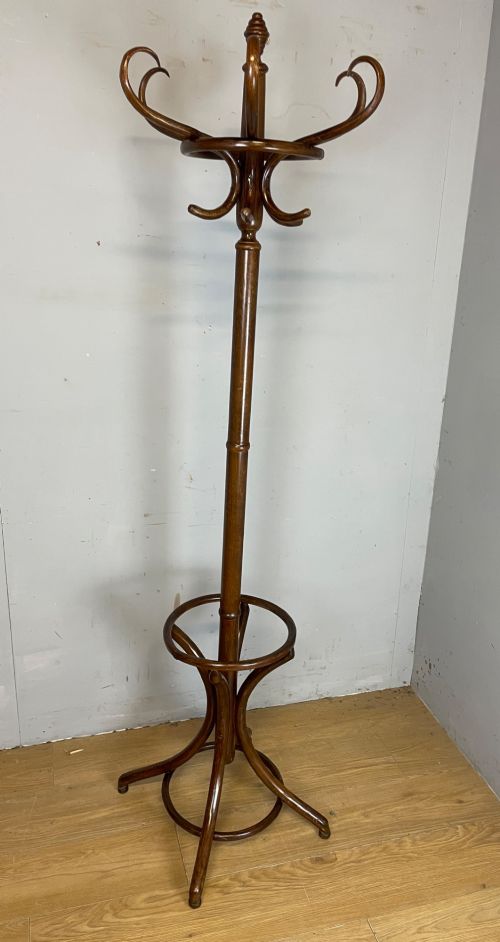
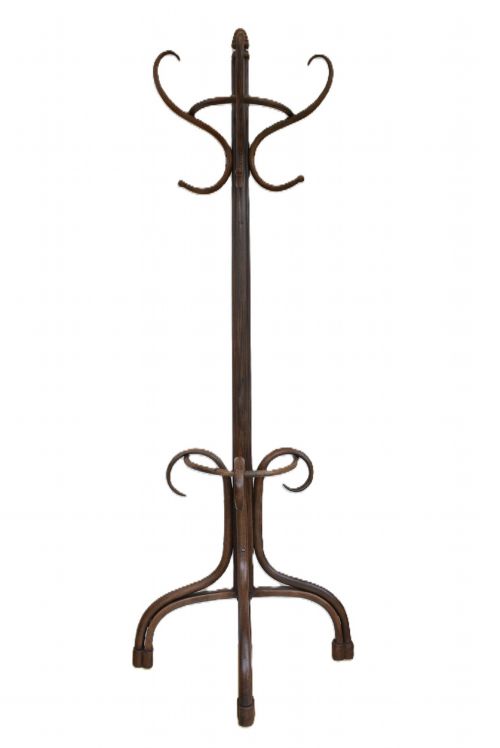
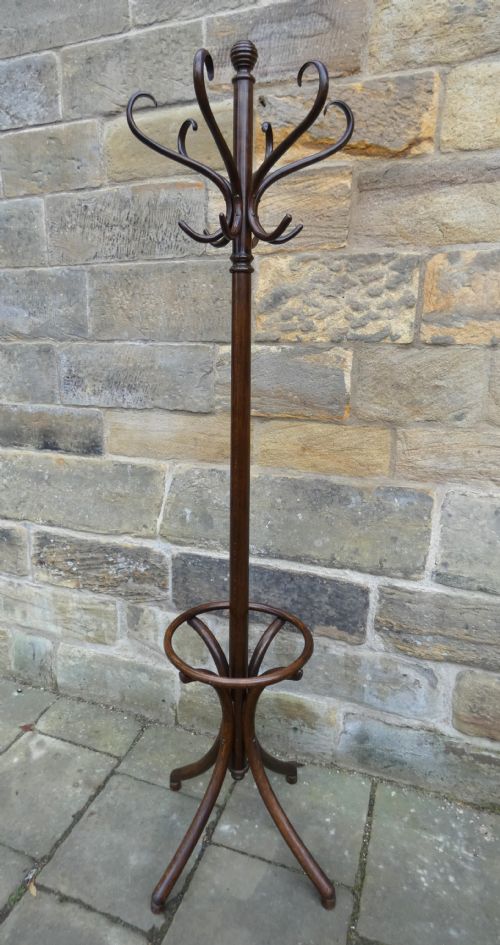
Victorian and Edwardian versions dominate the selection, executed in dark oak, mahogany, or beech with brass or cast iron fittings. You will encounter tall wooden structures with integrated umbrella wells alongside slender bentwood poles designed for smaller spaces.
Makers utilised alternative natural materials too, producing designs in bamboo, cow horn, and pine. Some incorporate carved panels featuring figures like bears or green men, or geometric motifs drawn from the Arts and Crafts and Art Nouveau movements.
Materials and construction
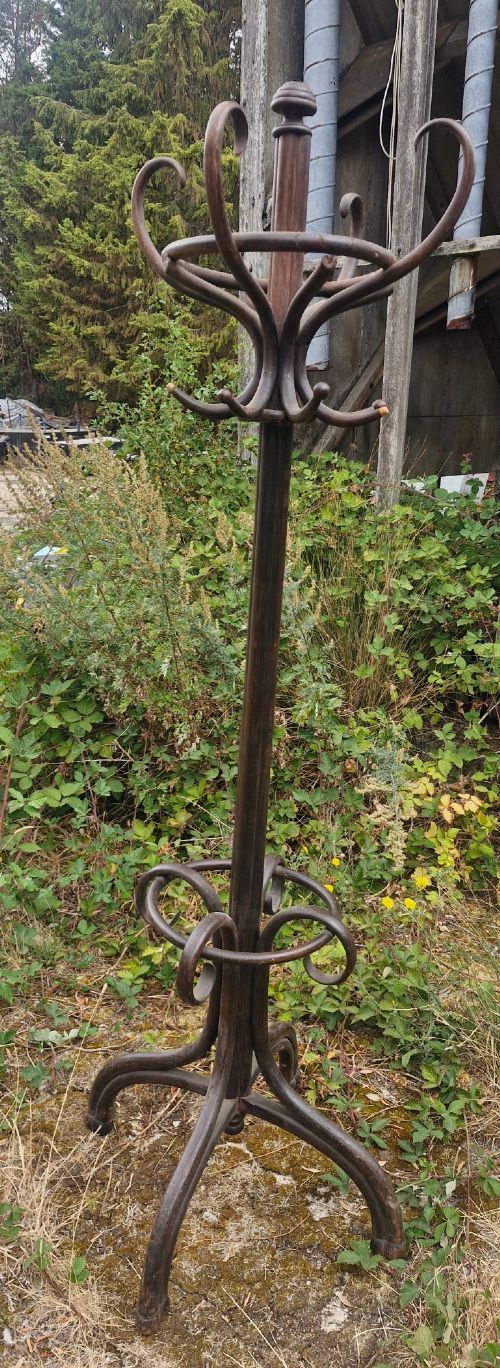
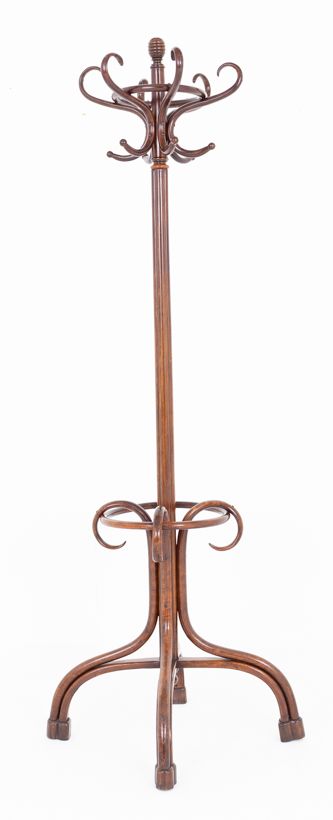
Makers built these pieces predominantly from solid timbers such as oak, mahogany, walnut, and beech, frequently applying carved details and panels. Bentwood versions relied on steam-heated beech rods pulled into curved profiles to form lightweight yet rigid frames.
Functional hardware relied on brass, cast iron, and glass inserts. Metal coat hooks, umbrella rings, and removable drip trays were screwed directly into the timber to handle wet garments and heavy walking sticks.
Hallway Coat and Umbrella Stand Retail Price Guide 2026
Typical asking prices for hallway coat and umbrella stand among the pieces listed under this phrase on Sellingantiques today, from the lower quarter to the upper quarter. They describe what is for sale here now, not the wider market.
The selection includes specialised forms such as revolving bentwood stands, half-round hallway pieces, and multi-functional seat combinations.
Distinctions in quality
The standard of carving and the selection of timber dictate the hierarchy of these objects. Pieces featuring deeply undercut foliage, figures, or well-figured oak and walnut sit at the higher end of craftsmanship.
Structural integrity depends on the retention of original hooks, mirrors, and drip trays. Complete sets of matching brass hardware and stable joints mark out superior examples from those with replacement components.
Thonet·Astrola·GW Evans
The Hallway Coat and Umbrella Stand Glossary
- Bentwood
- Timber shaped by exposure to steam and bent into curved forms using moulds. This technique created light, strong coat stands popular in the late nineteenth and early twentieth centuries.
- Drip tray
- A shallow metal basin placed at the base of an umbrella stand to catch moisture from wet brollies and protect the floor below.
- Hall tree
- An alternative term for a freestanding piece of hallway furniture combining coat hooks, a mirror, and sometimes a seat or umbrella storage.
- Greenman
- A sculptural architectural ornament depicting a human face entwined with leaves and vines, frequently carved into the woodwork of Victorian hall stands.
- Aesthetic Movement
- A late nineteenth-century design style emphasising visual beauty over narrative content, often expressed through slender bamboo construction.
Hallway Coat and Umbrella Stand: Frequently Asked Questions
Where should I place a hallway coat and umbrella stand?
Position the piece immediately inside the primary entrance of your home where household members naturally deposit outdoor garments.
Ensure there is adequate clearance around the stand so that hooks and umbrella compartments remain accessible without blocking doorways.
How do I protect my floor from wet umbrellas?
Most traditional stands include a metal drip tray positioned beneath the umbrella rings to catch rainwater.
Periodically remove and empty this tray to prevent moisture accumulation from damaging the wooden base of the stand.
What is the difference between bentwood and carved oak stands?
Bentwood stands utilise steam-formed beech to create slender, organic curves with a lighter visual footprint.
Carved oak stands rely on solid timber joinery and decorative relief work, offering a heavier, more formal presence.
How do I date a hallway coat and umbrella stand?
Examine the stylistic cues such as geometric Arts and Crafts lines, sinuous Art Nouveau curves, or heavy Victorian carving.
Materials like bamboo indicate late nineteenth-century production, while steam-bent beech points towards the early twentieth century.