

Edwardian Bedroom Tables
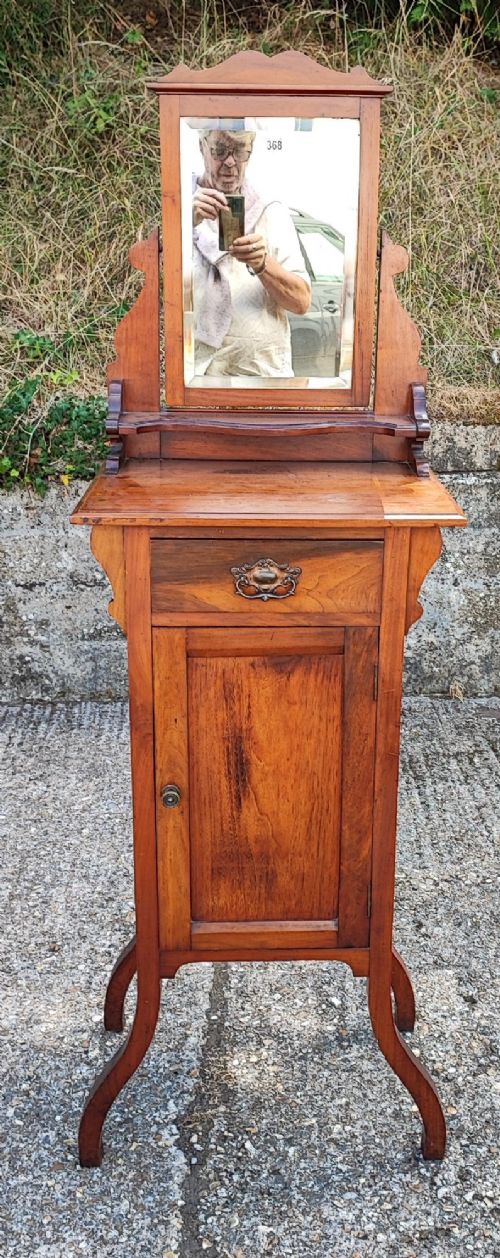
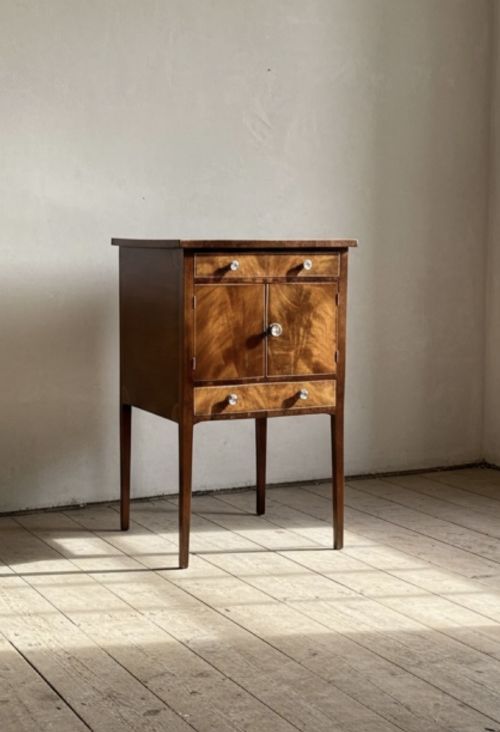
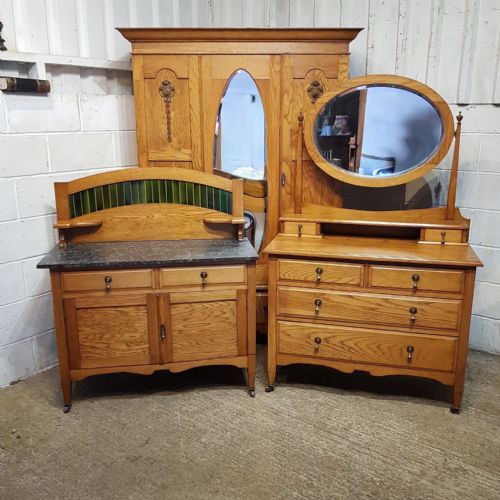
Edwardian bedroom tables encompass bedside cabinets, washstands and dressing tables designed for the early twentieth-century sleeping chamber.
Edwardian Bedroom Tables
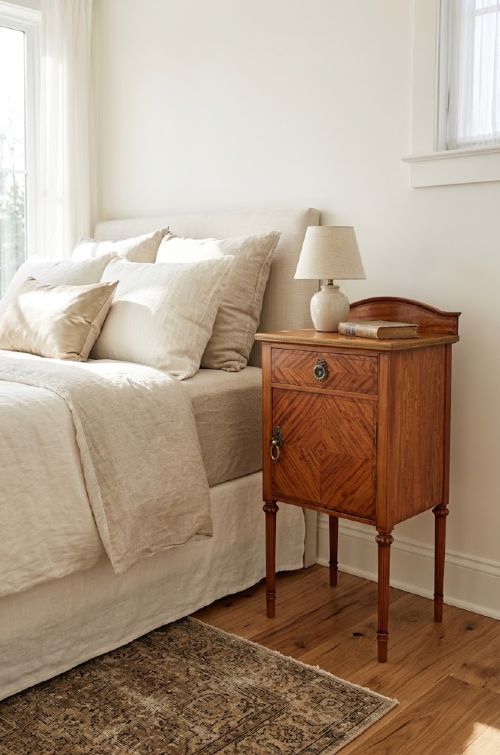
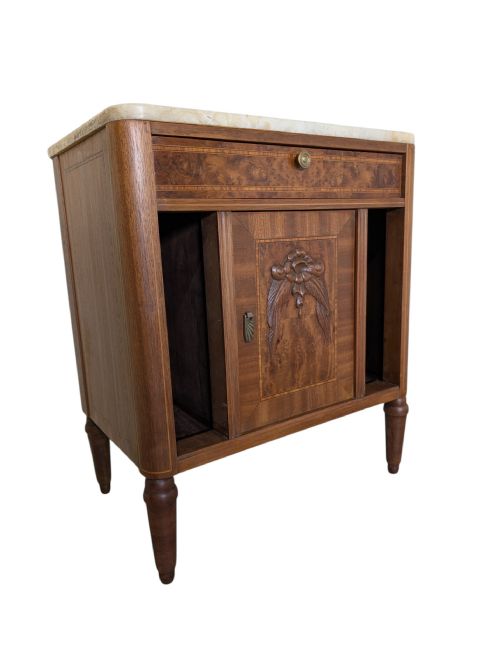
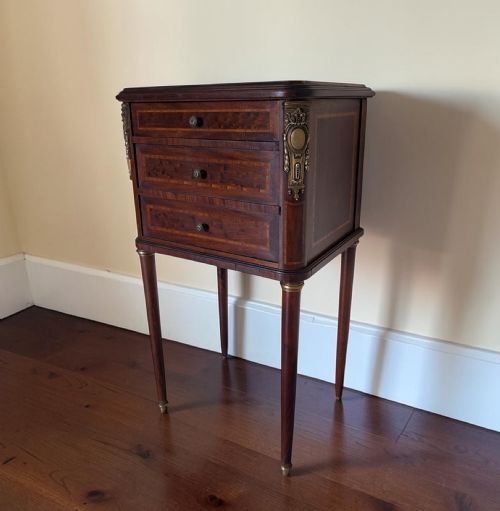
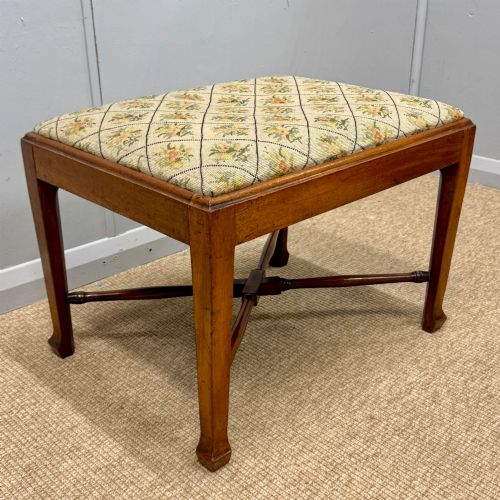
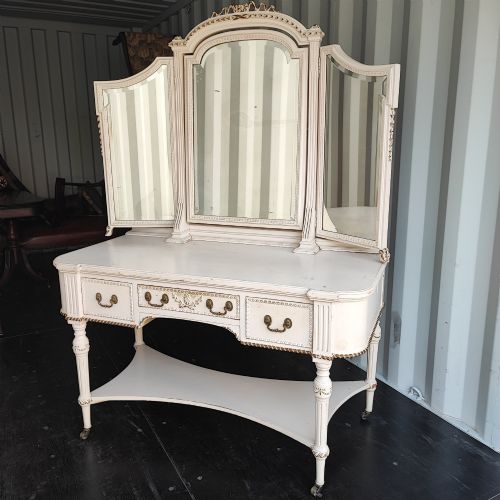
Edwardian bedroom tables are functional pieces of furniture created for the bedroom during the early twentieth century and the broader Edwardian period. Buyers searching for edwardian bedroom tables generally encounter bedside cabinets, washstands, side tables and dressing tables spanning the late nineteenth century through to the nineteen-twenties. These pieces serve practical bedside or dressing functions while reflecting the domestic interiors of their era.
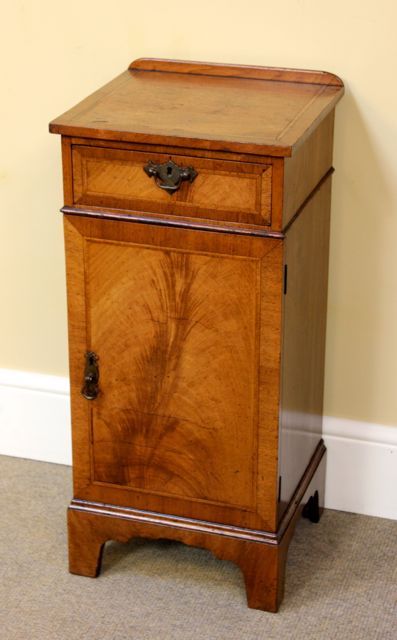
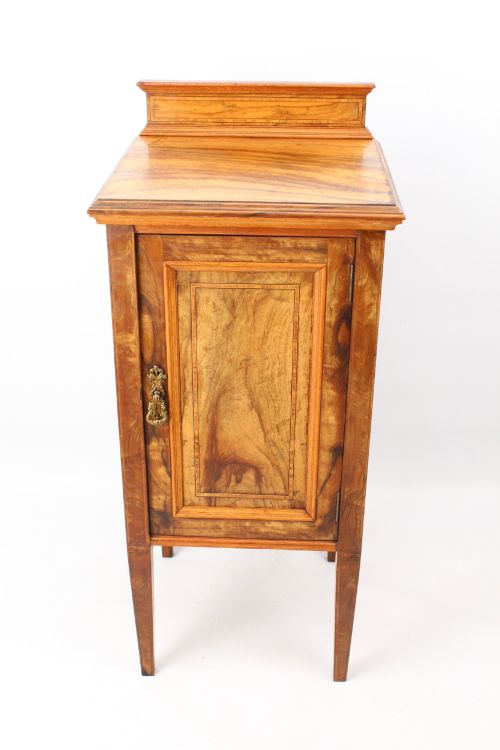
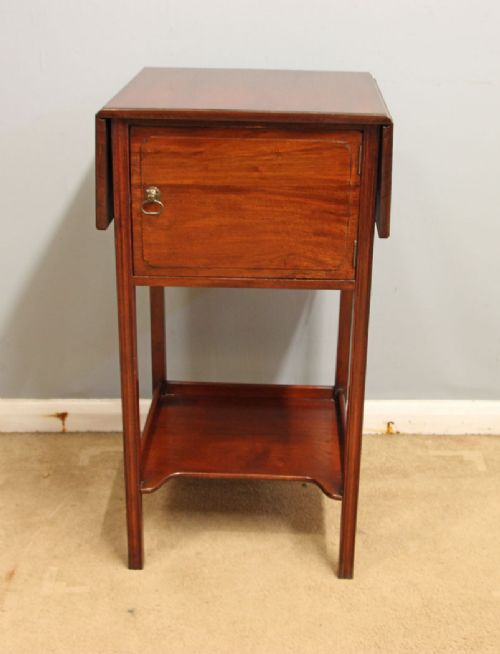
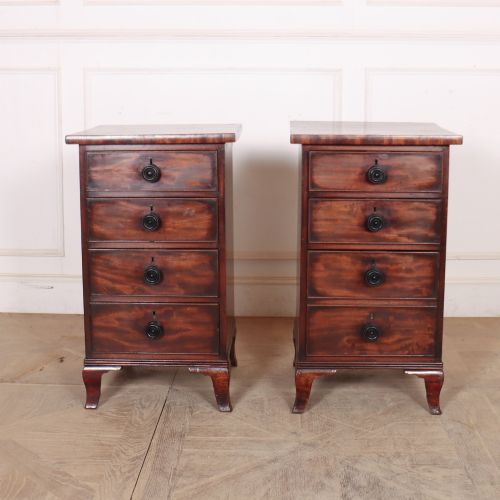
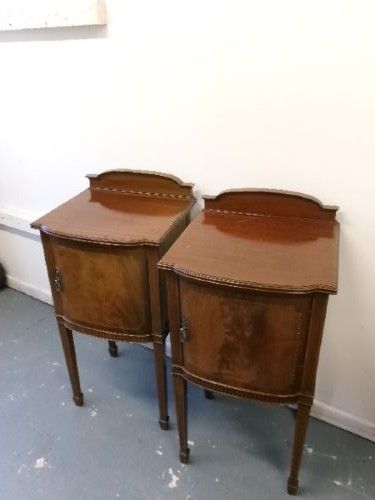
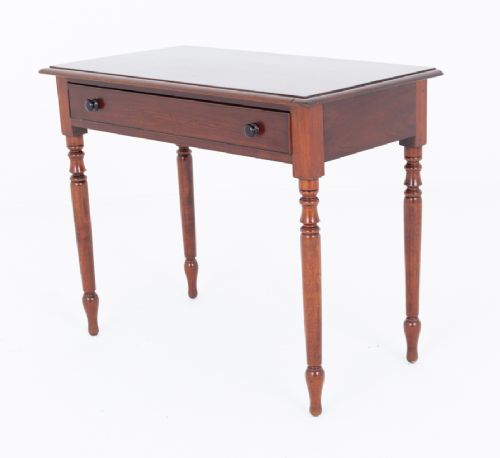
The selections on this page include mahogany, satinwood and walnut bedside cupboards, alongside oak Arts and Crafts pieces and matching bedroom suites. Forms range from simple single-drawer side tables to serpentine-fronted writing tables and washstands fitted with marble tops. Cabinets and cupboards predominate, offering enclosed storage alongside open display surfaces.
Makers such as Maple and Co, Harrods, Waring and Gillows, Shapland and Petter, and Heals appear across the listings, alongside unmarked vernacular pieces. Styles lean towards Edwardian interpretations of Sheraton Revival, Queen Anne Revival, and Arts and Crafts designs. Dating stretches from the late nineteenth century into the interwar years.
Materials and Construction
Makers utilised cabinet timbers including mahogany, walnut, burr walnut, satinwood and golden oak to construct these bedroom tables. Solid woods and choice veneers provide the primary structural surfaces, often accented with decorative stringing and crossbanding. Brass handles, hinges and gallery rails complete the hardware.
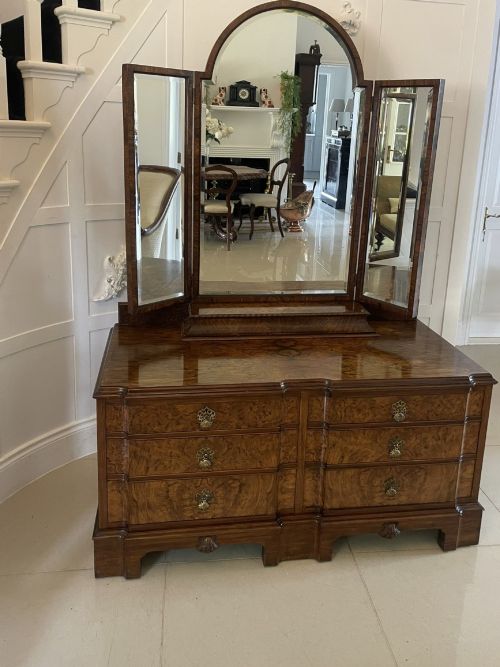
Construction techniques combine traditional joinery with the industrial capacities of large workshops and retail furnishers. Cabinets feature panelled doors and dovetailed drawer boxes, while dressing tables incorporate tilt-mirror frames and turned or cabriole legs. Applied carved details and inlaid marquetry define the stylistic vocabulary of the period.
The furniture includes distinct design movements, ranging from Sheraton Revival elegance to robust Arts and Crafts oak.
Markers of Quality
Quality in these bedroom pieces rests upon timber selection and the crispness of cabinet-making detail. Fine burr walnut, figured mahogany or carefully matched satinwood elevate a piece above standard domestic output. Subtle elements such as hand-cut dovetails, original brass hardware and well-executed inlay distinguish finer workshops.
Design integrity and maker attribution further separate examples. Pieces bearing stamps or labels from prominent retailers and makers demonstrate superior build standards and considered proportion. Original surface finishes and matching pairs also elevate the standing of individual tables.
Maple and Co·Harrods·Waring and Gillows·Shapland and Petter·Heals
The Edwardian Bedroom Tables Glossary
- Bedside Cabinet
- A small enclosed cupboard designed to stand beside a bed for night-time storage. These typically feature a single door above a plinth or short legs.
- Washstand
- A wooden table fitted with a marble or tile top and a splashback, originally built to hold a wash jug and basin. Many now serve as decorative console tables.
- Satinwood
- A lustrous, yellow-toned timber imported from the tropics, utilised extensively for fine cabinet-making and decorative veneer work. It gains a golden patina with age.
- Arts and Crafts
- A design movement prioritising honest construction, visible joinery and local materials over mass-produced ornamentation. Oak is the primary wood associated with this style.
- Sheraton Revival
- A neoclassical furniture style popular during the late nineteenth and early Edwardian eras, characterised by delicate proportions, straight legs and satinwood veneer.
Edwardian Bedroom Tables: Frequently Asked Questions
What is an Edwardian bedside cabinet?
An Edwardian bedside cabinet is a small wooden cupboard made around the start of the twentieth century to hold personal items next to the bed. They generally feature a single panelled door and a drawer.
These compact items were standard fittings in period bedrooms, offering enclosed storage beneath a flat tabletop suitable for a lamp or water jug.
How do I spot an original Edwardian washstand?
Original Edwardian washstands often feature marble or tiled splashbacks designed to protect bedroom walls from water splashes during washing. They frequently stand on slender legs with lower undershelves.
Examining the timber framework beneath the top slab reveals period construction methods, such as hand-cut joinery and aged secondary woods.
What woods were used for Edwardian bedroom furniture?
Makers of this era relied heavily on mahogany, walnut, burr walnut and oak for carcase construction. Satinwood was also favoured for finer decorative pieces.
Lighter timbers like satinwood and golden oak reflect the shift away from dark Victorian interiors towards brighter bedroom aesthetics.
Can I use a washstand as a hallway table?
A washstand makes a practical hallway or living room table because its shallow depth and flat surface suit narrow spaces. The original marble top provides a durable surface for keys and post.
Many buyers repurpose these pieces for modern homes while retaining their period character and storage potential.
How do I match bedside tables to a bed?
Matching bedside tables to a bed involves considering the wood tone, height and period style rather than seeking an exact suite. Walnut and mahogany pieces pair well with traditional wooden or upholstered bed frames.
Proportion is key; the tabletop should sit at a comfortable height relative to the mattress for ease of access.