


Edwardian Amethyst Gold Necklace
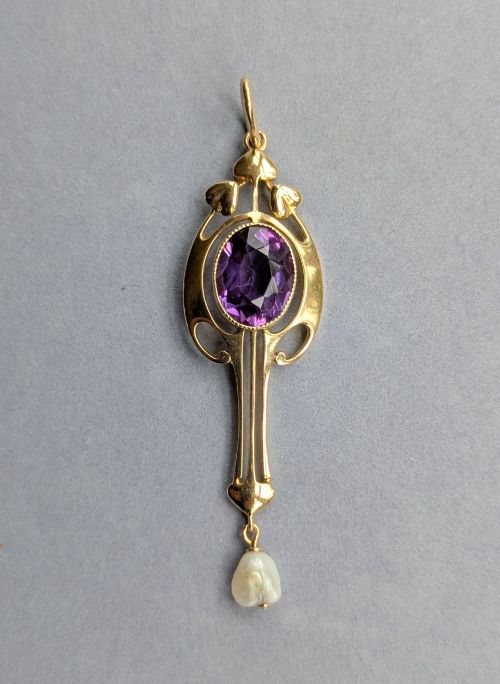
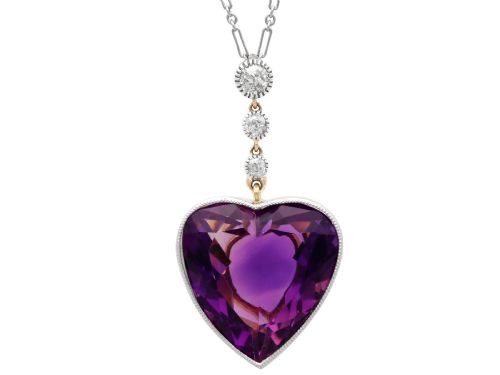
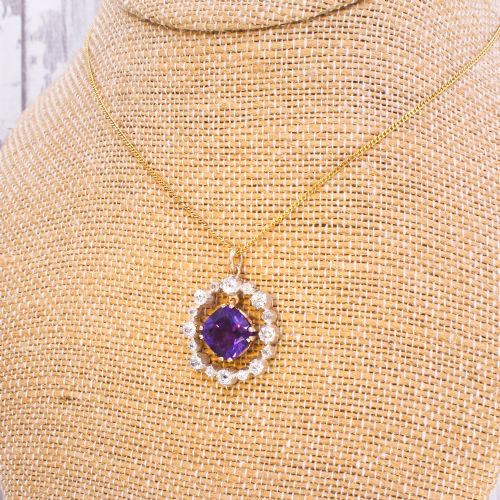
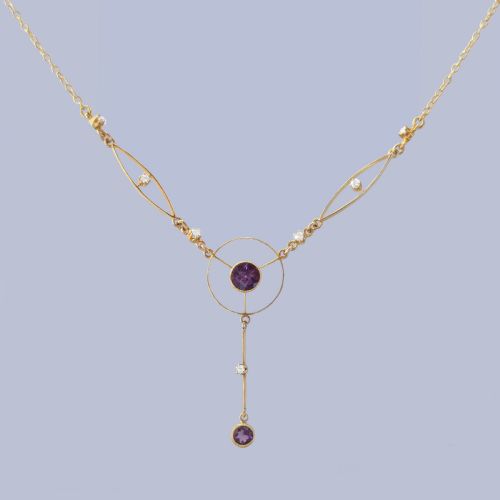
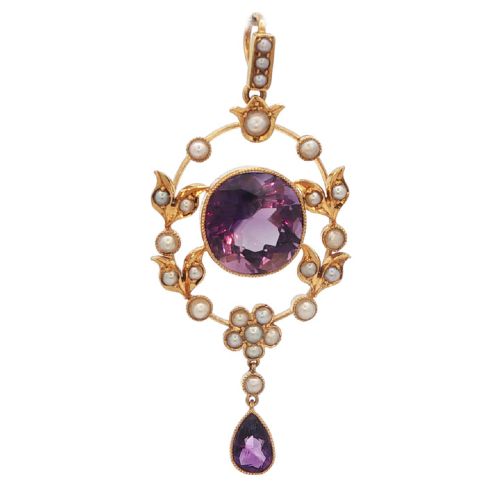
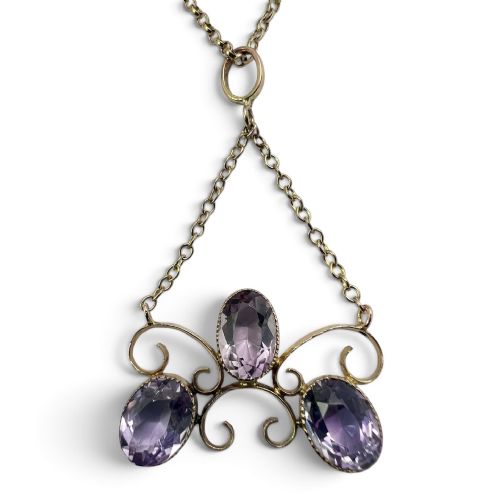
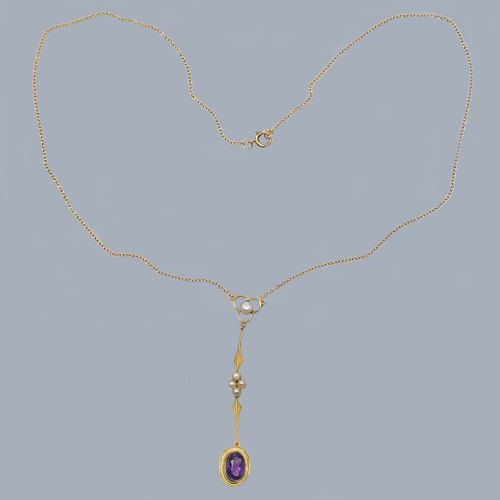
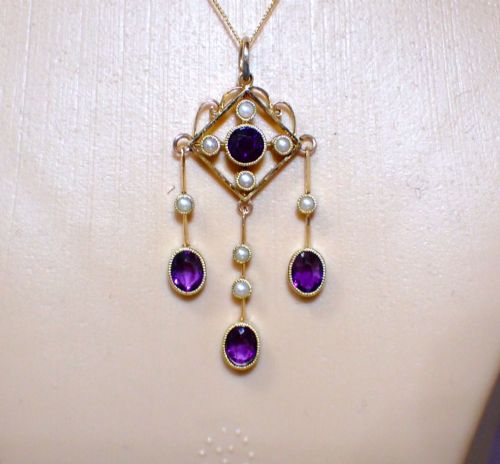
An edwardian amethyst gold necklace brings together rich purple quartz and luminous pearls within delicate openwork mounts from the early twentieth century.
Edwardian Amethyst Gold Necklace
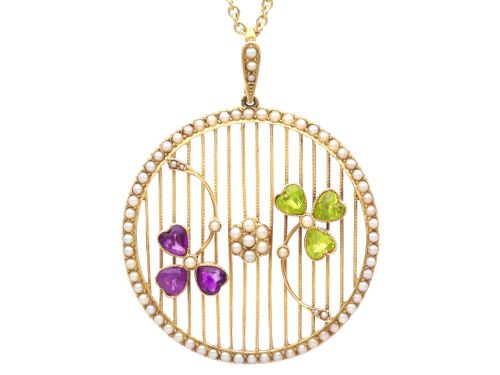
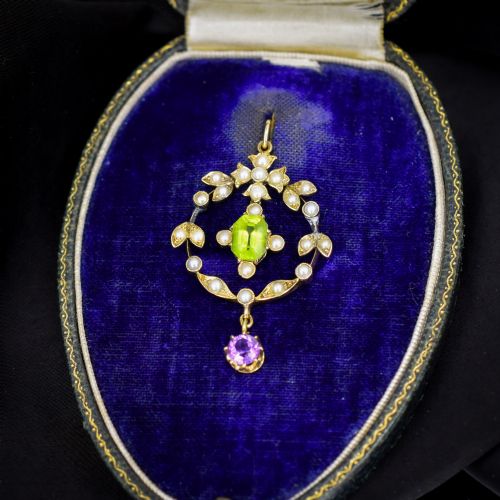
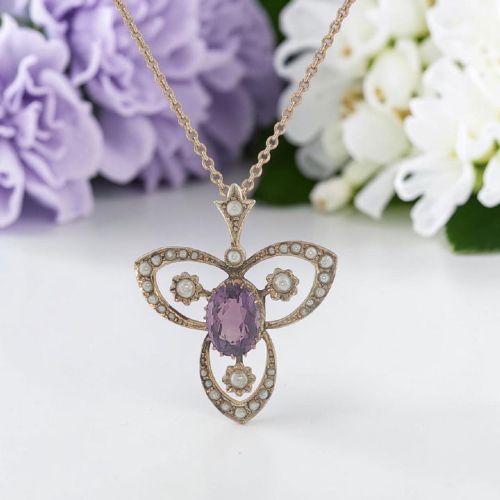
When searching for an edwardian amethyst gold necklace, buyers typically encounter pendant designs suspended from fine chains, often incorporating seed pearls arranged in floral or foliate motifs. The pieces originate predominantly from the Edwardian period and the late Victorian era, with additional examples spanning into the Art Deco years.
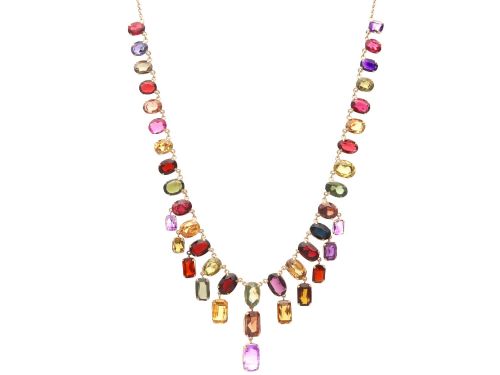
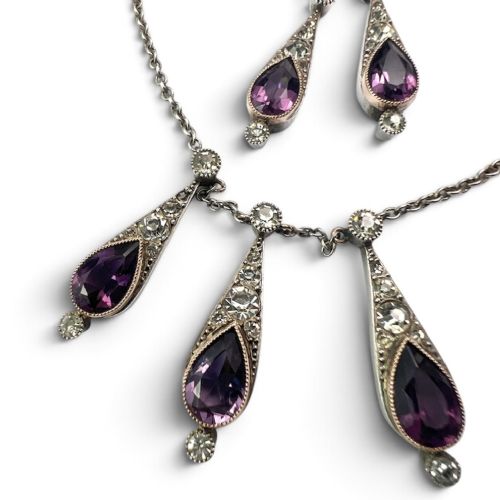
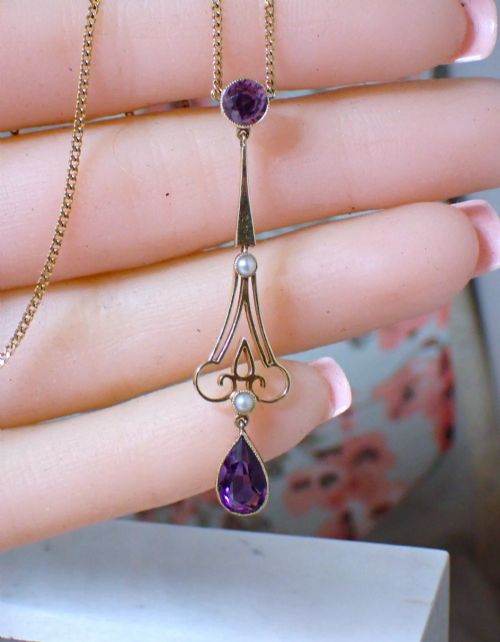
The layout of these jewels ranges from drop pendants and lavalier formats to fringe necklaces and negligé designs. Many items combine purple amethysts with white pearls, frequently framed in yellow gold settings characteristic of the turn of the twentieth century.
How they were made
Goldsmiths constructed these mounts predominantly in nine carat or fifteen carat yellow gold, occasionally utilising higher carat gold or platinum for specific gemstone settings. Amethysts were typically faceted in oval, pear, or round cuts to maximise light refraction within closed or open-backed settings.
Seed pearls were meticulously hand-strung or pinned into position, often accentuating bows, hearts, and Art Nouveau whiplash curves. Master craftsmen combined prong and bezel techniques to secure both the central quartz crystals and the delicate pearls without obscuring their profiles.
Edwardian Amethyst Gold Necklace Retail Price Guide 2026
Typical asking prices for edwardian amethyst gold necklace among the pieces listed under this phrase on Sellingantiques today, from the lower quarter to the upper quarter. They describe what is for sale here now, not the wider market.
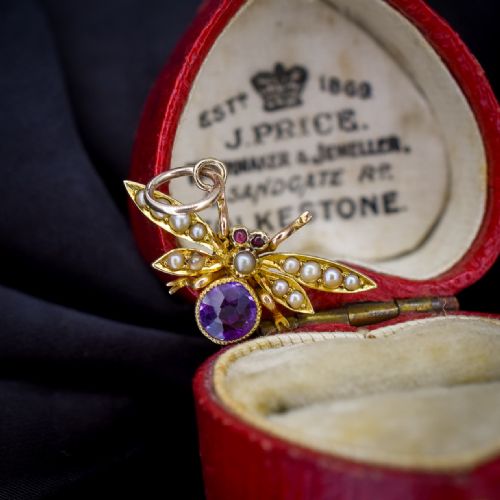
One cheerful pendant cleverly disguises itself as a delicate gold fly buzzing among purple stones.
What varies in quality
The distinction between standard commercial production and finer goldsmithing rests in the weight of the gold used and the complexity of the metalwork. Pieces featuring substantial fifteen carat or eighteen carat gold mounts display a crispness in their wirework and pierced detailing that lighter nine carat examples sometimes lack.
Gemstone selection also determines the standing of a piece, particularly the saturation and uniformity of the amethyst alongside the matching quality of the seed pearls. Original boxes and verifiable maker marks elevate certain necklaces above unbranded production of the same era.
S. Blanckensee & Son·Hamilton & Co
The Edwardian Amethyst Gold Necklace Glossary
- Lavalier
- A pendant necklace featuring a central stone or drop suspended lower than the main mounting line. This style gained immense popularity during the Edwardian era.
- Seed pearl
- A very small, naturally formed or cultured pearl used in clusters or borders to frame larger gemstones. They are drilled and secured with tiny pins or threads.
- Fringe necklace
- A necklace design where multiple gemstone drops hang vertically from a central chain or collar. These drops are often graduated in length.
- Negligé necklace
- A pendant style featuring two unequal drops suspended from a central motif by fine chains. It typifies the elegance of early twentieth century jewellery.
- Plique-à-jour
- An enamelling technique where enamel is applied within a wire framework without a backing, resembling miniature stained glass. This lets light pass directly through the coloured glass.
Edwardian Amethyst Gold Necklace: Frequently Asked Questions
How do I care for an antique gold necklace?
Store your necklace flat in a lined box to prevent the delicate chain from kinking or tangling under pressure. Keep it away from harsh chemical cleaners and ultrasonic baths, as seed pearls are particularly sensitive to moisture and abrasion.
Use a soft, dry microfibre cloth to wipe away any surface oils after wearing. Professional inspection of the seed pearl settings every few years ensures the tiny pins and threads remain secure.
Are these necklaces comfortable for daily wear?
Most Edwardian pendants and lavaliers sit lightly against the collarbone, making them suitable for regular wear if handled with care. The fine chains and delicate seed pearl clusters require a mindful approach to prevent snagging on clothing.
Removing the necklace before sleeping, swimming, or engaging in physical activity preserves the integrity of the gold work. Treating the piece as fine heirloom jewellery ensures it survives for future generations.
How can I tell an Edwardian piece from a Victorian one?
Edwardian jewellery typically favours lighter, more ethereal platinum and yellow gold mounts with intricate garland or Art Nouveau motifs. Victorian pieces often display heavier gold construction, deeper bezels, and more robust structural elements.
Stylistic crossovers do occur during transitional years around nineteen hundred, where makers combined Victorian metal weights with emerging Edwardian motifs. Examining the clasp type and overall construction method helps clarify the exact period.
What is an Art Nouveau influence on these necklaces?
Art Nouveau design introduces asymmetrical whiplash curves, stylised floral motifs, and organic insect or botanical shapes into the pendant frame. This artistic movement rejected rigid symmetry in favour of flowing, naturalistic lines.
On these necklaces, you will see amethysts framed by sinuous gold tendrils and cascading pearl droplets. This aesthetic defines the avant-garde spirit of the early twentieth century decorative arts.