



Purple Amethyst Lavalier
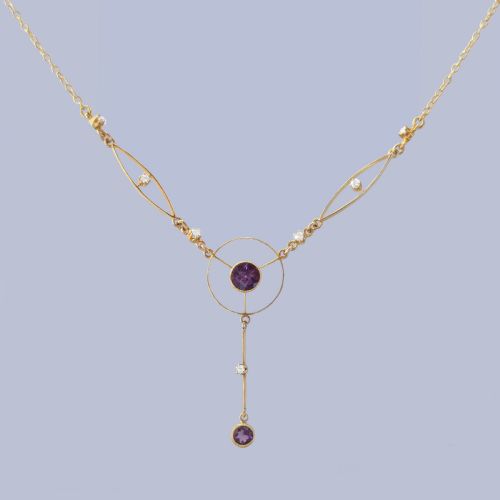
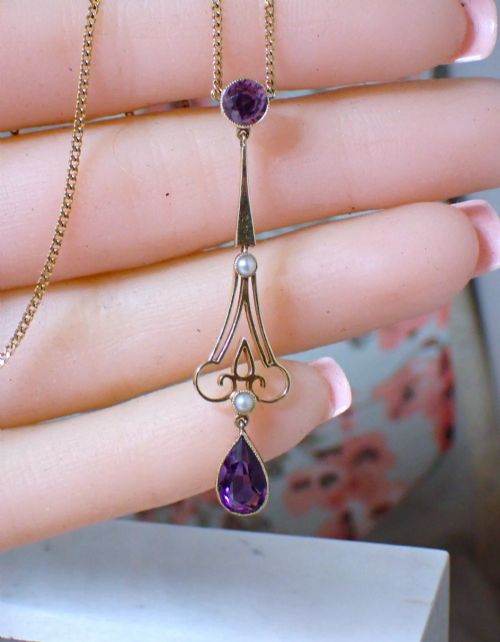
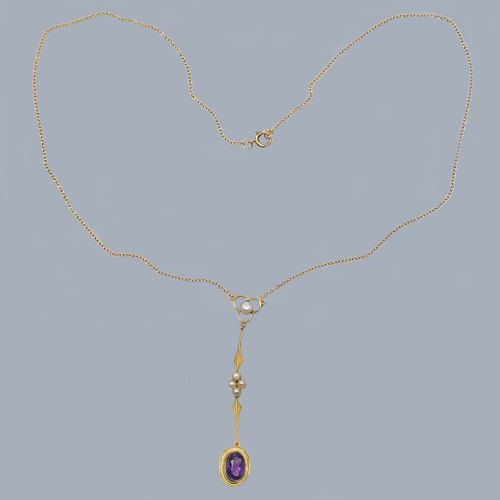
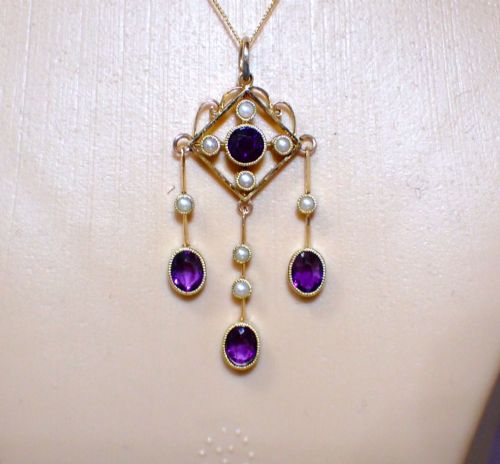
A purple amethyst lavalier suspends rich violet stones from delicate drops, offering the distinctive flowing grace of early twentieth-century jewellery.
Purple Amethyst Lavalier
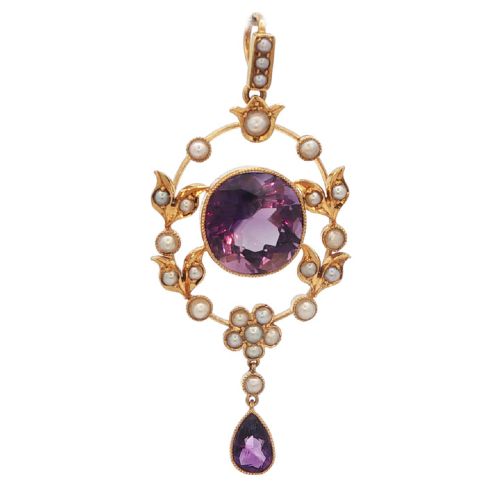
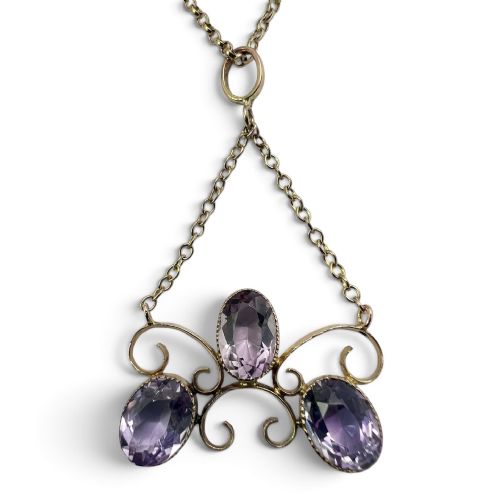
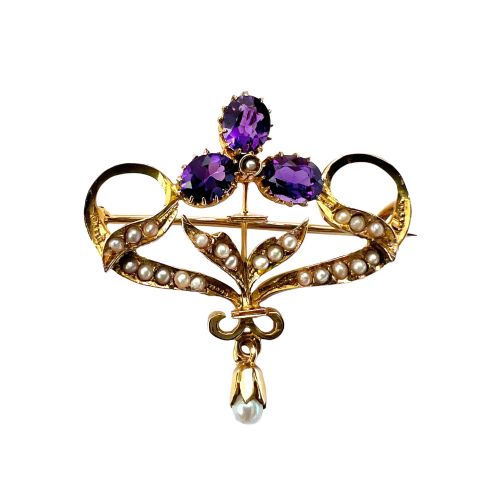
A purple amethyst lavalier takes the form of a pendant necklace featuring suspended stones and central amethyst drops, characteristic of the Edwardian, Art Nouveau, and Victorian periods. These pieces combine rich purple quartz with delicate floral or foliate motifs that sway with movement.
Buyers most frequently encounter designs in nine-carat or fifteen-carat gold, often accented with seed pearls or diamonds. The typical arrangement places the principal amethyst within an openwork frame, suspended from a fine chain or integrated into a convertible brooch pendant.
The aesthetic bridges late nineteenth-century romanticism and early twentieth-century lightness, encompassing distinct stylistic movements such as Arts and Crafts alongside Edwardian elegance. Such necklaces survive in various forms, from simple gold drops to elaborate gem-set iterations.
Quality factors in early pendant design
The standard of a piece depends on the depth of colour in the amethyst and the precision of the gold wirework. Finer examples display well-matched seed pearls and balanced proportions in the suspended drop elements.
Subtlety of design distinguishes standard production from superior work, particularly where hand-formed organic curves define Art Nouveau or Edwardian motifs. The presence of maker marks or original boxes further elevates the standing of individual pieces.
Purple Amethyst Lavalier Retail Price Guide 2026
Typical asking prices for purple amethyst lavalier among the pieces listed under this phrase on Sellingantiques today, from the lower quarter to the upper quarter. They describe what is for sale here now, not the wider market.
Some pendants double as brooches, allowing the wearer to pin the purple stones directly to a lapel.
S. Blanckensee & Son·Hamilton & Co
The Purple Amethyst Lavalier Glossary
- Lavalier
- A pendant necklace featuring one or more suspended drops hanging below the main body. This style gained popularity during the late nineteenth and early twentieth centuries.
- Seed pearl
- A very small natural or saltwater pearl, often unperforated or half-drilled, utilised in clusters or borders around larger gemstones. These tiny pearls add a soft luminous contrast to deep purple quartz.
- Art Nouveau
- A design style spanning the late nineteenth and early twentieth centuries characterised by flowing, organic, and asymmetrical lines inspired by natural forms. Jewellery from this period often incorporates whiplash curves and stylised floral motifs.
- Old-cut diamond
- A hand-faceted diamond cut before the standardisation of the modern brilliant cut, typically possessing a smaller table and higher crown. These stones exhibit a softer, candlelit sparkle within antique settings.
- Foliate
- Ornamentation or metalwork shaped to resemble leaves and foliage. This motif frequently appears in Edwardian and Victorian pendant frames.
Purple Amethyst Lavalier: Frequently Asked Questions
What defines a lavalier necklace?
A lavalier is distinguished by a pendant drop that hangs below the main decorative cluster, creating movement when worn. They typically suspend from fine gold or silver chains.
These pieces gained prominence during the Edwardian and Art Nouveau eras, often combining amethysts with pearls or small diamonds in symmetrical or flowing organic frames.
How do I care for antique amethyst jewellery?
Amethyst is a durable quartz, but antique settings with seed pearls require gentle cleaning without harsh chemicals or ultrasonic baths. Warm soapy water and a soft brush protect both the metal and the delicate pearls.
Store each necklace flat in a lined box to prevent the fine chains from tangling and to protect the projecting drops from impact.
How do I distinguish Edwardian from Victorian pieces?
Victorian pieces tend to be heavier and more substantial in gold weight, often featuring closed-back settings or darker tones during mourning periods. Foliate and geometric arrangements dominate the mid to late nineteenth century.
Edwardian jewellery shifts towards lighter filigree work, platinum-topped gold, and airy openwork designs that maximise the play of light through amethysts and diamonds.
Are these necklaces suitable for daily wear?
While wearable, antique jewellery from the early twentieth century benefits from careful handling due to the delicate nature of seed pearl settings and fine gold chains. Removing the necklace before sleeping or strenuous activity preserves the antique structure.
Regular inspection of the claws holding the amethyst and pearls ensures the stones remain secure within their original mounts.