

Gold and Amethyst Pendant
A gold and amethyst pendant brings together rich purple quartz and yellow gold, holding the refined lines of Edwardian and Victorian work.
Gold and Amethyst Pendant
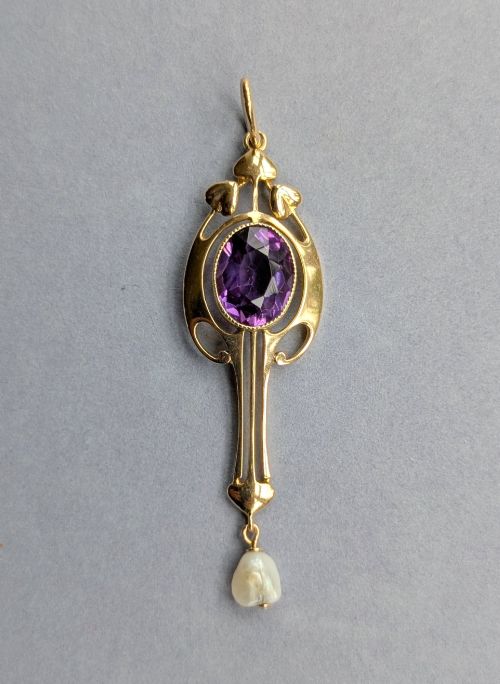
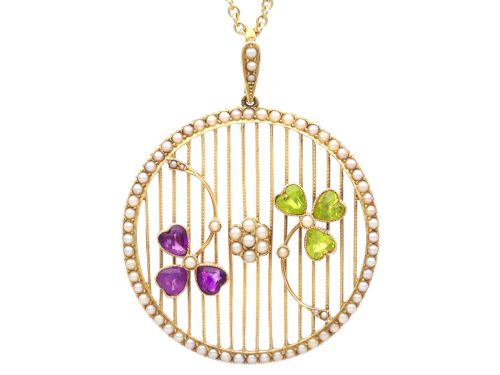
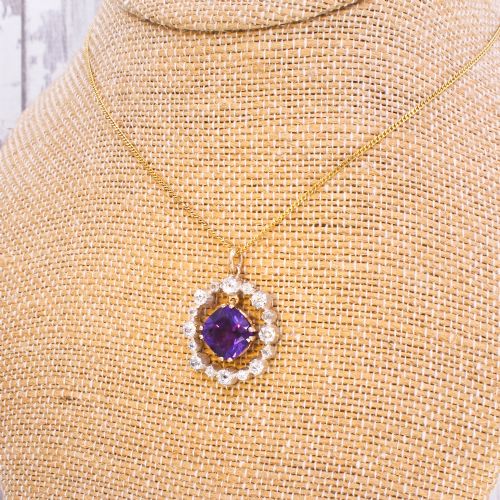
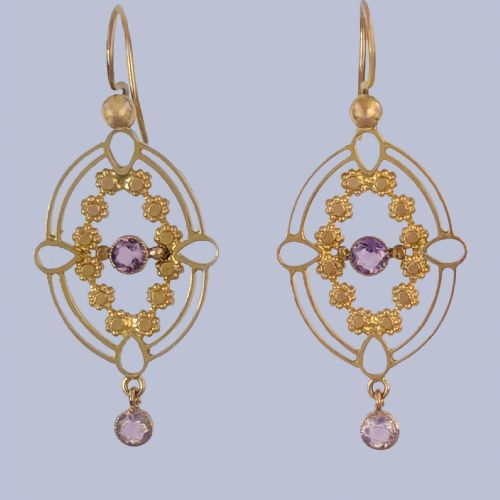
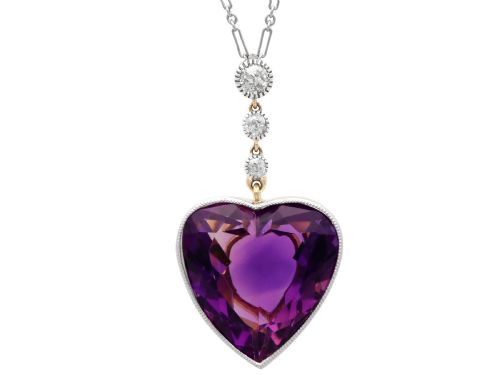
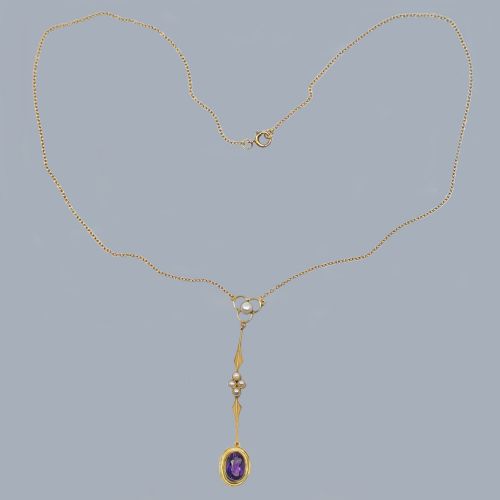
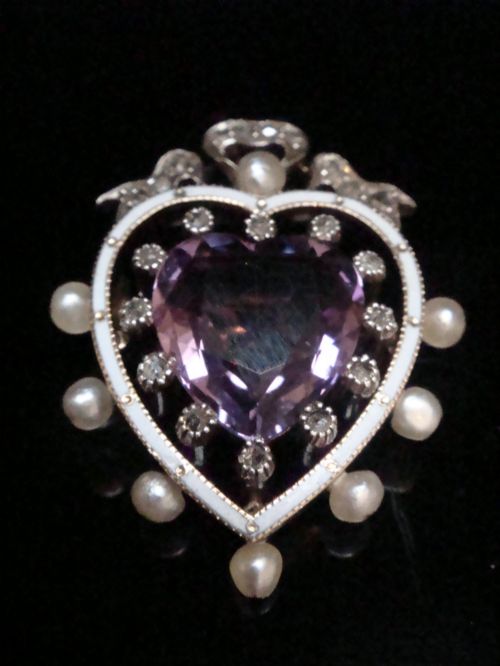
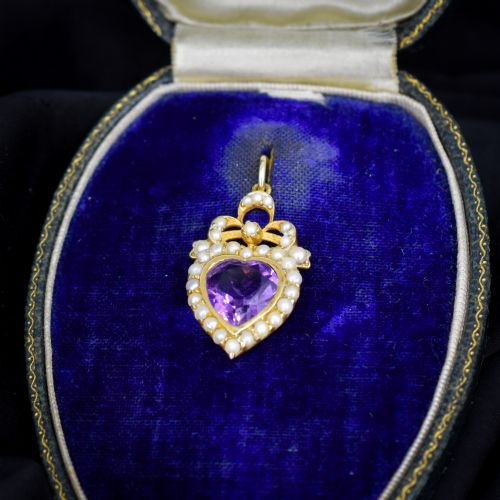
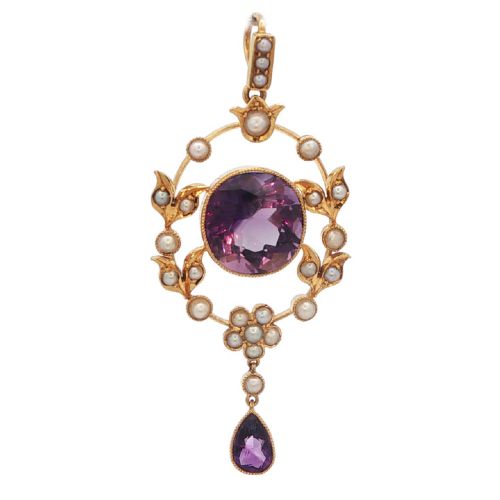
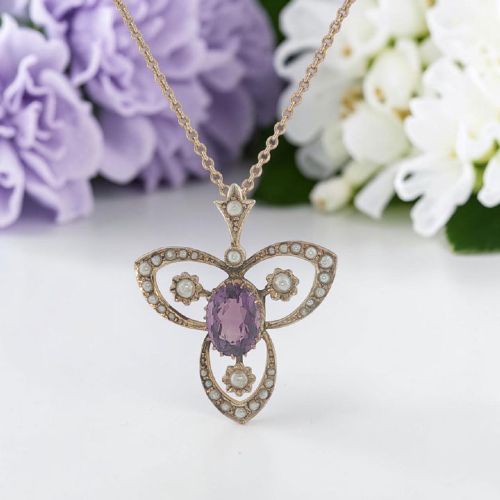
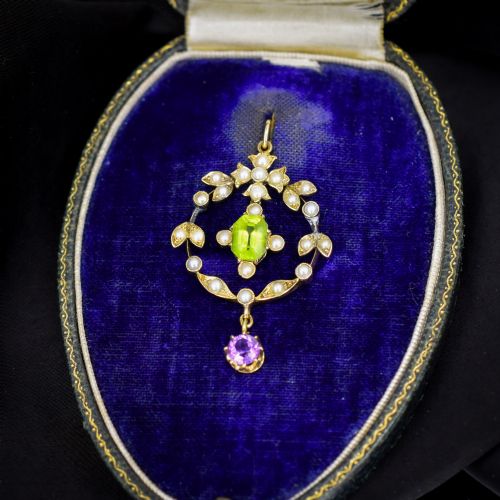
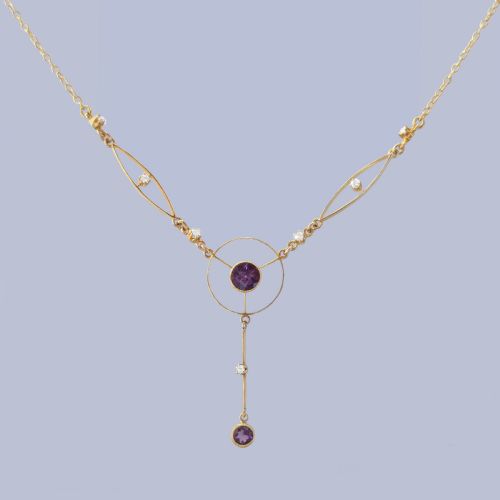
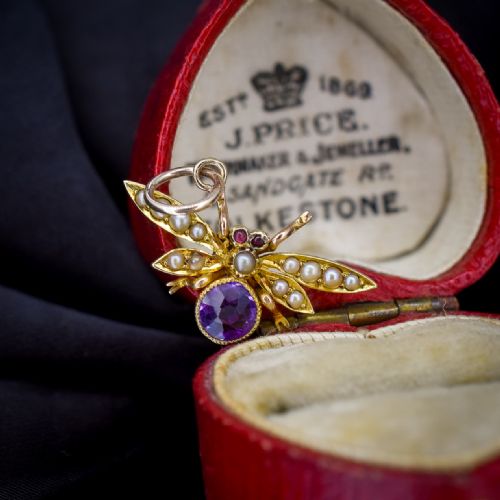
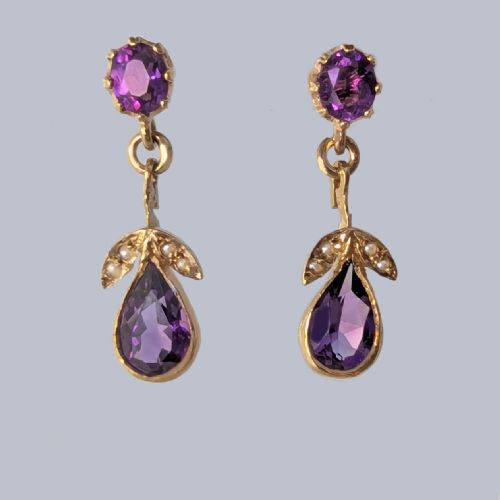
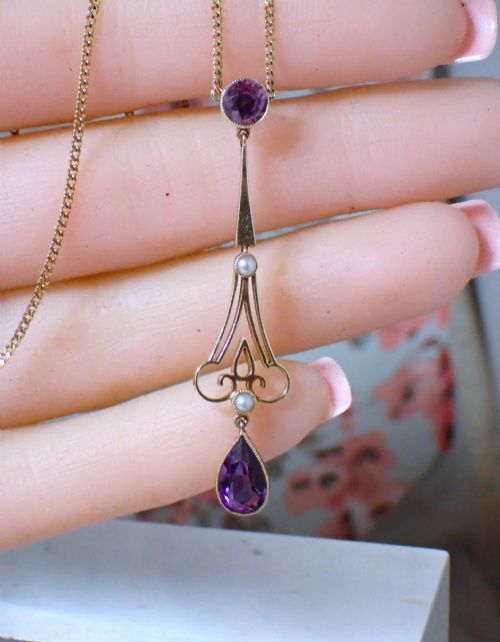
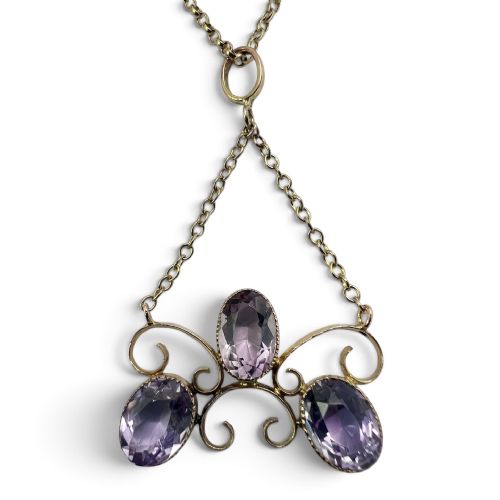
A gold and amethyst pendant pairs faceted purple quartz with yellow gold settings, often taking the form of openwork drops, lavalier necklaces, and heart motifs. Edwardian and Victorian designs dominate the selection, bringing delicate seed pearls and intricate openwork metal settings together.
Makers shaped these pieces during periods ranging from the late nineteenth century into the mid-twentieth century, utilising styles from Art Nouveau curves to geometric Art Deco lines. Collectors encounter both small daily wear pieces and substantial stones exceeding twenty carats set in higher purity gold.
Materials and Working Methods
Goldsmiths set amethysts into 9ct, 15ct, and 18ct yellow gold, occasionally incorporating white gold or silver depending on the period. Seed pearls and natural pearls frequently accent the purple quartz in claw or bezel settings.
Craftsmen applied techniques such as openwork piercing, millegrain edges, and guilloche enamel to frame the central gemstone. Lavalier and négligé designs suspend the amethyst from delicate chains to catch the light.
Gold and Amethyst Pendant Retail Price Guide 2026
Typical asking prices for gold and amethyst pendant among the pieces listed under this phrase on Sellingantiques today, from the lower quarter to the upper quarter. They describe what is for sale here now, not the wider market.
Listings feature yellow gold ranging from 9ct to 18ct, alongside platinum and silver.
Distinctions in Quality
The depth of the amethyst colour and the precision of the facet cutting set superior stones apart from simpler commercial varieties. Higher gold carat weights and intricate handmade wirework indicate elevated workshop standards.
The integration of supporting gems like old cut diamonds and matched seed pearls elevates the refinement of the piece. Maker marks and original fitted boxes further distinguish exceptional examples from standard production.
Murrle Bennett·S. Blanckensee and Son·Hamilton and Co
The Gold and Amethyst Pendant Glossary
- Lavalier
- A pendant featuring a dangling gemstone or drop suspended from a vertical chain or bar. This style gained immense popularity during the Edwardian era.
- Seed Pearl
- A very small, naturally formed pearl, often drilled and sewn or strung into decorative floral clusters around a central gemstone.
- Guilloche Enamel
- A decorative technique where precise patterns are mechanically engraved into metal beneath a translucent layer of coloured enamel.
- Old Cut Diamond
- A hand-faceted diamond cut before modern machine standards, typically displaying a small table and deep pavilion.
- Negligé Necklace
- A pendant style featuring two unequal drops suspended from a central link, originating in the Edwardian period.
Gold and Amethyst Pendant: Frequently Asked Questions
How do I date a gold and amethyst pendant?
Examination of the metal hallmarks, setting style, and accompanying chain provides the primary clues for dating. Edwardian pieces often feature delicate openwork and seed pearls, while Victorian examples tend toward heavier gold bezels.
Consulting the specific gold carat, such as 15ct which was common in the nineteenth and early twentieth centuries, narrows the period further.
Were these pendants worn every day?
Many Edwardian and Victorian pendants served as daily accessories for middle and upper-class wearers. Their durable gold settings and quartz stones stood up well to regular use.
Delicate additions like seed pearls required more careful handling, which explains why some survive with replacements.
How should I care for an antique amethyst pendant?
Amethyst is a durable quartz, but prolonged exposure to direct sunlight can fade its purple colour over time. Cleaning should be done gently with warm soapy water and a soft brush, avoiding harsh chemical dips.
Store the pendant separately in a lined box to prevent the gold and stones from scratching against other items.