


Edo Period Imari Jars
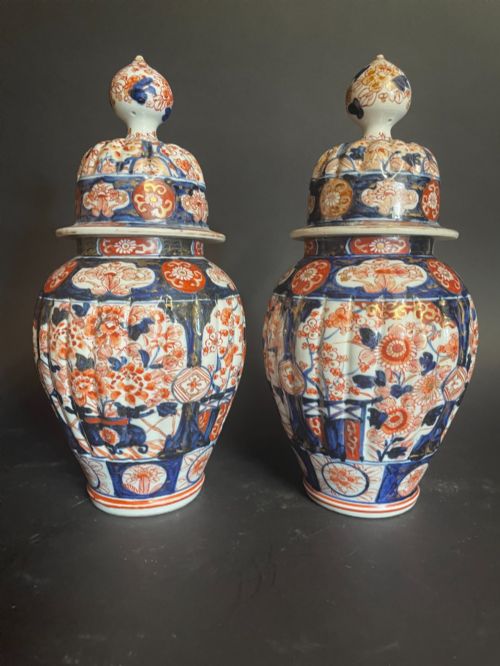
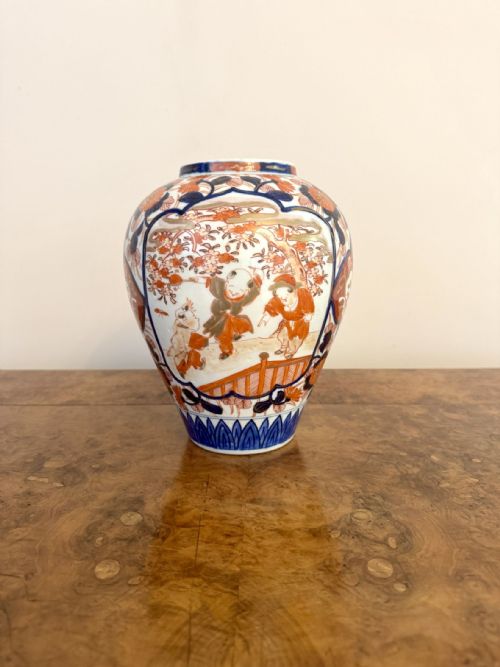
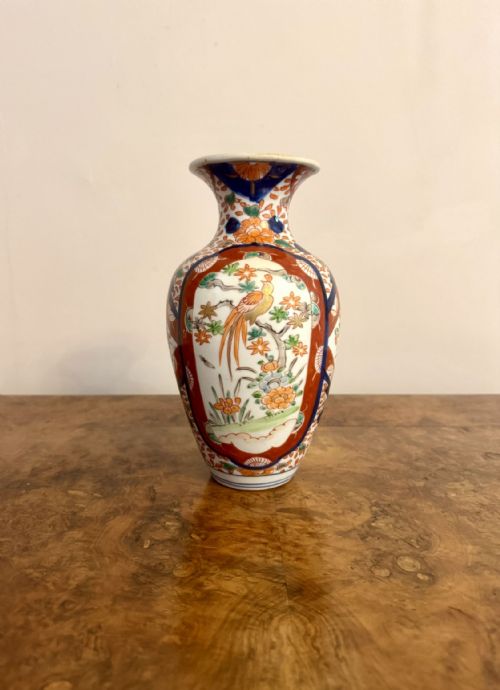
These edo period imari jars are robust porcelain vessels carrying rich cobalt enamel and iron-red decoration, prized for their bold colour palette and decorative presence.
Edo Period Imari Jars
When you search for edo period imari jars, you encounter porcelain vessels spanning the seventeenth century through to the nineteenth century, including examples from the Edo period and Meiji transition. The selection includes lidded jars, baluster vases, and garnitures originating from Arita.
Most pieces you meet on this page are shaped vases and lidded jars featuring Japanese Imari patterns. These range from octagonal and hexagonal forms to pairs and trios designed for display.
Materials and Construction
Potters shaped these porcelain vessels and applied cobalt enamel underglaze painting before firing. Overglaze enamels, gilt, and gold leaf were often added in subsequent firings to build up the intricate surface decoration.
Some decorative iterations incorporate ormolu mounts to complement the porcelain body. Gilding highlights specific motifs within the traditional palette.
Some jars wear their lids like permanent hats, refusing to reveal whether they hold secrets or just empty space inside.
Judging Quality
The distinction between standard and superior pieces lies in the precision of the hand-painted cobalt enamel and the crispness of the porcelain form. Balance in the shape of hexagonal and octagonal vases dictates the visual success of the piece.
The richness and depth of the enamel palette, alongside the careful integration of gilding or gold leaf, separate simpler utilitarian items from grander display pieces and lidded jars.
The Edo Period Imari Jars Glossary
- Imari
- A style of Japanese porcelain decorated in underglaze blue, iron red, and gold. This palette originated in Arita and was exported extensively to Europe.
- Baluster
- A vase form with a rounded body that tapers toward the base and swells near the lower centre. This shape provides stability and visual weight.
- Garniture
- A set of three or more matching vases or jars displayed together on a mantelpiece or cabinet. These sets often combine lidded jars and open vases.
- Cobalt Enamel
- A blue pigment used under the glaze to create deep, permanent tones on porcelain. It forms the structural foundation of traditional Imari decoration.
Edo Period Imari Jars: Frequently Asked Questions
What are edo period imari jars?
These pieces are porcelain vessels from Japan decorated in characteristic blue, red, and gold palettes. They were produced as decorative vases and lidded containers for export and domestic use.
Many examples feature shaped bodies, including octagonal and hexagonal forms, designed to catch the eye in a room.
How were edo period imari jars used?
Historically, these jars served as ornamental displays in grand interiors, often arranged in matching sets or garnitures on furniture. Their lids kept the interiors clean while completing the sculptural silhouette of the vase.
Today, they function as focal points on side tables, cabinets, and mantels, bringing historic colour and pattern into a modern interior.
How do I live with edo period imari jars?
Place these jars on sturdy surfaces where their glazed porcelain and gilt details catch natural light. Keep them away from heavy foot traffic to protect lids and protruding rims from accidental knocks.
Dust them gently with a soft, dry cloth to maintain the surface enamel and gold leaf without harsh cleaning agents.
How do I tell periods apart?
Seventeenth-century and eighteenth-century pieces often display characteristic Arita porcelain bodies with hand-painted underglaze cobalt and iron-red tones. Later nineteenth-century examples may incorporate heavier gilding or different potting weights.
Comparing the crispness of the painting and the form helps distinguish earlier baseline wares from later nineteenth-century interpretations.