




Edo Period Charger
An edo period charger brings centuries of Japanese ceramic skill into a room, offering broad surfaces of traditional colour and pattern.
Edo Period Charger
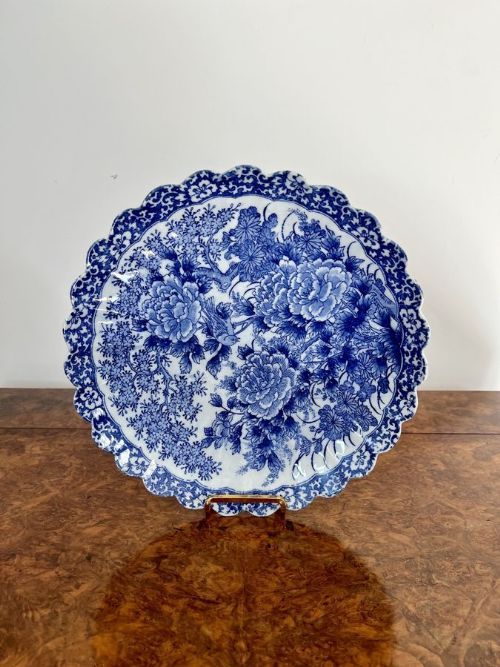
An edo period charger represents large-scale decorative Japanese ceramic and metalwork production, functioning primarily as a display piece rather than tableware. When exploring this phrase, buyers encounter substantial circular plates, bowls, and dishes originating from workshops operating during the centuries of the Edo shogunate. Pieces span from late seventeenth-century productions to nineteenth-century examples.
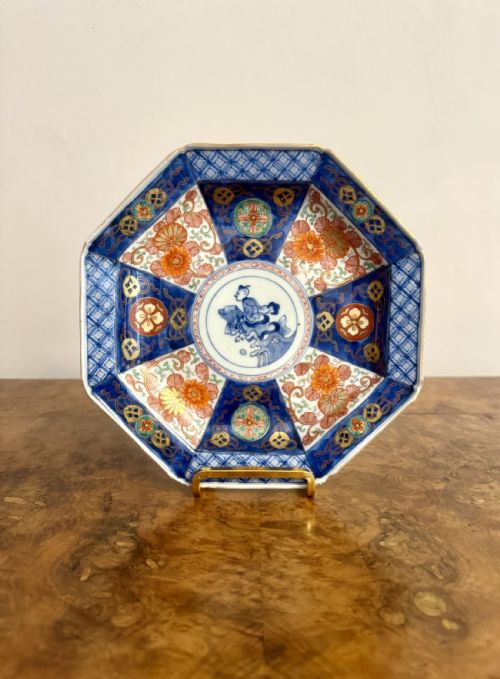
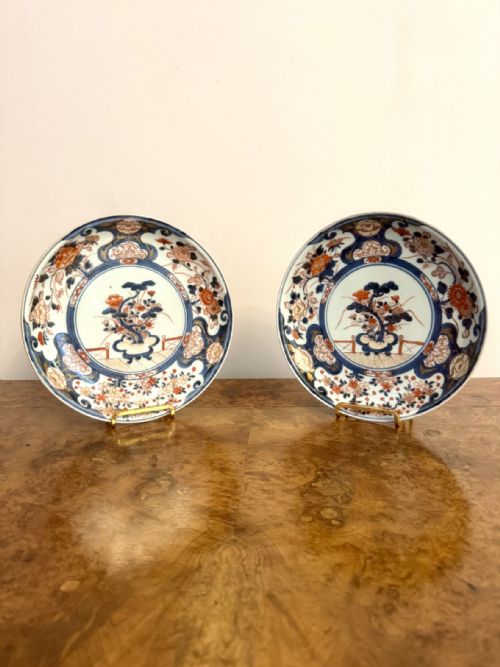
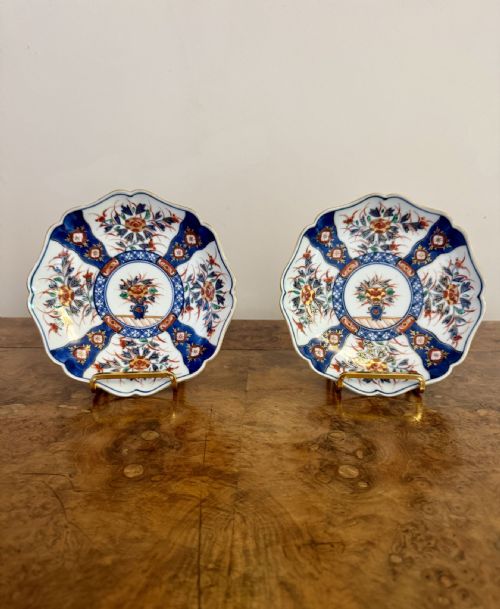
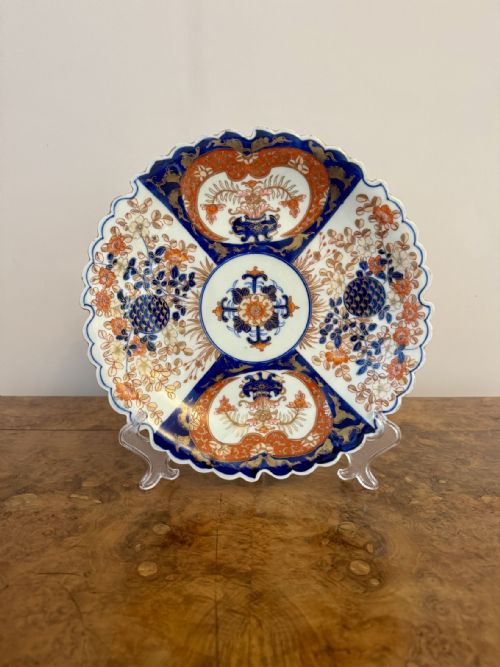
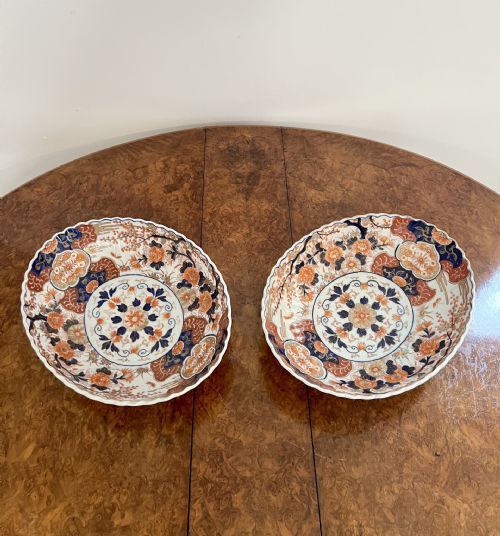
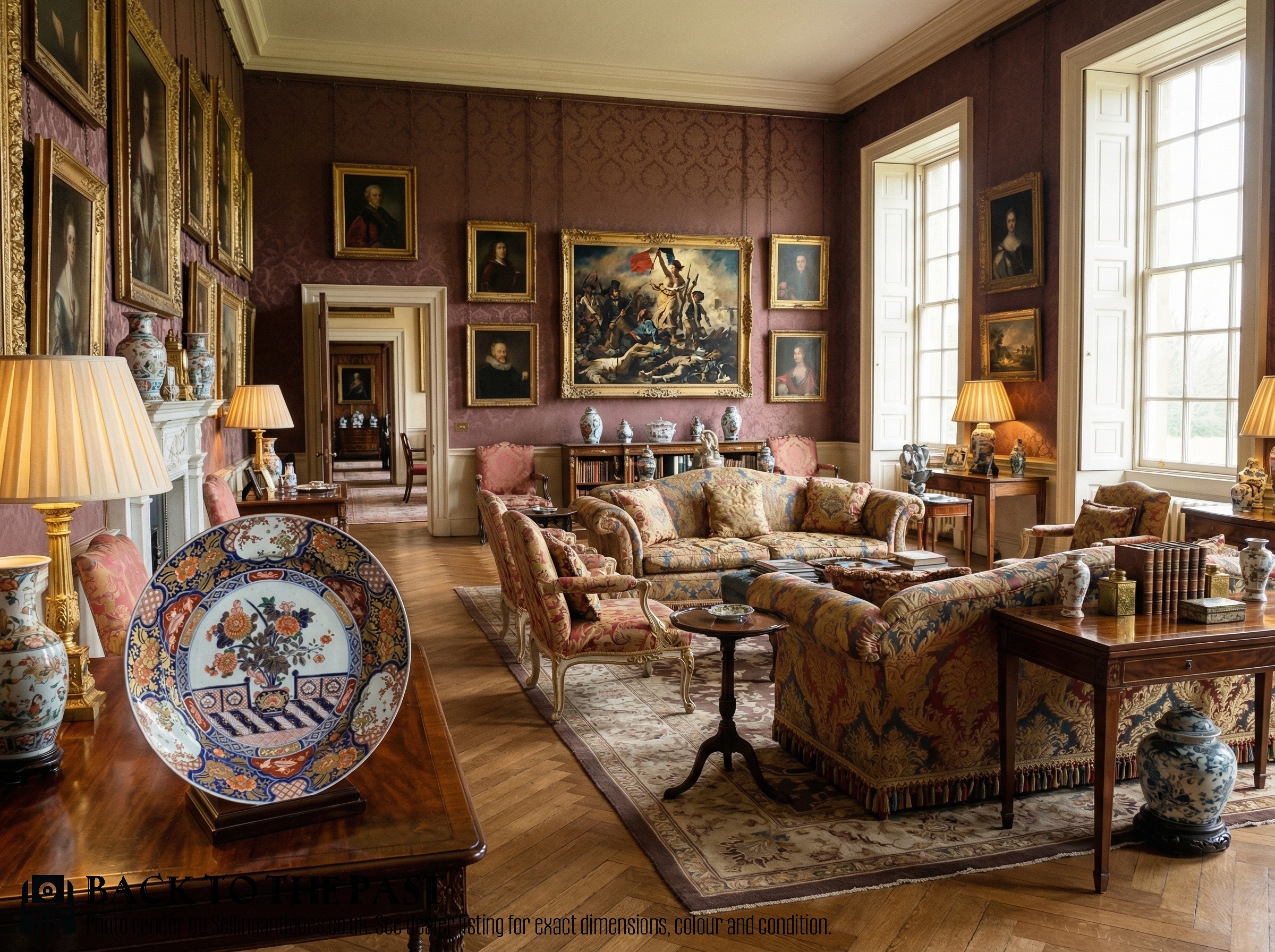
The version most commonly met on this page is the Japanese Imari charger or plate, alongside Arita porcelain dishes and cloisonne pieces. Forms include standard circular chargers, large scalloped edge plates, octagonal shapes, and hexagonal formats. Many display characteristic cobalt underglaze combined with enamel and occasionally gold leaf accents.
Origins trace directly to Japanese kilns and metalworking traditions, particularly centres associated with Arita wares. The dating ranges across the seventeenth, eighteenth, and nineteenth centuries, capturing both early baseline traditions and later Victorian-era interpretations of Edo styles. Collectors encounter diverse plate formats, ranging from standard dishes to massive display bowls.
Materials and construction
The physical construction relies heavily on porcelain bodies shaped by hand or wheel, finished with specialised glazes and cobalt underglaze. Artisans applied enamel paints and gold leaf over initial kiln firings to build complex surface patterns. Copper and brass also appear in specific metal-based decorative items like cloisonne.
Techniques involve precise control of kiln temperatures to achieve the vibrant cobalt blue and iron-red palettes typical of Imari wares. Hand-painted details dominate the surface decoration, showing cranes, auspicious symbols, and intricate geometric borders. Cloisonne examples utilise wire compartments soldered to metal bases to hold coloured enamel pastes before firing.
Edo Period Charger Retail Price Guide 2026
Typical asking prices for edo period charger among the pieces listed under this phrase on Sellingantiques today, from the lower quarter to the upper quarter. They describe what is for sale here now, not the wider market.
Listings feature items spanning the 17th Century, 18th Century, and 19th Century, alongside specific production years from 1850 up to 1920.
Assessing quality and craftsmanship
Quality rests upon the precision of the hand-painted brushwork and the clarity of the underlying porcelain body or metal form. Superior examples show confident, detailed application of the Imari palette, with well-defined lines and harmonious colour placement. Lesser pieces present heavier, coarser lines and less disciplined glaze coverage.
The complexity of the form also dictates the tier of the object, with unusual shapes like fan-shaped plates, octagonal edges, and large scalloped chargers demanding higher technical skill from the potter. The depth and vibrancy of enamel colours, alongside the careful integration of gold leaf, separate standard decorative items from masterworks.
The Edo Period Charger Glossary
- Edo Period
- The historical era in Japan lasting from 1603 to 1868, characterised by economic growth and stable arts production under the Tokugawa shogunate. Pieces from this time reflect distinct traditional aesthetics.
- Imari
- A style of Japanese export porcelain originating from the port of Imari, typically decorated in cobalt blue, iron red, and gold. This palette became immensely popular across Europe and Japan.
- Arita
- The Japanese town and surrounding region in Hizen province famous for pioneering porcelain production. Arita kilns produced the bulk of the decorated dishes and chargers seen in these collections.
- Cloisonne
- A metalworking technique where enamel is applied to compartments created by soldered wires on a copper or brass base. It results in rich, patterned surfaces like those found on Japanese chargers.
- Cobalt Underglaze
- A blue pigment applied to ceramic bodies before glazing and firing, capable of withstanding high kiln temperatures. It provides the deep blue foundation for many traditional decorative plates.
Edo Period Charger: Frequently Asked Questions
What is an edo period charger used for?
These large plates and dishes served primarily as decorative display items in traditional Japanese interiors rather than functional tableware.
Today, collectors place them on walls, stands, or tables to showcase their intricate hand-painted patterns and historical presence.
How do I identify Imari style?
Imari style is typically recognised by its distinct palette of cobalt underglaze blue, iron red, and added gold leaf highlights.
Designs often feature dense floral, botanical, or figurative motifs arranged in complex panels across porcelain surfaces.
Are these pieces made of porcelain?
Many of the items listed are constructed from fine porcelain fired in traditional Japanese kilns, particularly around Arita.
Other examples utilise metal bases, such as copper or brass, decorated with cloisonne enamel and auspicious symbols.
How can I tell the age of a charger?
Dating relies on stylistic shifts, material composition, and recorded historical periods spanning the seventeenth through the nineteenth centuries.
Archive records and comparative examples from specific centuries help contextualize the production date of each individual dish.