




Ecclesiastical Oak Statues
These ecclesiastical oak statues bring centuries of devotional craft into a room, offering a solemn presence carved from sturdy timber.
Ecclesiastical Oak Statues
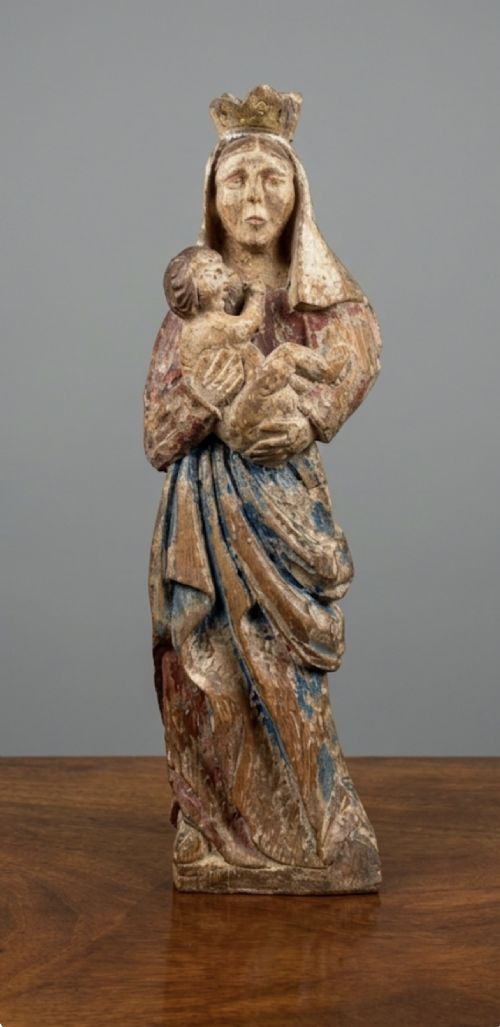
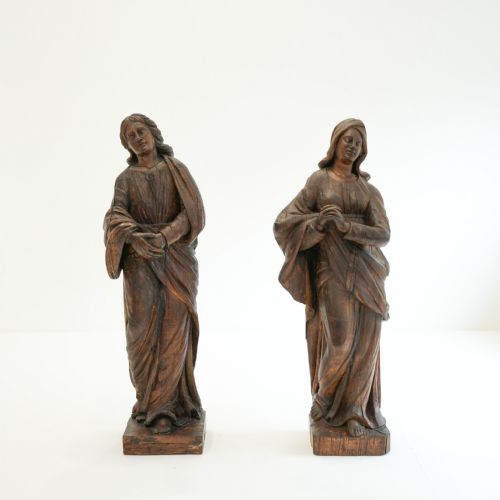
When searching for ecclesiastical oak statues, collectors encounter figures hewn from solid timber depicting saints, Madonna and child groups, and biblical figures. These devotional objects span from pre-sixteenth century medieval workshops through to nineteenth century Gothic Revival creations, originating from English, French, German, and Croatian hands.
The pieces on this page range from monumental wall sculptures and pairs of kneeling angels to fragmentary heads and complete donor figures. Figures such as St. Paul, St. Jerome, and St. Catherine appear frequently, often carved with deep drapery folds characteristic of religious commissions.
Buyers are most likely to meet eighteenth century carvings and nineteenth century interpretations alongside older medieval fragments. Oak remains the predominant medium, though polychrome paint, gesso, and gold leaf occasionally survive on the timber surface.
Assessing quality and execution
The depth of carving and anatomical proportion separate standard workshop output from exceptional liturgical art. Superior pieces display fluid movement in the drapery and careful attention to hands, hair, and facial expression.
The integrity of the timber and the survival of original surface treatments such as polychrome or gilding heavily influence the character of a piece. Statues retaining early surface pigment or retaining their original architectural context command greater interest than heavily restored examples.
Several angels on this page spend their eternity kneeling perpetually on carved oak clouds.
The Ecclesiastical Oak Statues Glossary
- Polychrome
- Decoration consisting of several colours applied to the surface of wood or stone. This technique was widely used on medieval and later religious figures to bring realism to the carved forms.
- Gesso
- A plaster mixture used as a smooth base for paint or gold leaf on wooden sculptures. It helps bind the decorative layers to the oak substrate.
- Gilding
- The application of gold leaf or powder to the surface of a sculpture. This finish highlighted divine figures within dimly lit ecclesiastical interiors.
- Donor figure
- A portrait of the person who commissioned a religious work of art, often included kneeling at the base of a larger devotional grouping. These figures appear frequently in late medieval ecclesiastical sculpture.
- Pieta
- A subject in Christian art depicting the Virgin Mary cradling the dead body of Jesus. This poignant form is common among pre-sixteenth century wood carvings.
Ecclesiastical Oak Statues: Frequently Asked Questions
Where were these statues originally displayed?
These figures stood in churches, private chapels, and monastic foundations across Europe as focal points for prayer and veneration. Some served as altar pieces while others stood in niches along nave walls.
Later nineteenth century pieces often served similar devotional roles in revived Gothic architectural schemes or domestic chapels.
How should I care for a wooden religious sculpture?
Keep wooden sculptures away from direct heat sources and strong sunlight to prevent the timber from drying out and splitting. Stable indoor humidity protects both the underlying oak and any fragile painted or gilded surfaces.
Dust the piece gently with a dry, soft brush and avoid using liquid cleaners or oils on historic wood.
Are these statues usually signed by the maker?
Medieval and early modern carvers rarely signed their work, as ecclesiastical art was created for communal worship rather than individual renown. Pieces are generally attributed by region and stylistic school rather than specific master craftsmen.
Nineteenth century revival pieces occasionally bear workshop marks or labels on the reverse.
What is the difference between Gothic and Renaissance styles in these carvings?
Gothic carvings tend to feature vertical emphasis with rigid, angular drapery folds and solemn expressions. They reflect medieval theological traditions focused on spiritual symbolism.
Renaissance figures introduce more naturalistic human proportions, softer drapery movement, and classical poses influenced by fifteenth and sixteenth century developments in art.