




Dark Oak Figure
Dark oak figure carvings bring deep timber texture and historic character to a room, ranging from medieval saints to later folk art interpretations.
Dark Oak Figure
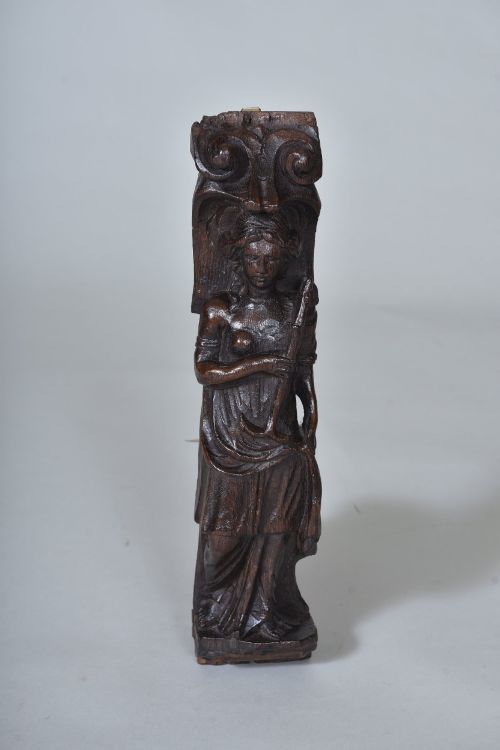
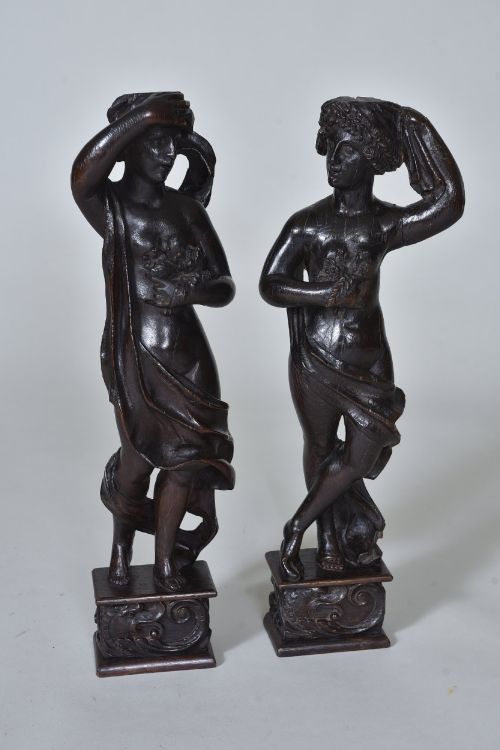
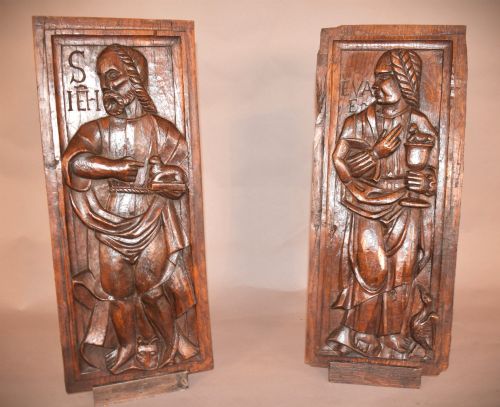
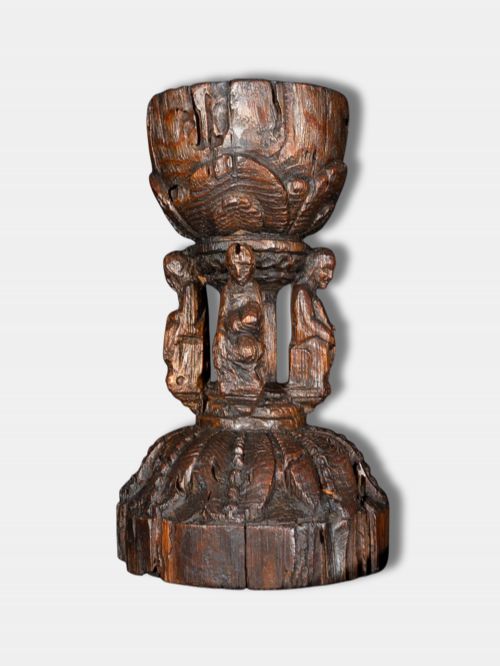
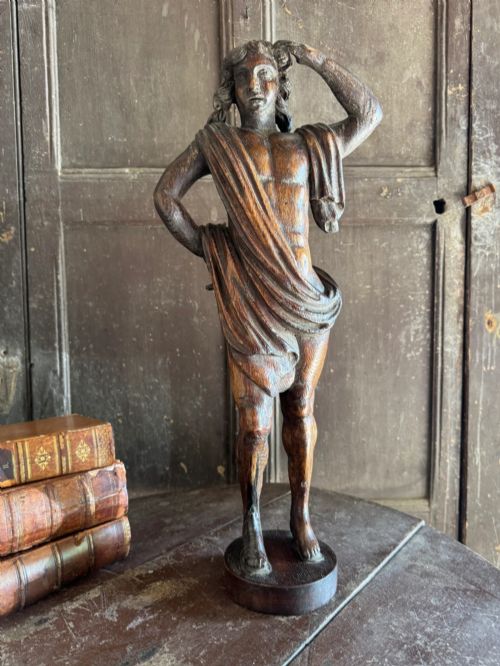
A dark oak figure is a carved sculpture in wood originating from periods spanning the medieval era through the nineteenth century, encompassing religious subjects, architectural elements like caryatids, and secular representations. Buyers searching for a dark oak figure encounter ecclesiastical carvings, saints, panels, and decorative ornaments fashioned from heavy hardwood.
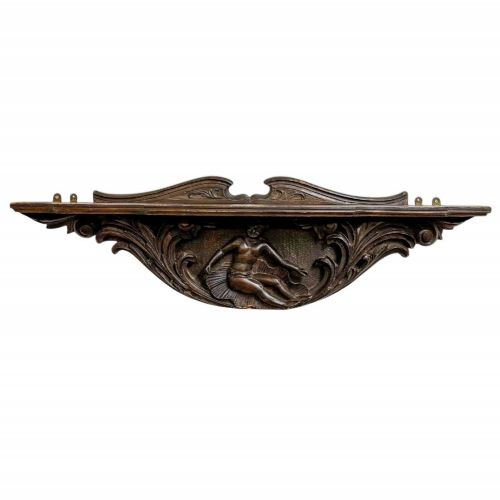
The material runs from sixteenth and seventeenth-century European church fragments to later nineteenth-century revival pieces influenced by Gothic, Baroque, and Renaissance styles. Many items serve architectural functions, appearing as building brackets, overdoors, pedestals, and terminals rather than freestanding sculptures.
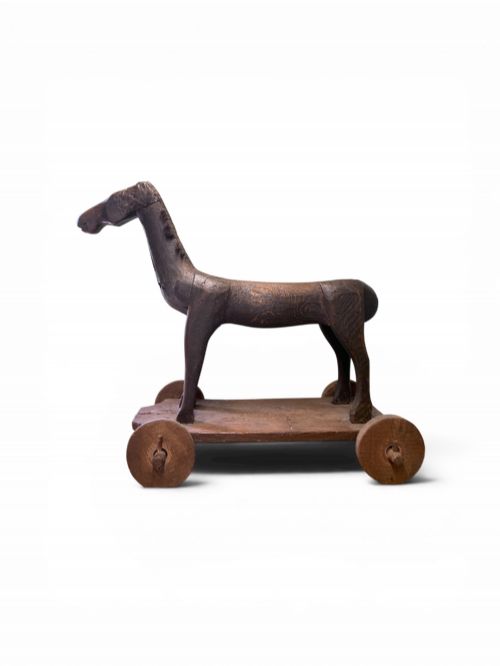
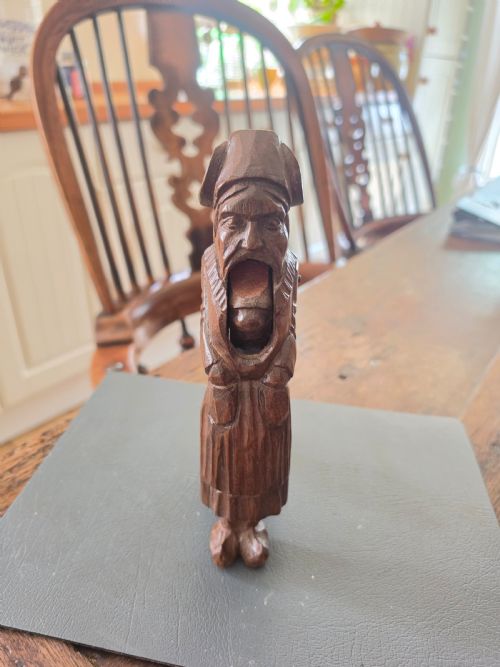
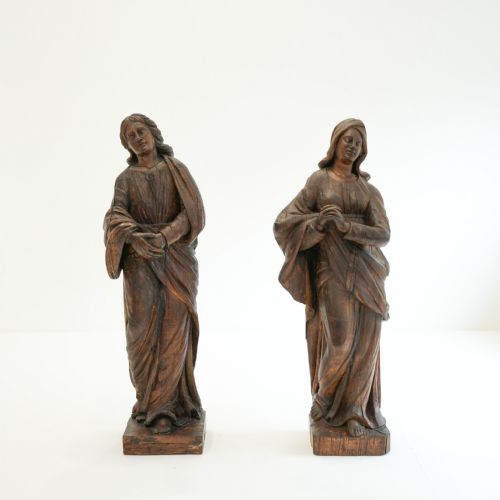
Religious subjects dominate the selection, including figures of saints, angels, and Pietà groups, alongside secular objects such as nutcrackers, toy horses, and animal statues. The dark patina develops over centuries through handling, polish, and the natural ageing of oak timber.
Materials and construction methods
Makers utilised dense native oak and related hardwoods, selected for stability and suitability for detailed chisel work. The timber is heavily carved using gouges and chisels to create deep relief panels, figures, and architectural supports.
Surfaces often show tool marks beneath centuries of wax polish and accumulated dark patination. Joinery relies on pegged mortise and tenon construction for larger elements like hall stands and architectural fragments.
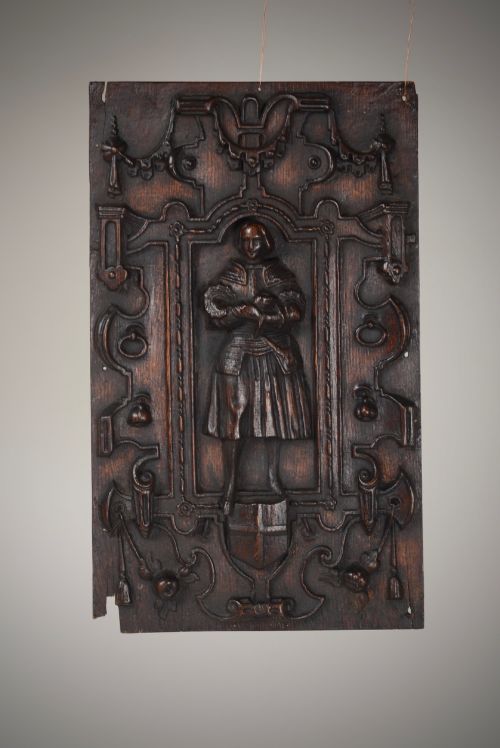
Object forms vary widely from architectural brackets, caryatid pedestals, and panels to standalone animal statues and painted wooden panels.
Distinctions in quality
Quality rests on the crispness of the carving and the depth of the relief work, where skilled handling of facial expressions and drapery separates master carvers from naive provincial work. Proportion and anatomical understanding distinguish refined sixteenth and seventeenth-century liturgical figures from later decorative copies.
The integrity of the timber also determines worth, as original sixteenth or seventeenth-century surfaces with unbroken patination hold greater interest than pieces subjected to heavy later re-carving or chemical darkening. The sophistication of the regional style, from Flemish baroque panels to Upper Rhine Gothic figures, guides the aesthetic weight of the object.
The Dark Oak Figure Glossary
- Caryatid
- A carved architectural figure acting as a support in place of a column or pier. These structural elements frequently appear supporting cornices or shelves.
- Ecclesiastical
- Relating to the Christian Church, describing wood carvings salvaged from religious buildings, choir stalls, or altarpieces. These pieces often depict saints, angels, and biblical scenes.
- Gothic Revival
- An architectural and decorative style popular during the nineteenth century that imitated medieval forms. Pieces in this aesthetic draw heavily on fourteenth and fifteenth-century motifs.
- Pieta
- A subject in Christian art depicting the Virgin Mary cradling the dead body of Jesus. Medieval examples in dark oak form significant sculptural fragments.
- Terminating figure
- A architectural carving that tapers toward the base, often used as a terminal bracket or furniture support. They frequently take grotesque or figural forms.
Dark Oak Figure: Frequently Asked Questions
How do I date a dark oak figure?
Dating relies on tool marks, style, timber shrinkage, and the nature of the patination built up over centuries. Earlier pieces from the sixteenth and seventeenth centuries show hand-adzed surfaces and deep oxidation.
Later nineteenth-century revival items often exhibit machine assistance or crisper, less worn edges while mimicking earlier Gothic or Renaissance styles.
Were these figures always freestanding?
Many surviving figures were originally attached to larger structures such as church altars, architectural paneling, furniture, or hall stands. Architectural salvage pieces often functioned as shelf brackets, terminals, or overdoors rather than standalone sculptures.
Freestanding devotional statues and animal ornaments form a smaller portion of the available historic forms.
How should I clean historic oak carvings?
Historic oak requires minimal intervention to preserve the original patina and wax finish accumulated over generations. Light dusting with a dry, soft cloth is sufficient for routine maintenance.
Avoid using water, modern detergents, or silicone polishes, which can penetrate the grain and damage the historic surface.
What regions produced these wood carvings?
Surviving examples originate across Europe, with significant numbers stemming from Flemish, German, Italian, and British workshops. Regional preferences influence the style, such as German Gothic church figures or Flemish Baroque architectural panels.
Folk art interpretations also appear from British and continental makers.