




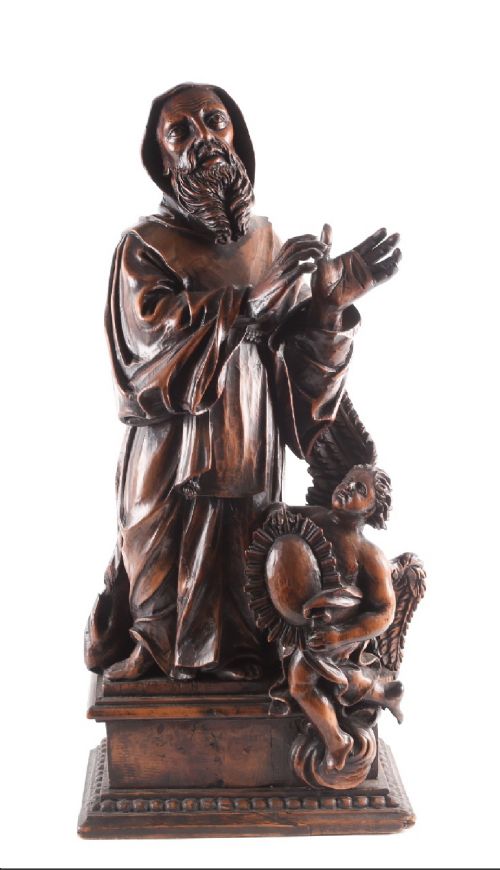
18th Century Oak Sculpture
18th century oak sculpture brings substantial timber and deep grain into a room, offering genuine historical weight.
18th Century Oak Sculpture
When you search for 18th century oak sculpture, you encounter heavy wooden carvings originating from religious, domestic, and decorative contexts across Europe. These pieces range from substantial life-size figures and wall plaques to architectural pedestals and ecclesiastical lecterns.
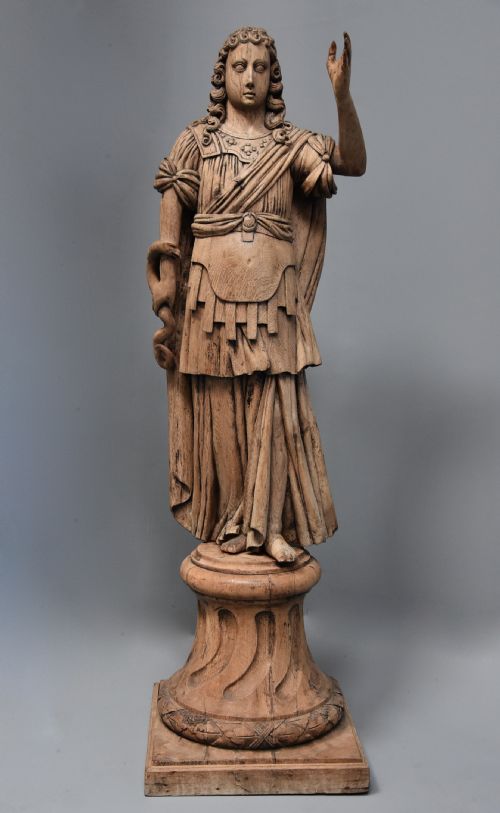
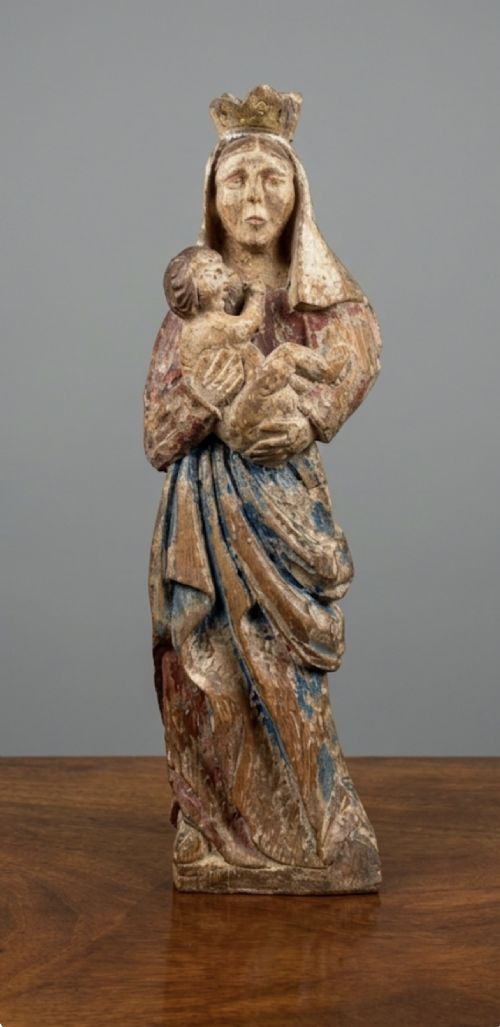
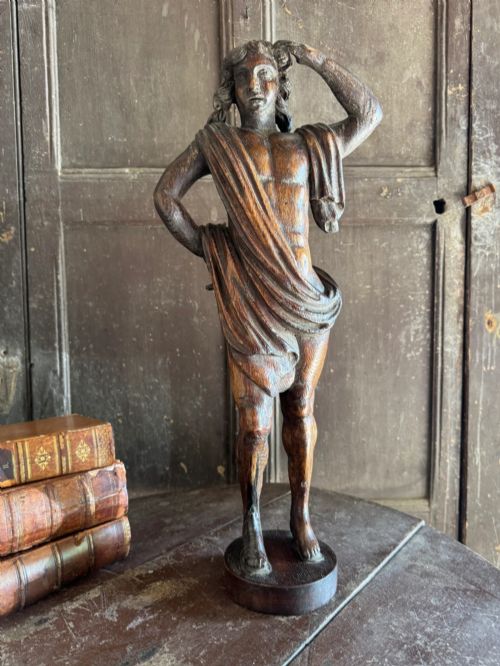
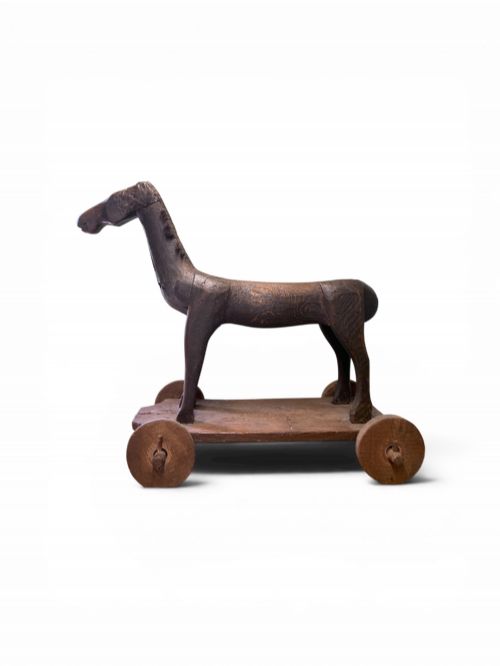
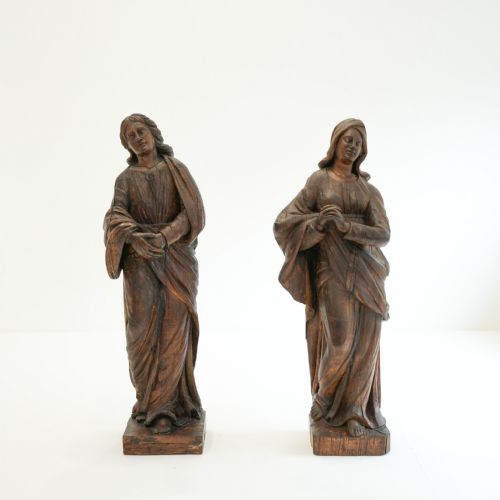
The objects on this page predominantly reflect religious subjects, saints, and classical figures, alongside folk art representations of animals and heraldic crests. Continental and English workshops produced these works, utilising timber for both structural support and detailed relief carving.
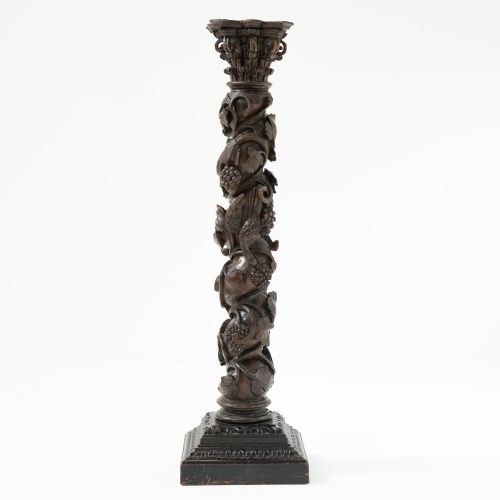
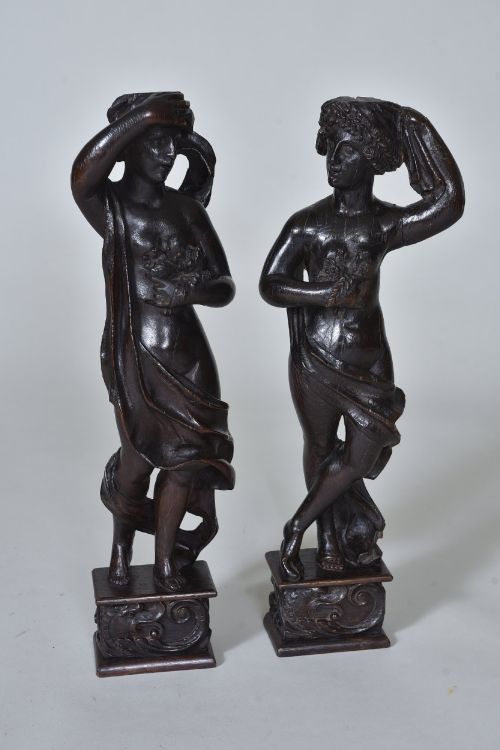
Buyers frequently find figures of saints, cherubs, and classical deities alongside architectural elements like Solomonic columns. The selection spans the span of the 1700s, showing both refined European classicism and naive folk interpretations.
How They Were Made
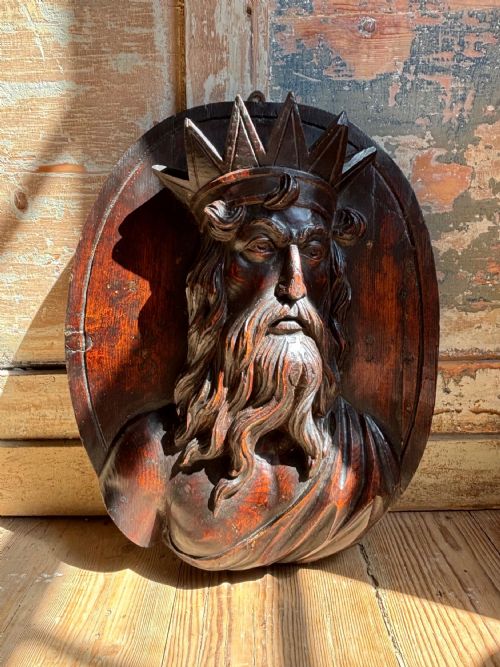
Carvers shaped these pieces directly from solid oak timber and hardwood using chisels and gouges to create deep relief panels and fully rounded figures. The natural density of the wood dictated the depth of the carving and the scale of the finished sculpture.
Some surfaces received applications of gesso and polychrome paint, adding colour and detail to figures of Mary, Jesus, and various saints. Other items relied purely on the dark grain and polished finish of the raw wood.
Materials across the selection range from plain carved oak and hardwood to surfaces finished with gesso and polychrome paint.
What Varies in Quality
Scale and survival condition also differentiate the items, particularly with large life-size figures and monumental architectural fragments that required substantial blocks of prime timber. Intact polychrome surfaces or original gesso layers add significant character compared to stripped wood.
The 18th Century Oak Sculpture Glossary
- Polychrome
- Painted in several colours. This surface treatment was frequently applied to wooden religious figures to enhance realism.
- Gesso
- A plaster-like mixture applied to wood as a base for paint or gilding. It provides a smooth surface for fine detail work.
- Solomonic
- A helical twisting column shape. This architectural form appears on decorative pedestals from the period.
- Ecclesiastical
- Relating to the Christian Church. Many surviving wooden sculptures originated in chapels and monastic settings.
- Armorial
- Relating to heraldry and coats of arms. These carved displays denoted family lineage or royal authority.
18th Century Oak Sculpture: Frequently Asked Questions
Where were these sculptures kept?
Most of these carved wooden pieces originated in churches, chapels, and large domestic residences across Europe.
Religious figures and lecterns served liturgical functions, while plaques and crests decorated wood-panelled rooms.
How do I identify folk art pieces?
Folk art and naive carvings display simpler proportions and less formal anatomical detail than classical European works.
These sculptures often depict animals or local subjects with direct, unpretentious charm rather than academic precision.
How should I care for old oak?
Keep wooden sculptures away from direct heat sources and sudden humidity changes to prevent the timber from splitting.
Dust gently with a dry cloth and avoid applying modern polishes that can build up on porous historic surfaces.