





Ecclesiastical Oak Chairs
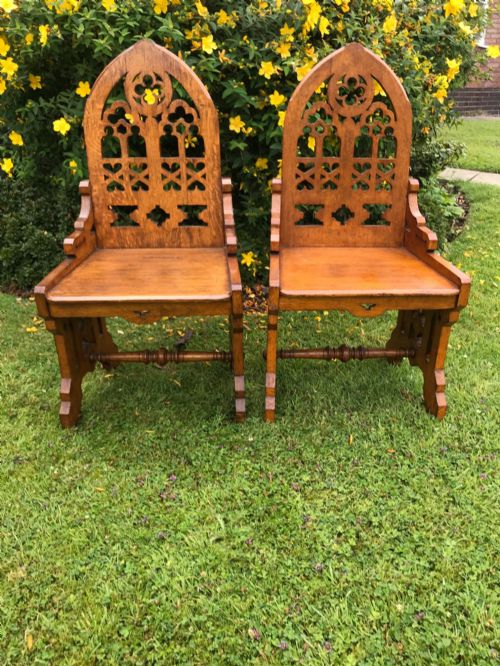
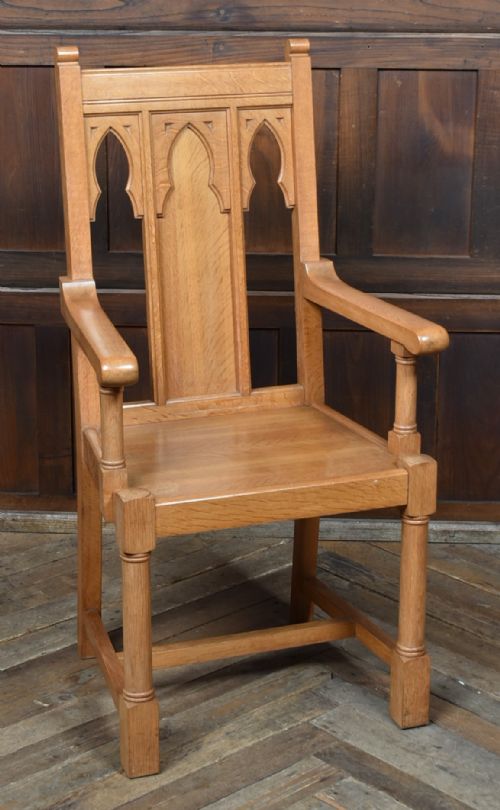
These ecclesiastical oak chairs bring serious architecture indoors, built from solid timber to anchor a room with centuries of heavy design.
Materials and construction
Solid timber forms the foundation of these pieces, with oak dominating the construction alongside occasional accents of walnut, brass and metal. Craftsmen utilised traditional joinery to build frames capable of enduring centuries of heavy daily use in religious settings.
Surface decoration relies on deep carving, engraved plaques, gold leaf highlights and inscribed markers indicating specific cathedrals or chapels. Seating surfaces frequently incorporate rush or fabric, completing constructions meant to project solemnity and endurance.
What separates the finest pieces
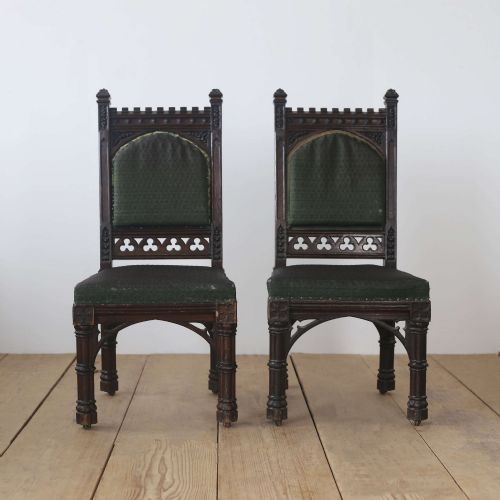
Quality rests in the crispness of the Gothic detailing and the integrity of the structural timber. Superior examples display deeply carved tracery, well-defined trefoils and authentic ecclesiastical markings that tie the chair directly to a known cathedral or chapel.
The age of the timber and the honesty of the construction determine the standing of a piece within the range. Pieces retaining their original finish, uncompromised joinery and intended seating materials stand firmly at the upper echelon.
Ecclesiastical Oak Chairs Retail Price Guide 2026
Typical asking prices for ecclesiastical oak chairs among the pieces listed under this phrase on Sellingantiques today, from the lower quarter to the upper quarter. They describe what is for sale here now, not the wider market.
Some pews and chairs carry the literal scars of history, retaining the exact marks where centuries of worshippers rested their elbows.
The Ecclesiastical Oak Chairs Glossary
- Glastonbury chair
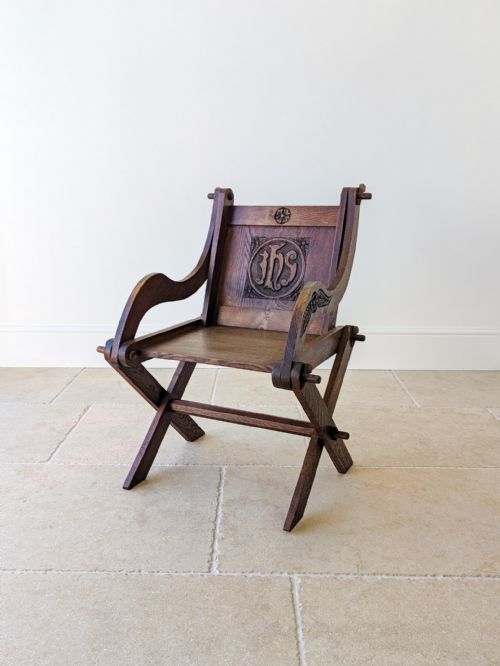
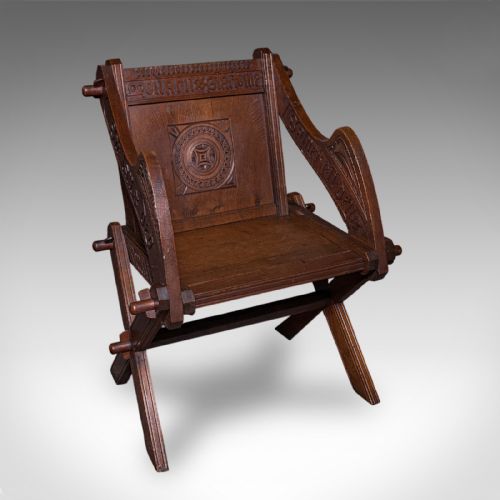
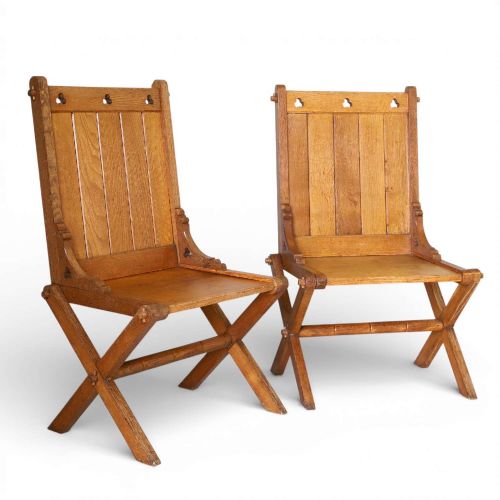
- A traditional folding armchair design with an X-frame base and sloping arms, heavily favored by Victorian makers interpreting medieval church seating.
- Prie-dieu
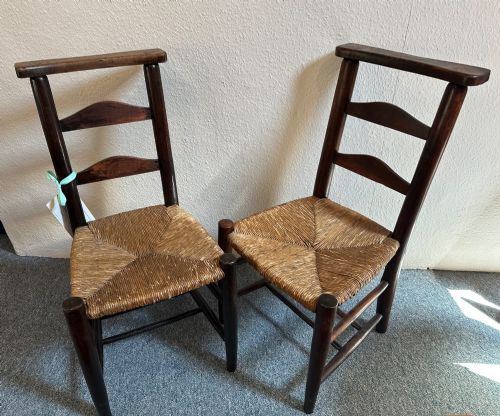
- A specialised prayer desk or chair featuring an upper ledge for kneeling or resting books during devotion.
- Trefoil
- A three-lobed decorative ornament resembling clover leaves, frequently pierced through the wooden backs of Gothic Revival seating.
- Tracery
- Architectural stonework-style ornamentation translated into woodwork, often seen tracing pointed arches on chair backs.
- Pre-reformation
- Pertaining to the period in English history before the 16th-century religious changes, denoting immense age and scarcity in surviving church furniture.
Ecclesiastical Oak Chairs: Frequently Asked Questions
How do I style an ecclesiastical chair at home?
These imposing seats work best as single accent pieces in hallways, studies or large living spaces where their architectural lines can stand clear of clutter.
Allow the heavy timber and Gothic details to command the corner without crowding the piece with too many surrounding ornaments.
Were these chairs actually used in churches?
Many examples were commissioned specifically for cathedrals, chapels and monastic settings, occasionally bearing physical proof such as inscribed metal plaques or cathedral markings.
Others were built during the 19th-century Gothic Revival for domestic use in the ecclesiastical taste popular among Victorian collectors.
What is a Glastonbury chair?
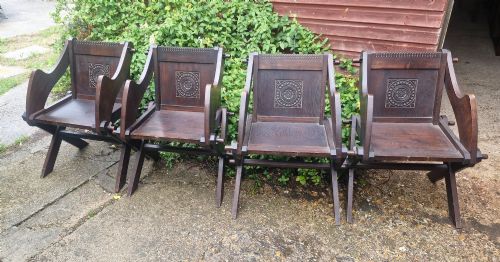
A Glastonbury chair is a distinct form of wooden armchair characterised by an interlocking X-frame base, a slanted panel back and wide flat arms.
Originating as a medieval design, it was widely reproduced by Victorian makers during the Gothic Revival movement.
How do I care for antique oak furniture?
Keep wooden ecclesiastical seating away from direct heat sources and sudden temperature fluctuations to prevent the solid oak from splitting or warping.
Feed the timber occasionally with a quality wax to maintain the finish without building up heavy chemical layers.