




Ebony Writing Box
An ebony writing box brings deep, dark timber and meticulous craftsmanship to a desk, offering a portable workspace shaped by Victorian and Regency hands.
Ebony Writing Box
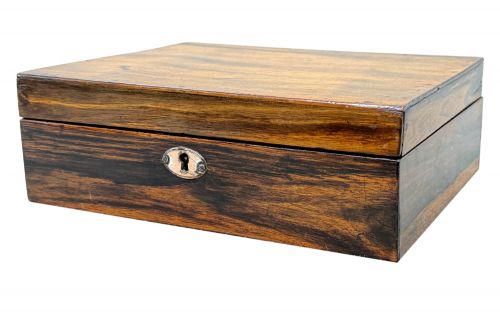
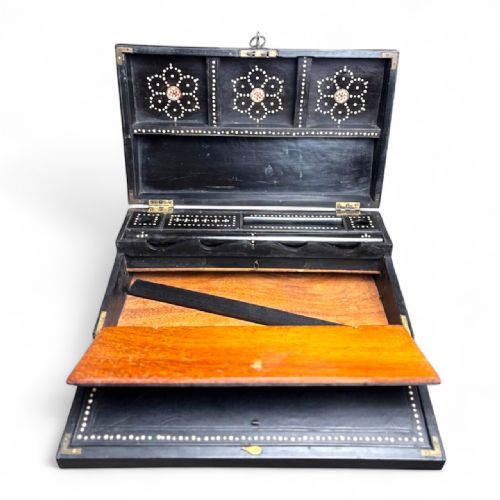
An ebony writing box is a portable desk designed for correspondence, featuring a hinged slope that opens to reveal compartments for ink, pens and stationery. When you search for an ebony writing box, you encounter pieces originating from nineteenth-century Britain, the Victorian era, and the Regency period.
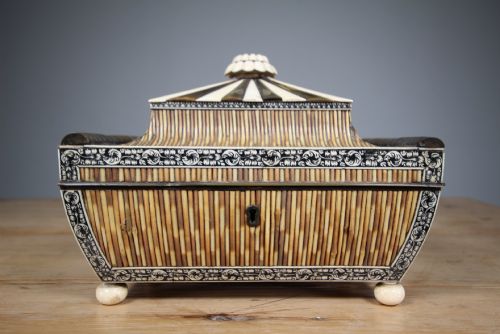
Many examples reflect Anglo-Indian or Ceylonese craftsmanship, originating from regions such as Ceylon and Sri Lanka. These boxes often take rectangular or sarcophagus forms, serving both as functional writing slopes and decorative caskets for letters and valuables.
How they were made
Cabinetmakers constructed these boxes using dense tropical hardwoods, chiefly ebony, often paired with coromandel, satinwood or boxwood for interior fittings and contrast. Some Ceylonese examples incorporate porcupine quill alongside the dark wood to create striking geometric patterns on the exterior lid and sides.
Surface decoration relies on precision inlays of bone or ivory, alongside reeded mouldings carved directly into the solid timber. Brass mounts, campaign handles and escutcheons are integrated to reinforce corners and secure the box during travel.
Ebony Writing Box Retail Price Guide 2026
Typical asking prices for ebony writing box among the pieces listed under this phrase on Sellingantiques today, from the lower quarter to the upper quarter. They describe what is for sale here now, not the wider market.
Listings for ebony writing box forms span the Regency and Victorian periods, incorporating materials such as porcupine quill, coromandel and satinwood.
What varies in quality
The choice of secondary woods within the interior, such as satinwood or coromandel compartments, shifts the character of the piece. Solid ebony construction throughout indicates a more ambitious commission than veneered alternatives.
The Ebony Writing Box Glossary
- Writing slope
- A portable box with an angled writing surface that folds flat when closed. It typically lifts to reveal hidden storage for letters and documents.
- Porcupine quill
- Quills extracted from porcupines and arranged in intricate geometric mosaics across the exterior of Ceylonese boxes. This technique creates a textured, contrasting surface against the dark ebony wood.
- Reeded decoration
- Parallel rounded mouldings carved directly into the surface of the timber. This adds linear texture and catches the light along the edges of the box.
- Campaign box
- A sturdy portable desk fitted with brass corners and recessed handles designed for travel. These elements protected the box during military or colonial transit.
- Sarcophagus form
- A box shape featuring a stepped, domed lid reminiscent of classical stone sarcophagi. This silhouette was popular during the Regency period for larger caskets and writing boxes.
Ebony Writing Box: Frequently Asked Questions
What is an ebony writing box?
An ebony writing box is a portable desk made from dark tropical timber, designed to hold stationery, inkwells and correspondence materials. These boxes fold shut into secure caskets for travel or desktop use.
Originating largely in the nineteenth century, they reflect both British cabinetmaking and colonial workshops in regions such as Ceylon and India. Their dark surfaces often feature contrasting inlays and brass hardware.
How were writing boxes used in the nineteenth century?
People used these boxes as portable desks before fitted studies and permanent writing tables became standard in every home. The hinged lid opened to form an inclined writing surface lined with leather or velvet.
Inside, dedicated compartments held quill pens, ink bottles, sanders for drying ink, and personal papers. The boxes locked securely to protect private letters and valuables.
How do I tell a Regency box from a Victorian one?
Regency writing boxes often display architectural forms such as sarcophagus shapes, alongside restrained brass stringing and reeded decoration. They date from the early nineteenth century and lean toward classical lines.
Victorian examples frequently incorporate heavier colonial influences, including porcupine quill work, extensive bone inlay, and solid ebony construction. The stylistic shift moves from neoclassical restraint to ornate, decorative surfaces.
What is an Anglo-Indian writing box?
An Anglo-Indian writing box is an antique piece made in the Indian subcontinent or Ceylon during British rule, combining local materials with European furniture forms. They utilise dense local woods like ebony and satinwood.
Local artisans applied traditional carving and inlay techniques, such as geometric bone work or intricate quill patterns, onto portable desk structures suited for British officers and merchants.
How do I care for antique ebony wood?
Keep antique ebony away from direct sunlight and sudden temperature changes to prevent the dense timber and internal veneers from drying out. Stable indoor humidity preserves both the wood and any delicate ivory or bone inlay.
Dust the surface gently with a soft, dry cloth. Avoid commercial liquid polishes, which can build up in the carved reeding and intricate inlay work.