


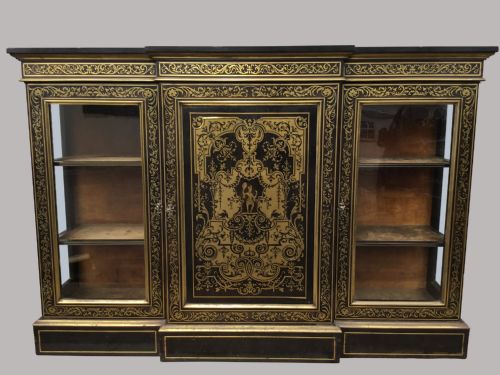


Ebony Inlaid Display Cabinet
An ebony inlaid display cabinet brings dark timber and striking contrast to a room, offering a disciplined frame for treasured possessions.
Ebony Inlaid Display Cabinet
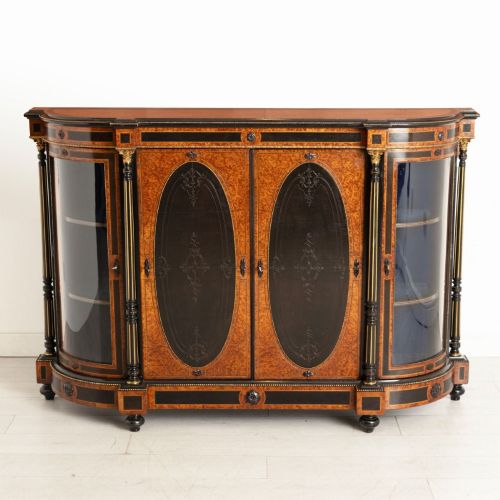
An ebony inlaid display cabinet stands as a formal piece of furniture designed to house and exhibit fine objects behind glass doors. Buyers searching for an ebony inlaid display cabinet encounter forms ranging from compact pier cabinets to larger Victorian side cabinets and French credenzas.
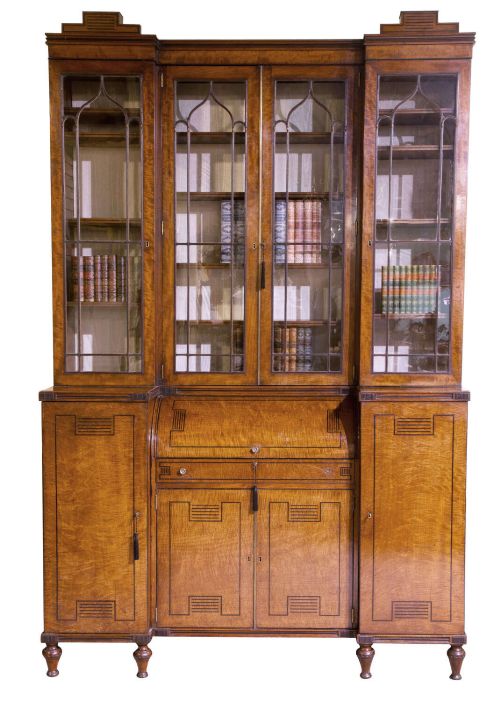
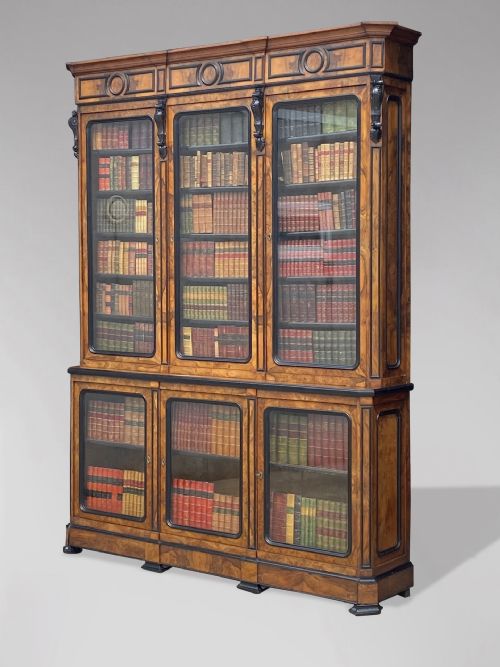
The material vocabulary centres on deep ebony, frequently paired with burr walnut, rosewood, and oak across periods including the seventeenth century, the Regency era, and the Victorian epoch. Dutch Baroque and French Second Empire or Napoleon III influences appear frequently in the surviving examples.
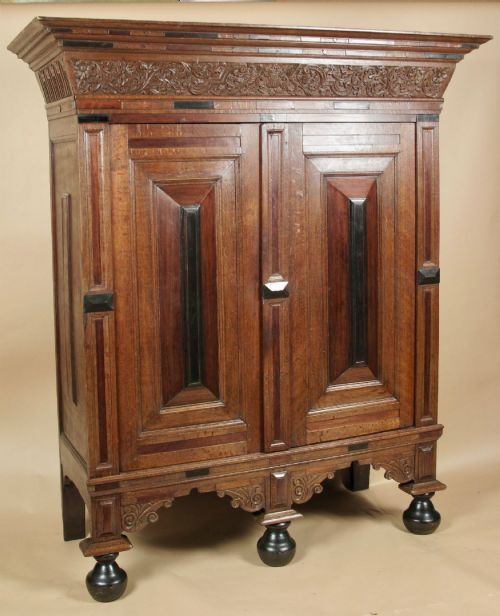
Most items meeting this search on the page belong to the nineteenth century, particularly the eighteen-sixties and eighteen-eighties, alongside occasional seventeenth-century armoires and side cabinets.
How they were made
Cabinet makers utilised dense timbers such as ebony, walnut, and rosewood, building carcases from sturdy oak or softer secondary woods before applying choice veneers. Inlay work incorporated contrasting brass and exotic woods to create geometric or floral patterns across the front panels and friezes.
Glazing techniques required secure framing to support large glass panes within cabinet doors, while decorative metal mounts in ormolu frequently accentuated corners, pilasters, and cornices. Boulle work, combining tortoiseshell and brass inlay, appears on select French examples from the nineteenth century.
Ebony Inlaid Display Cabinet Retail Price Guide 2026
Typical asking prices for ebony inlaid display cabinet among the pieces listed under this phrase on Sellingantiques today, from the lower quarter to the upper quarter. They describe what is for sale here now, not the wider market.
Listings feature pieces from the 17th century through to the late 19th century, constructed in ebony, burr walnut, rosewood, oak, and amboyna.
What varies in quality
The refinement of the timber selection dictates much of the distinction, separating cabinets with lively burr walnut figures and deep ebony borders from plainer constructions. Precision in the marquetry and inlay work reveals the hand of the maker, where tight joints and clean lines signal careful workshop execution.
Proportion and architectural balance define the upper tier of these cabinets, alongside the integration of original glass, internal shelving, and mounts such as ormolu or brass.
The Ebony Inlaid Display Cabinet Glossary
- Boulle
- A form of marquetry utilising brass and tortoiseshell inlay, popularised in seventeenth-century France and revived during the nineteenth century. This technique creates a rich metallic sheen against dark backgrounds.
- Ormolu
- Gilded bronze used for decorative mounts and furniture feet. The finish adds bright metallic contrast to dark woods like ebony and walnut.
- Pier Cabinet
- A narrow display cabinet designed to fit the wall space between windows. These pieces often feature glazed doors and delicate inlay.
- Credenza
- A large sideboard or display piece equipped with central cupboards and flanking glazed compartments. It serves as both storage and a surface for display.
- Burr Walnut
- Timber taken from the warted growths of walnut trees, yielding complex swirling grain patterns. It is frequently used as a veneer on Victorian cabinets.
Ebony Inlaid Display Cabinet: Frequently Asked Questions
Where should I place an ebony inlaid display cabinet?
These cabinets suit reception rooms, libraries, or studies where their dark timber and glass panels can be appreciated away from direct sunlight. Positioning them against a neutral wall helps the ebony and inlay work stand out.
Ensure the floor is level so the doors hang true and the glass remains under no structural stress. Adequate clearance allows doors to open fully for arranging contents.
How do I care for the ebony and inlay?
Maintain the timber with appropriate wax polish applied sparingly, rubbing it gently with the grain to preserve the sheen of the ebony and walnut. Avoid modern aerosol sprays containing silicones that can penetrate aged finishes.
Keep the cabinet away from radiators and temperature fluctuations to prevent the wood or veneer from shrinking and lifting. Dust glass panels with a soft, dry cloth.
What periods do these cabinets represent?
The selection spans from seventeenth-century Dutch examples, such as heavy kussenkast armoires in oak and ebony, through Regency pieces, up to numerous Victorian interpretations.
Nineteenth-century French Napoleon III and Second Empire pieces also feature prominently, often incorporating Boulle work and brass inlay.
How do I identify Boulle work?
Boulle work consists of intricate brass and tortoiseshell inlay set into a dark ground, typically ebony. It creates a shimmering, reflective surface pattern across cabinet doors and friezes.
This decorative technique requires close inspection to appreciate the precision of the cut metal and shell elements.