

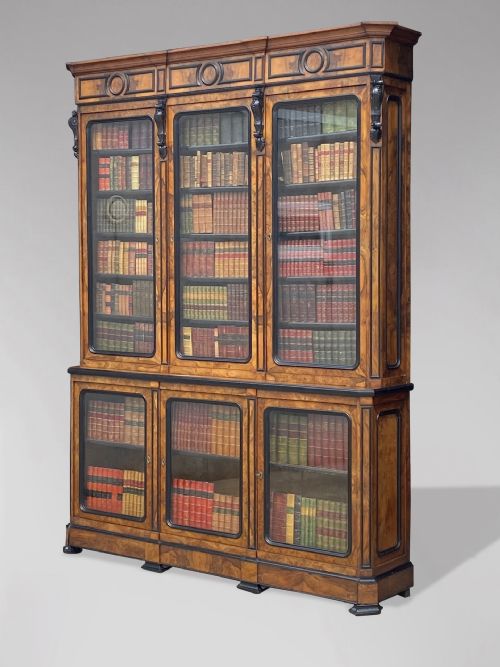


Ebony Glazed Cabinet
An ebony glazed cabinet brings dark timber tones and glass fronts together to display books and treasured objects.
Ebony Glazed Cabinet
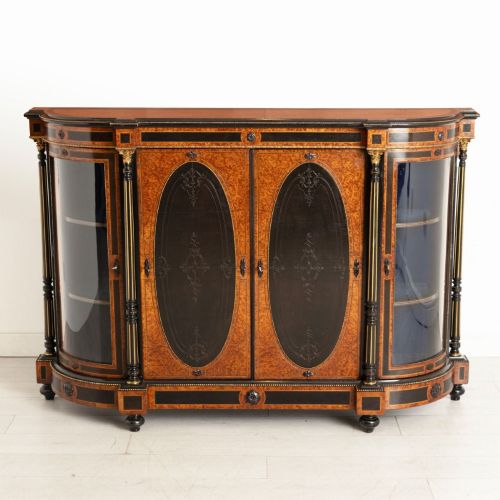
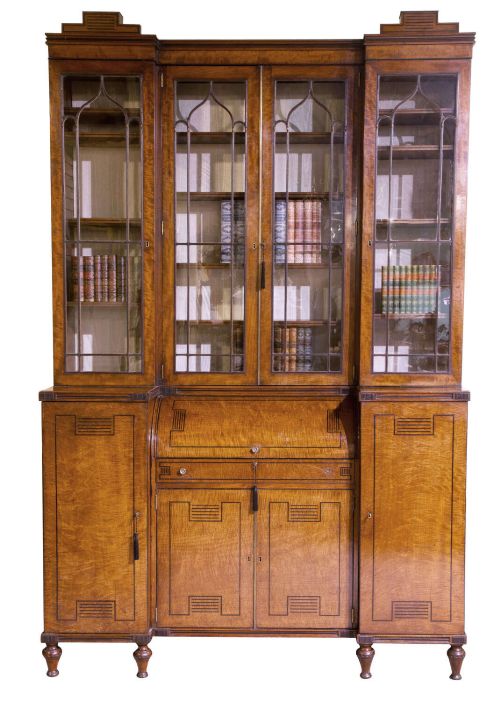
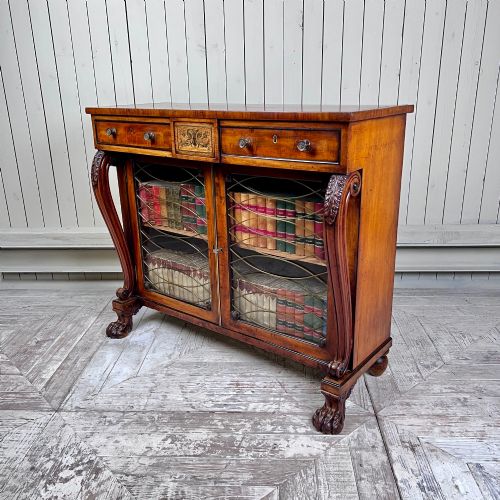
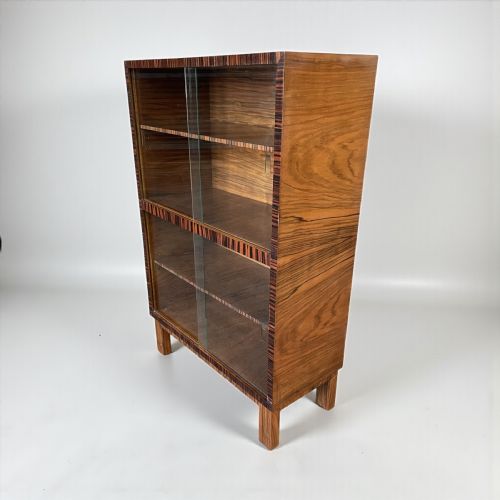
When you search for an ebony glazed cabinet, you encounter pieces spanning the Regency, Victorian, and Art Deco periods, alongside Dutch Colonial and French Second Empire examples. The forms on offer include bookcases, display cabinets, pier cabinets, sideboards, credenzas, and side cabinets.
The most common versions met on this page are Victorian pieces featuring burr walnut, mahogany, and ebonised wood combined with glass doors. These items served historically to store and exhibit prized possessions in the principal rooms of grand houses.
Makers utilised contrasting stringing and inlays of brass and exotic timbers to break up the dark surfaces of these cabinets. The resulting furniture ranges from compact pier cabinets designed for narrow wall spaces to large library bookcases built to house substantial collections.
Materials and construction
Makers built the carcases of these cabinets using solid hardwoods like mahogany and walnut, frequently applying fine veneers such as burr walnut to the main visual surfaces. Ebonised wood and solid ebony provided a deep black finish that served as a dramatic backdrop for gilt mounts and brass inlays.
Glass panels were secured within wooden frames to protect the interior contents from dust while maintaining visibility for display purposes. Ormolu mounts and brass stringing added metallic highlights that complemented the dark timber grain and polished surfaces.
Ebony Glazed Cabinet Retail Price Guide 2026
Typical asking prices for ebony glazed cabinet among the pieces listed under this phrase on Sellingantiques today, from the lower quarter to the upper quarter. They describe what is for sale here now, not the wider market.
Samuel Pepys makes an unexpected historical cameo in a Dutch Colonial cabinet description on this page.
Assessing quality and finish
The standard of the timber selection and veneer matching defines the upper tier of these cabinets. Superior examples display carefully chosen burr walnut or rich mahogany figures that align symmetrically across the doors and drawers.
Refinement in the brass inlay, ormolu mounts, and hand-cut marquetry separates ordinary production from exceptional work. Finer cabinets also retain their original glass panes and well-fitted internal shelving systems without awkward modifications.
The Ebony Glazed Cabinet Glossary
- Ebonised wood
- Timber treated with a dark stain or finish to imitate solid ebony. This technique was popular during the nineteenth century for achieving a uniform black appearance on cheaper woods like beech or fruitwood.
- Ormolu
- Gilt bronze ornamentation applied to furniture mounts and decorative details. The technique involves treating bronze with a gold amalgam and heating it to leave a rich metallic layer.
- Pier cabinet
- A narrow display piece designed to fit the wall space between windows. These cabinets typically feature a glazed door and compact proportions suited to smaller drawing room locations.
- Credenza
- A low sideboard or cabinet used for serving food or displaying decorative objects. Victorian examples often incorporate glass doors and marquetry inlay.
- Marquetry
- Decorative veneer work arranged in pictorial or geometric patterns using various coloured woods. Craftsmen cut contrasting timbers to fit precisely into a prepared background.
Ebony Glazed Cabinet: Frequently Asked Questions
What is an ebony glazed cabinet used for?
These cabinets were designed to store books, ceramics, and ornaments while keeping them visible through glass doors.
Today, they serve the same function in domestic interiors, offering enclosed display space that protects delicate items from dust.
Are the shelves adjustable in these cabinets?
Many nineteenth-century bookcases and display cabinets feature adjustable shelving supported by rack-and-pinion or wooden tooth systems.
Archive records and current listings specifically note adjustable sets of bookshelves in taller pier display vitrines.
How do I care for ebonised wood?
Ebonised surfaces require gentle cleaning with a soft, dry cloth to prevent dust accumulation without stripping the dark finish.
Avoiding direct sunlight and excessive moisture preserves both the polished timber and any delicate brass inlays.