

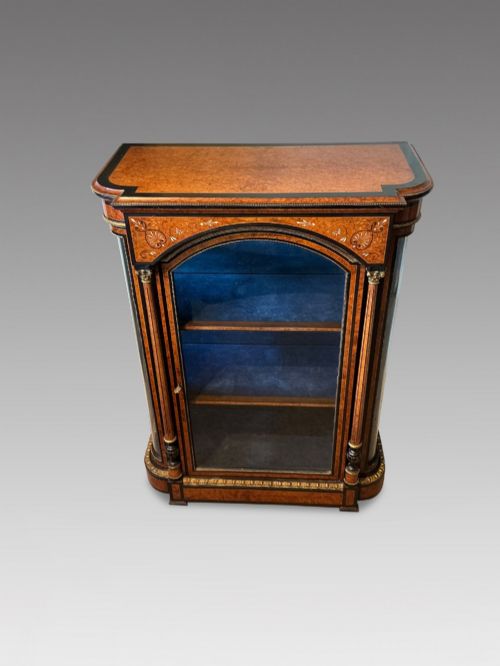


Victorian Burr Walnut Vitrine
A Victorian burr walnut vitrine brings warmth and elegance to any room, offering refined glazed display for prized possessions.
Victorian Burr Walnut Vitrine
When you search for a Victorian burr walnut vitrine, you encounter pieces designed primarily for the display and protection of fine ornaments and books. These cabinets typically take the form of pier cabinets or glazed display bookcases, constructed during the nineteenth century.
The versions most frequently met on this page belong to the Victorian period, spanning decades from the mid to late nineteenth century. Alongside these, examples with Regency influences and French Chateau styles appear, reflecting the eclectic tastes of the era.
The forms range from single pier cabinets to large pairs of display cabinets, often featuring glazed doors and tall proportions suitable for nineteenth-century reception rooms. Walnut, burr walnut and figured walnut provide the primary visual character across these varying shapes.
Materials and construction
Makers utilised burr walnut veneers applied over solid carcases to create rich, swirling grain patterns across the front of each cabinet. Inlaid details, marquetry and ebonised wood often accent the primary timber.
Ormolu mounts in cast gilt bronze frequently frame the glass panels and corners of the furniture, adding metallic contrast to the dark wood. Brass hardware and velvet or fabric linings complete the interior and exterior detailing.
Victorian Burr Walnut Vitrine Retail Price Guide 2026
Typical asking prices for victorian burr walnut vitrine among the pieces listed under this phrase on Sellingantiques today, from the lower quarter to the upper quarter. They describe what is for sale here now, not the wider market.
The object forms span narrow pier cabinets, paired display cases, and tall bookcases featuring inlaid marquetry and fabric-lined interiors.
Assessing quality in these cabinets
The distinction between standard examples and exhibition quality pieces lies in the choice of veneers and the precision of the marquetry inlay. Cabinets with exceptionally figured burr walnut and intricate brass or ebonised stringing demand closer inspection for their superior cabinetwork.
The integration of cast ormolu mounts and the weight of the glass doors influence the overall presence of the cabinet. Higher grade items demonstrate careful matching of timber grains across the entire facade and refined finishing on all surfaces.
The Victorian Burr Walnut Vitrine Glossary
- Vitrine
- A glass-fronted display cabinet used for showcasing porcelain, curiosities and small collectables. These pieces often feature glazed sides as well as front doors.
- Burr walnut
- A specialised timber cut from the abnormal growths on walnut trees, prized for its complex, swirling grain patterns. Cabinet makers selected these veneers for the most prominent display surfaces.
- Ormolu
- Gilded bronze mounts applied to furniture for decorative effect during the nineteenth century. These metallic ornaments highlight the corners and framing of high-status cabinets.
- Pier cabinet
- A narrow cabinet designed to stand against the wall space between windows. These tall, shallow pieces suited Victorian drawing rooms where floor space was at a premium.
- Marquetry
- Decorative patterns formed by the insertion of different coloured veneers into a primary wood ground. Craftsmen used floral or geometric motifs to enrich the cabinet facades.
Victorian Burr Walnut Vitrine: Frequently Asked Questions
Where were these cabinets placed in a home?
These cabinets typically stood against narrow wall spaces between large windows, known as pier spaces, or along main drawing room walls. Their shallow depth allowed them to fit into formal nineteenth-century room layouts without obstructing walkways.
Pairs of cabinets often flanked a fireplace or filled symmetrical wall sections in larger reception rooms.
How do I care for burr walnut furniture?
Maintain burr walnut by keeping the cabinet away from direct sunlight and sudden temperature changes, which can dry out the antique veneers. Dust gently with a soft, dry cloth and avoid harsh chemical polishes.
Occasional application of appropriate wax helps preserve the sheen on the polished wood surfaces and ormolu mounts.
How do I identify the period of a vitrine?
Dating relies on examining construction methods, timber choices, and decorative styles such as Aesthetic Movement influences or French Chateau details. Nineteenth-century pieces frequently feature hand-cut dovetails, specific glass characteristics, and distinct hardware styles.
Comparing the secondary timbers inside the cabinet also helps confirm the manufacturing era.