







Pair Vitrine Cabinets
Pair vitrine cabinets are matched display furniture designed to showcase collections behind glass, spanning Victorian, Edwardian, and Art Deco periods.
Pair Vitrine Cabinets
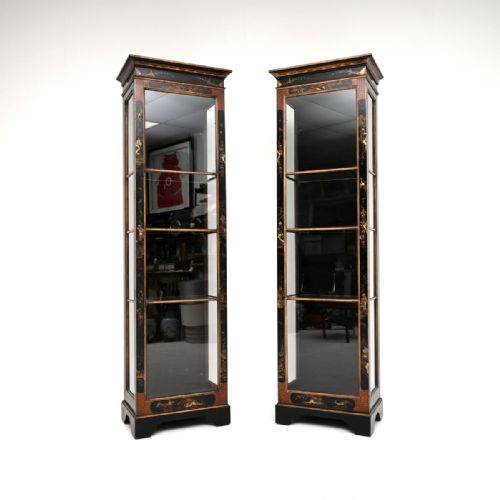
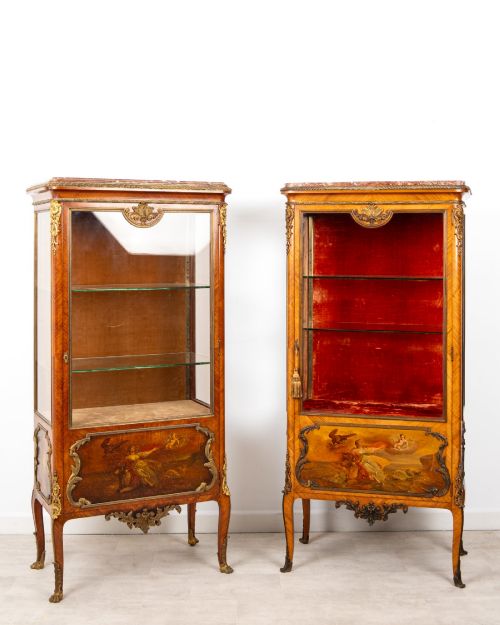
Pair vitrine cabinets encompass matched sets of glazed display furniture, including pier cabinets, corner cabinets, and larger display cases designed for symmetry in a room. These pieces originate from the nineteenth and twentieth centuries, taking forms such as French revival vitrines, Edwardian chinoiserie, and Art Deco display units.
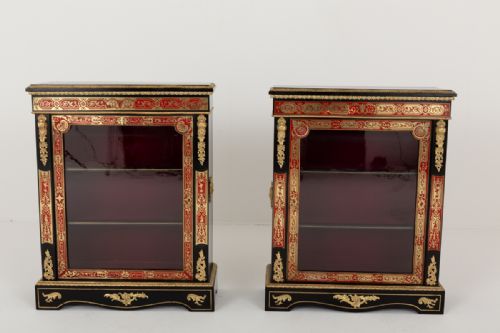
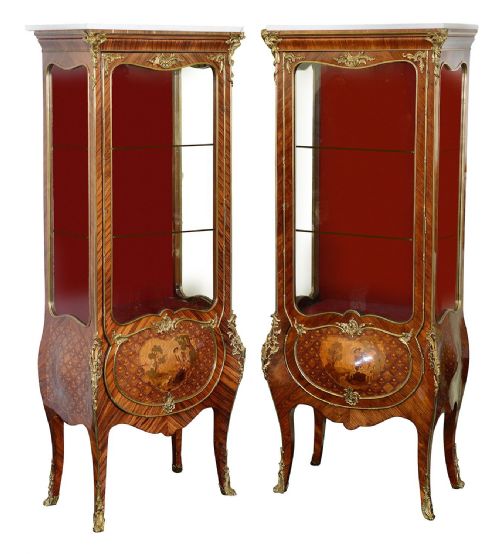
Buyers meet variations ranging from compact walnut pier cabinets with marquetry to French kingwood vitrines topped with marble and mounted with ormolu. English oak bookcases, mahogany bow top cabinets, and ebonised boulle work provide further choices within this category.
The materials span solid English oak, elm, and mahogany alongside decorative veneers such as satinwood, kingwood, tulipwood, and burr walnut. Inlays of mother of pearl, brass, and tortoiseshell appear across pieces dating from eighteen fifty to nineteen thirty.
Materials and Construction
Cabinet makers utilised structural timbers like mahogany, oak, and walnut, often applying decorative surface veneers including kingwood, satinwood, and burr walnut. Frames incorporate ebonised wood alongside brass stringing and tortoiseshell detailing.
Metalwork played a defining structural and decorative role, with cast ormolu mounts, brass banding, and glazed doors framing the display areas. French pieces frequently integrated marble tops and specialised painted panels.
Inlay techniques combined marquetry flowers, mother of pearl, and boulle work made from brass and tortoiseshell. Workshops structured these elements into architectural carcases designed to support heavy glass shelves and doors.
Pair Vitrine Cabinets Retail Price Guide 2026
Typical asking prices for pair vitrine cabinets among the pieces listed under this phrase on Sellingantiques today, from the lower quarter to the upper quarter. They describe what is for sale here now, not the wider market.
The listings feature pair vitrine cabinets spanning the Victorian, Edwardian, and Art Deco eras, constructed from walnut, mahogany, and kingwood.
Assessing Quality
Quality rests upon the precision of the cabinet work, visible in the alignment of matched veneers and the crispness of marquetry inlays. Superior examples display refined proportions and deeply cast ormolu mounts rather than mass-produced brass fittings.
The selection of timbers dictates the character of the piece, with richly figured burr walnut, kingwood, and satinwood denoting higher grades of manufacture. Secondary woods and interior linings also reflect the care taken during production.
Attribution to documented makers or retailers elevates a pair, as seen in signed pieces from established nineteenth and twentieth-century workshops. The complexity of decorative programmes, such as combined boulle work and Vernis Martin panels, distinguishes exhibition-grade examples.
Edwards and Roberts·C Hindley and Sons·Arthur Reynolds of Ludlow·Paul Somani
The Pair Vitrine Cabinets Glossary
- Vitrine
- A glass-fronted display cabinet used for exhibiting porcelain, curiosities, and fine objects. These pieces often feature glazed sides to maximise light exposure on the contents.
- Ormolu
- Gilded bronze mounts applied to furniture for decorative enrichment. This technique gained widespread use on nineteenth-century French revival pieces.
- Boulle
- A form of marquetry utilising brass and tortoiseshell inlaid in intricate scroll patterns. It is named after the master cabinet maker André-Charles Boulle.
- Marquetry
- Decorative patterns formed by fitting together thin veneers of various coloured woods and materials. Craftsmen applied these designs to the exterior surfaces of high-status cabinets.
- Pier Cabinet
- A narrow display cabinet designed to fit wall spaces between windows. Victorian examples frequently incorporate glass doors and velvet-lined interiors.
Pair Vitrine Cabinets: Frequently Asked Questions
What were pair vitrine cabinets used for?
These cabinets served primarily to display porcelain, silver, and precious collectibles within formal reception rooms. The glass panels protected delicate items from dust while allowing full visibility.
Pairs were specifically placed in rooms to create architectural symmetry, often flanking fireplaces, doorways, or windows. Their internal shelves accommodated varied collections of curiosities.
How do I date a pair of vitrines?
Dating relies upon timber selection, construction methods, and prevailing stylistic revivals. Nineteenth-century pieces frequently employ hand-cut dovetails and rich veneers like burr walnut or kingwood.
Later twentieth-century examples from the nineteen thirties introduce streamlined Art Deco lines or simpler oak structures. Hardware styles and glazing techniques also shift noticeably between Victorian and interwar periods.
Where should I place them at home?
Matched pairs require balanced wall space to preserve the symmetry intended by their makers. Drawing rooms, libraries, and wide hallways provide suitable settings for symmetrical arrangement.
Consider the lighting in the room, as glazed sides and fronts benefit from natural daylight that illuminates the interior shelves. Ensure adequate floor space so both cabinets can be opened safely.