




Ebonised Tiered Table
An ebonised tiered table delivers multiple display surfaces in a dark, dramatic finish that suits period and modern interiors alike.
Ebonised Tiered Table
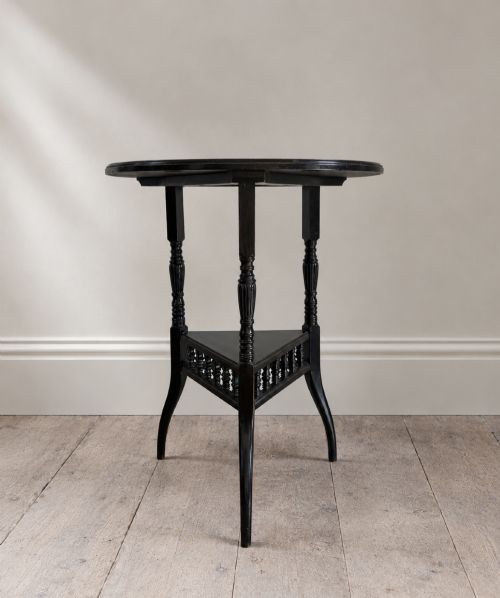
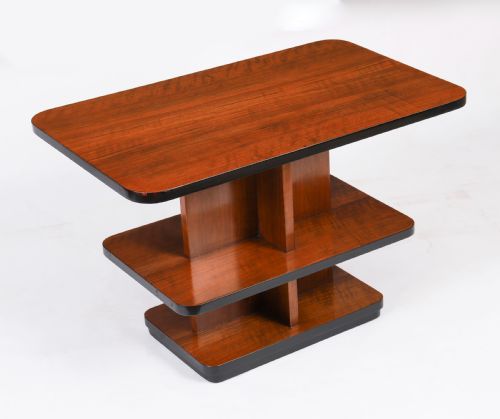
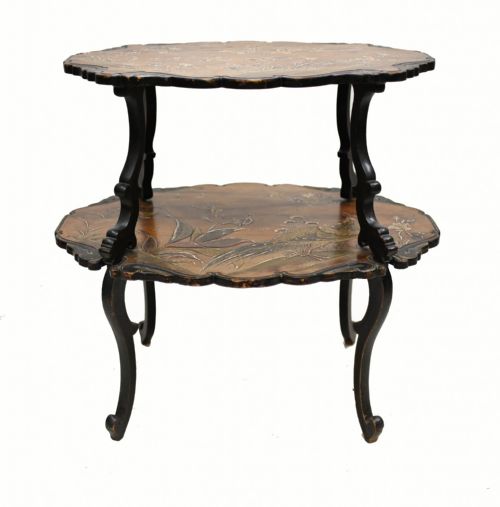
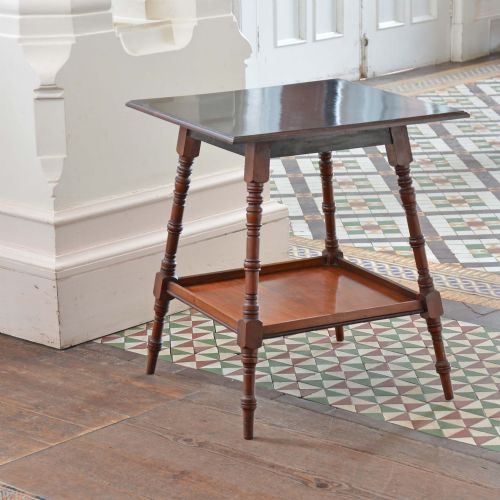
When you search for an ebonised tiered table, you encounter practical multiple-level surfaces designed to hold books, plants or ornaments without taking up excessive floor space. These pieces span several decades of the nineteenth and early twentieth centuries, drawing heavily on Victorian and Aesthetic Movement ideals.
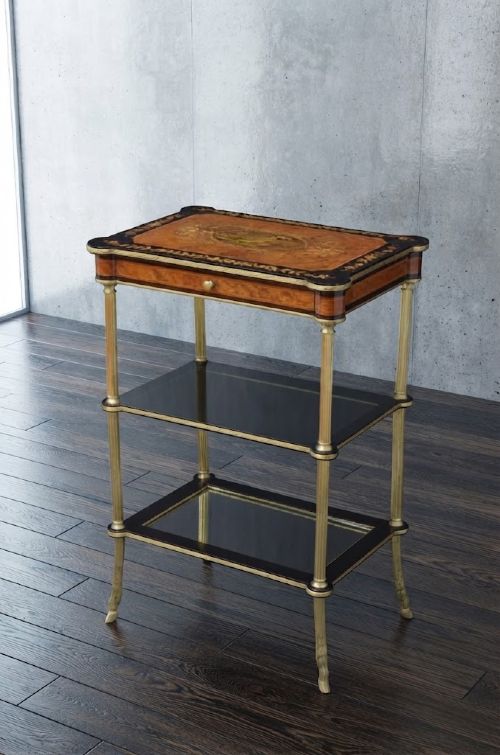
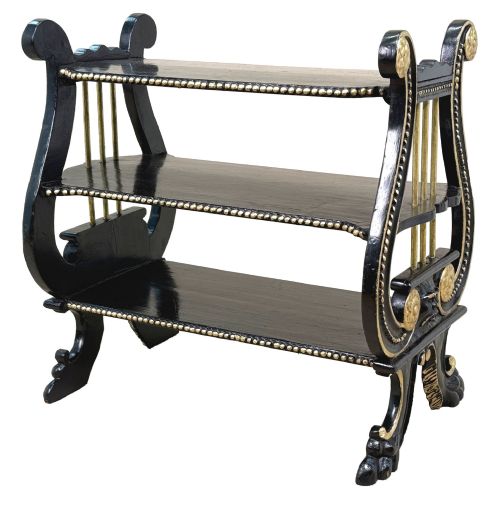
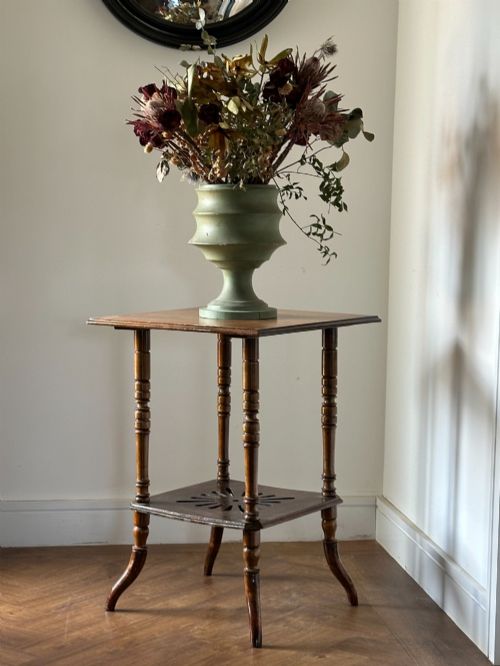
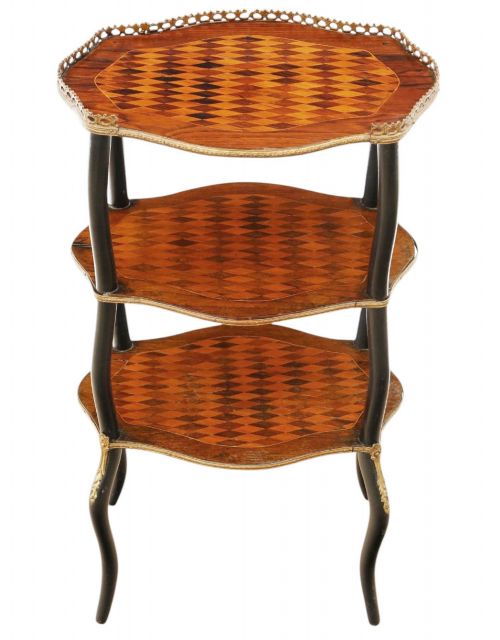
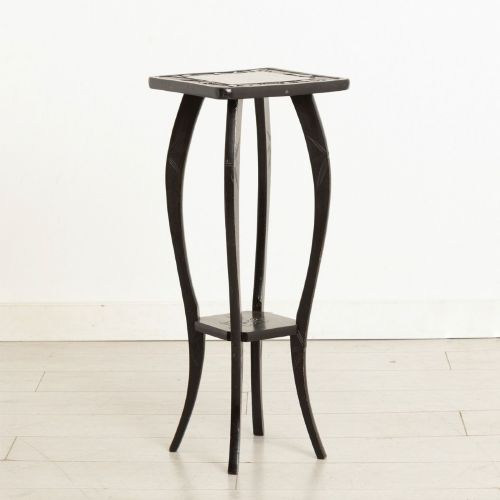
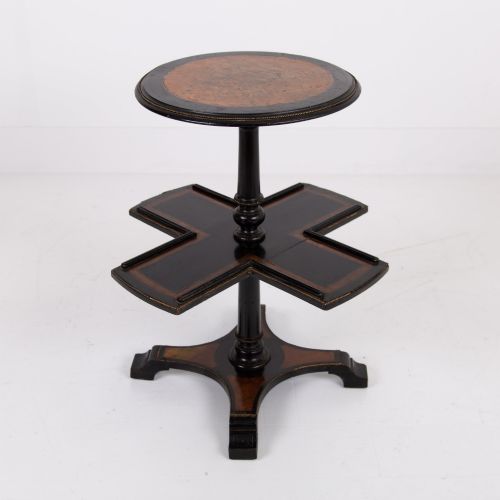
The most common forms on this page include occasional tables, etageres and whatnots featuring two or three distinct shelves linked by slender supports. Many pieces reflect Anglo-Japanese tastes or French Napoleon III design, often combining dark wood with contrasting veneers or gilt highlights.
Makers and designers of the period produced these tiered surfaces to serve specific domestic functions, from small bedside stands to larger drawing room display units. The structural layout prioritises vertical display, balancing lower weight distribution with upper platforms for ornaments.
Materials and Technique
Makers achieved the characteristic dark finish using ebonised wood, hardwood or ebonised bamboo, sometimes applying japanning or black stain to simulate costly ebony. This dark ground frequently serves as a backdrop for brass mounts, ormolu, parcel gilt details and hand-painted motifs.
Secondary timbers such as walnut, amboyna veneer, maple and mahogany appear across the tiers, often arranged in parquetry or marquetry patterns. Brass castors, sabots and gallery rails provide structural support and decorative contrast to the dark timber surfaces.
Some tables include hidden wheels or tiny brass shoes, letting your tea cups roll smoothly across the rug.
Design and Execution
The distinction between standard domestic production and superior execution lies in the precision of the joinery and the selection of secondary veneers like amboyna, burr walnut or rosewood. Fine examples display crisp carving, balanced proportions and meticulous inlay rather than simple painted decoration.
Hardware and mounts also signal distinction, where cast solid brass sabots, finely chased ormolu, and original castors indicate a workshop of higher standing. The integration of mirrored tiers, marble tops or complex fretwork separates ambitious design from utilitarian manufacturing.
Liberty of London·Bertram and Son·H Ogden of Manchester·Cottier and Co
The Ebonised Tiered Table Glossary
- Ebonised
- Wood treated with stain, dye or polish to imitate the deep black appearance of ebony. This finish became especially popular during the Victorian and Aesthetic periods.
- Etagere
- A piece of furniture consisting of several open shelves or tiers for displaying small objects or ornaments. Originating in France, these units frequently feature slender upright supports.
- Whatnot
- A multi-shelved Victorian display stand used for ornaments and books. It sits in corners or against walls to maximise vertical storage in smaller rooms.
- Aesthetic Movement
- A late nineteenth-century design style that emphasised visual beauty over narrative content. It drew inspiration from Japanese art, featuring simple geometric lines and ebonised surfaces.
- Parquetry
- Geometric wood mosaic work used for flooring, furniture tops and panels. Makers arrange contrasting timber veneers in repeating patterns across table surfaces.
Ebonised Tiered Table: Frequently Asked Questions
Where should I place an ebonised tiered table?
These tables fit well beside seating areas, in hallways or against blank walls where vertical display adds interest without crowding the floor.
The multiple levels allow you to separate items by height, placing lamps or larger objects on top and books below.
How do I clean ebonised wood surfaces?
Dust regularly with a soft, dry cloth to prevent particles from settling in the grain or carved details.
Avoid liquid cleaners or silicone sprays, using a minimal amount of appropriate wax polish only when the timber appears dry.
Are these tables sturdy enough for daily use?
Most tiered tables handle everyday items like cups and books comfortably, provided the leg joints remain tight.
Because many examples rely on slender supports, avoid placing excessively heavy items on the upper shelves.
How can I tell an Aesthetic Movement table apart?
Look for ebonised finishes combined with Anglo-Japanese motifs, bamboo elements or simple, geometric structures.
These pieces often reflect the design principles associated with makers inspired by Japanese art and interior reform.