
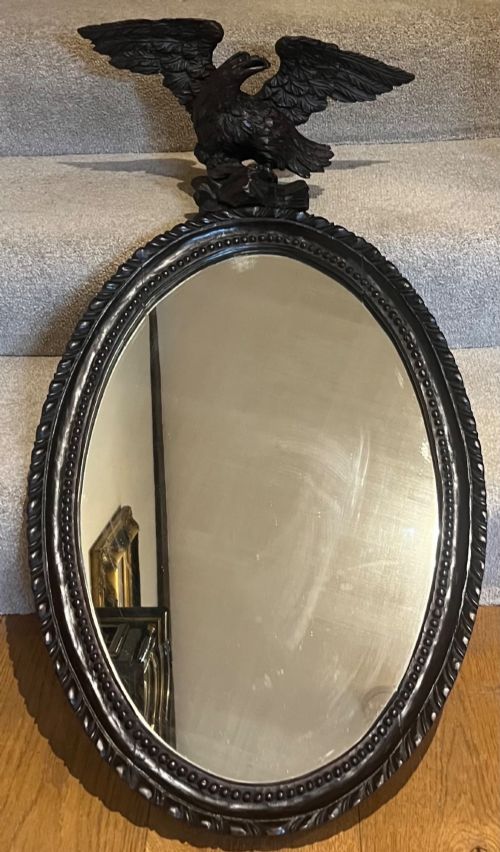

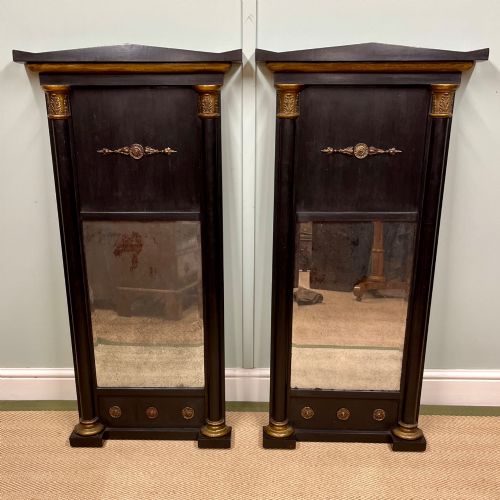


Ebonised Style Wall Mirror
An ebonised style wall mirror brings deep contrast and historical weight to a room through dark wood finishes.
Materials and construction methods
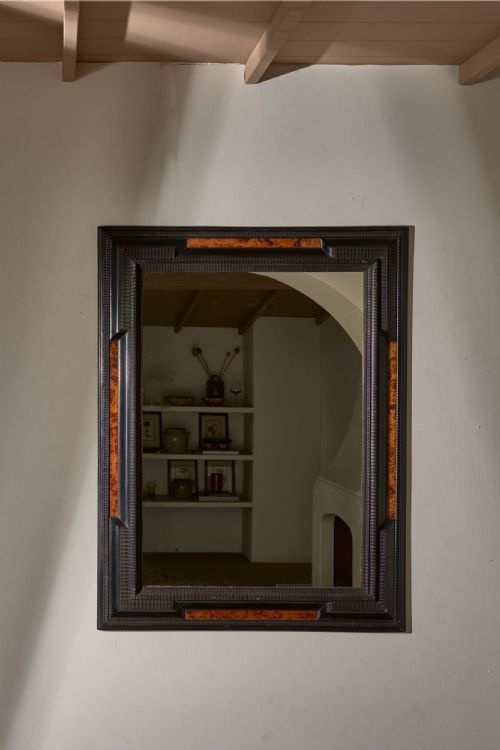
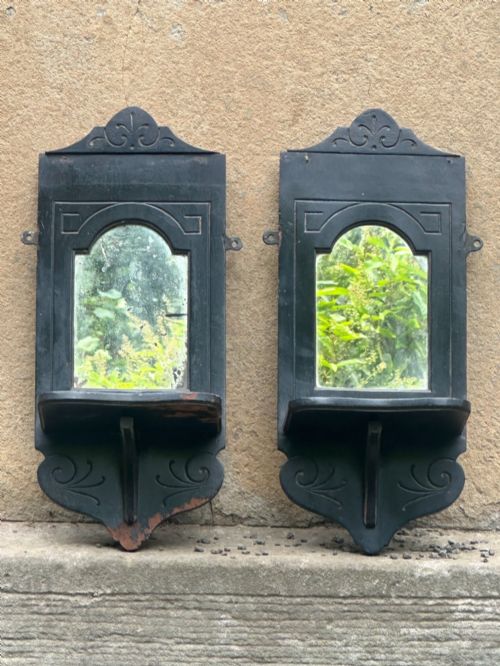
The frames rely on wood treated to imitate ebony, combined with gesso mouldings and applied mirror glass. Artisans frequently integrated giltwood, brass, and painted elements to create depth against the dark timber ground.
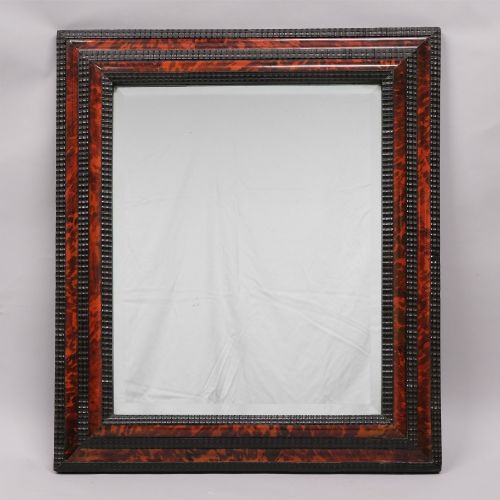
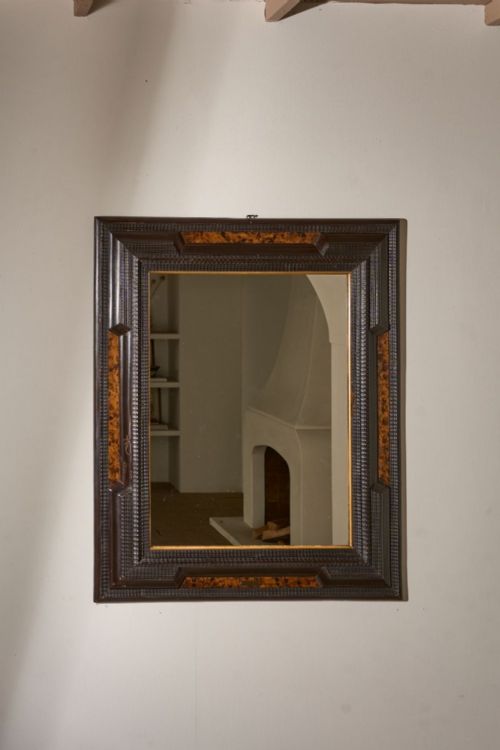
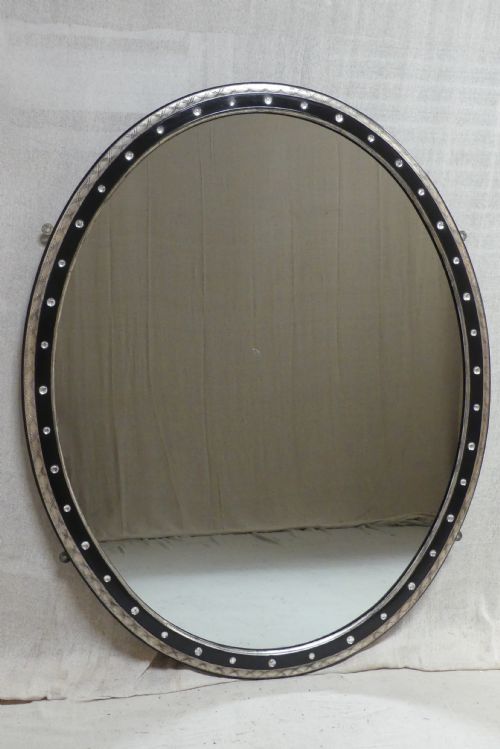
Surfaces receive careful polishing or lacquer work to achieve a deep sheen, while specialised frames utilise ripple mouldings or cut glass pediments for added texture.
Distinctions in craftsmanship
Quality rests in the crispness of the carved details, the integrity of the ebonised finish, and the character of the mirror plate itself. Superior pieces demonstrate precise joinery in complex cushion or ripple frames rather than simplistic surface treatment.
The presence of original silvering and secondary materials such as tortoiseshell or parcel gilt elevates an example, showing greater ambition from the workshop that produced it.
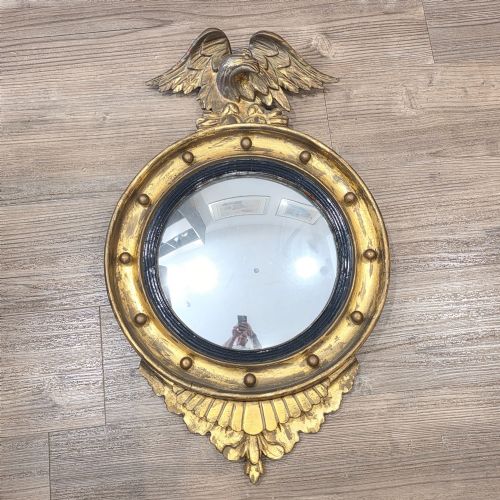
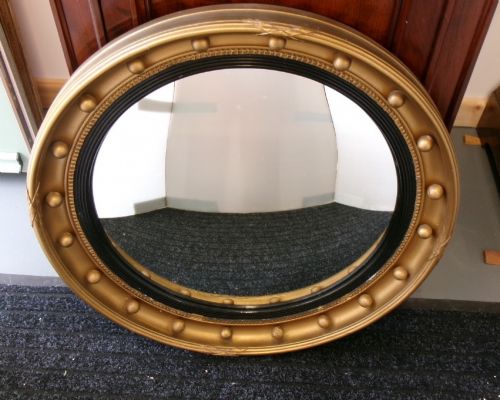
Several convex mirrors include watchful spread eagles perched atop the frames, keeping a silent eye on the room below.
Cottier and Co
The Ebonised Style Wall Mirror Glossary
- Ebonised wood
- Timber stained or painted to resemble genuine ebony, a technique popular in nineteenth-century revival furniture and mirrors. This treatment provides a uniform dark surface that contrasts sharply with gilt details.
- Convex mirror
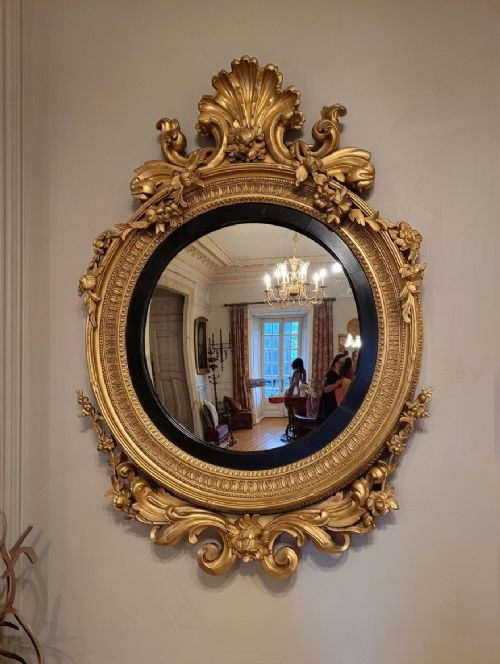
- A circular looking-glass with a curved surface that reflects a wide, panoramic view of the interior. These pieces are frequently set within deep frames featuring gilded balls or reeded bezels.
- Overmantel mirror
- A wide looking-glass traditionally hung above a fireplace mantelpiece. They often span significant lengths to balance the proportions of the hearth below.
- Gesso
- A plaster-like mixture applied to wood frames to create a smooth surface for gilding or painting. Artisans carve and mould this material to achieve ornate decorative reliefs.
- Pier mirror
- A tall, narrow looking-glass designed to hang on the wall space between two windows. They reflect additional light into darker rooms.
Ebonised Style Wall Mirror: Frequently Asked Questions
Where should I hang an ebonised style wall mirror?
These pieces suit living rooms, hallways, or above mantelpieces where their dark frames can provide a strong visual anchor. Positioning them opposite a window helps maximise natural light in smaller spaces.
Consider the scale of the surrounding furniture to ensure the proportions complement the room's overall layout.
How do I identify the period of these mirrors?
Examining the construction methods, backboards, and glass characteristics offers clues to the age of the piece. Nineteenth-century examples often display specific revival styles such as Flemish or Baroque influences.
Minor irregularities in the mirror plate and hand-applied finishes also point towards earlier manufacturing techniques.
What is a convex mirror used for?
Convex mirrors were historically placed in entertaining rooms to monitor guests and provide a wide-angle view of the interior. Their curved glass creates a distinctive fish-eye reflection that distorts perspective in an appealing way.
They function primarily as decorative accents rather than functional grooming mirrors.
How do I care for ebonised wood frames?
Dust the frame gently with a soft, dry cloth to prevent accumulation without disturbing the delicate finish. Avoid using liquid polishes or modern chemical sprays that might damage the historical surface.
Keep the mirror away from direct sunlight and excessive moisture to protect both the wood and the underlying gesso.