


Ebonised Salon Chairs
Ebonised salon chairs are dark, elegant seats designed for formal reception rooms, bringing striking contrast and period character to an interior.
Ebonised Salon Chairs
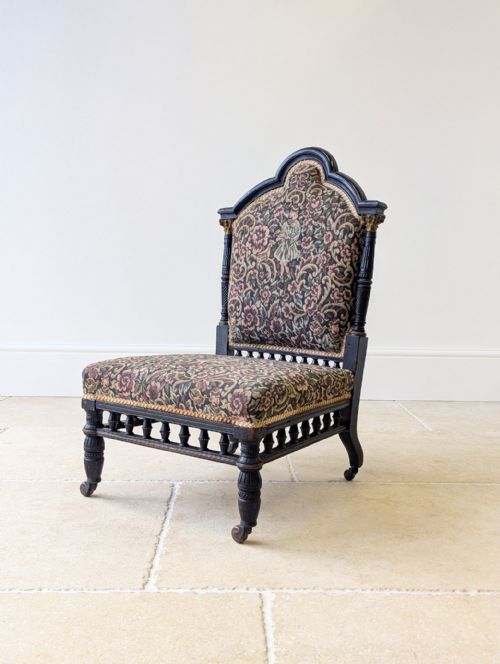
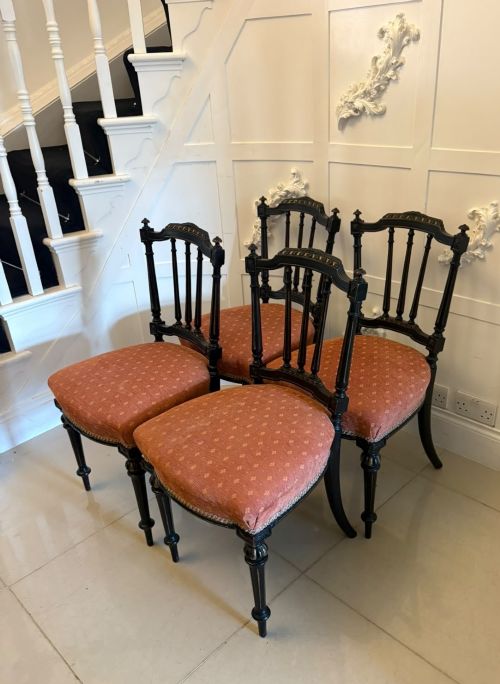
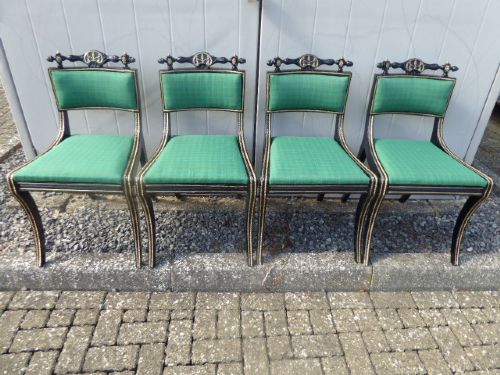
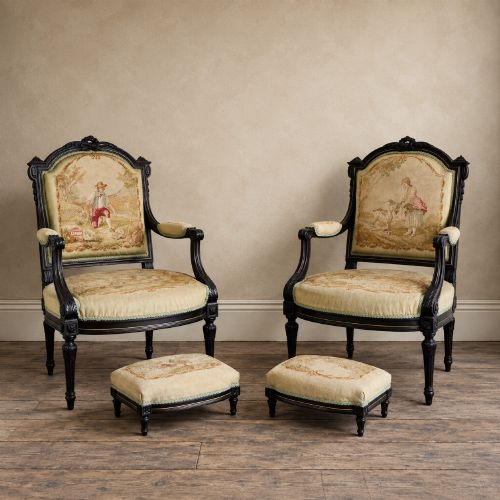
When you search for ebonised salon chairs, you encounter formal seating primarily rooted in the Victorian era, alongside Regency and French Napoleon III examples. These pieces range from individual side and desk chairs to pairs of armchairs and matched sets of four or six.
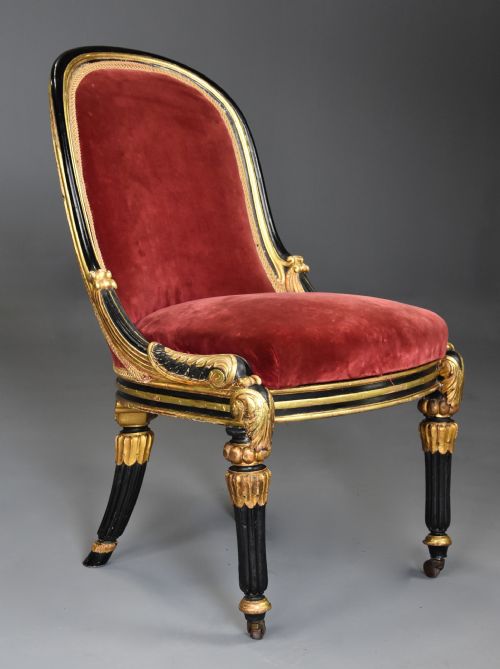
The selection here encompasses several distinct forms, including low salon chairs, tub shell back armchairs, and dining chairs adapted for reception spaces. Many of these items reflect stylistic influences such as the Aesthetic Movement and Louis XVI Revival, showing considerable diversity in their decorative details.
How they were made
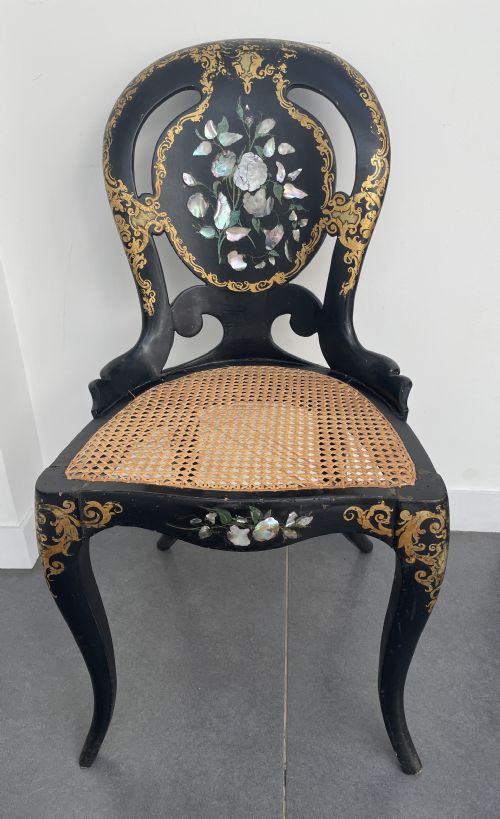
The construction relies heavily on hardwoods such as beech and mahogany, which are treated with a dark ebonising finish to imitate costly ebony. Artisans frequently added gilt highlights and inlay work, including mother of pearl, to catch the light against the darkened timber surfaces.
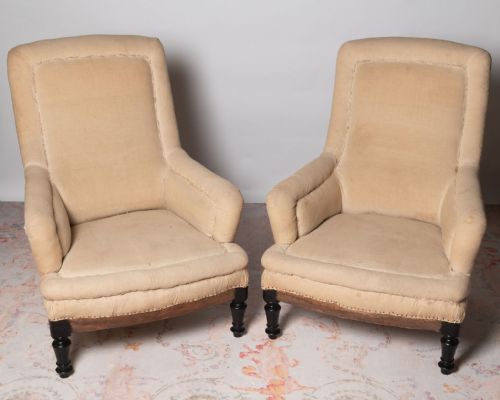
Upholstery forms an essential part of these pieces, utilising traditional materials like velvet, calico, and various patterned fabrics. Carved wooden frames provide the structural foundation for both sprung and padded seating elements.
Materials recorded across the available pieces include ebonised wood, mahogany, beech, brass, velvet, calico, and mother of pearl.
What varies in quality
The refinement of the carving and the precision of the gilt work distinguish superior examples from standard production pieces. Finer items display crisp detailing in the woodwork and more sophisticated decorative inlays.
The integrity of the ebonised finish and the quality of the original or period-appropriate upholstery fabric significantly influence the overall character. Matching sets and complete salon suites naturally demonstrate greater cohesion than assembled groups.
Jas James Shoolbred
The Ebonised Salon Chairs Glossary
- Ebonised
- Wood finished to resemble ebony through staining, painting, or chemical treatment. This technique became particularly popular during the nineteenth century for formal furniture.
- Salon chair
- A light, decorative seat designed for entertaining guests in a drawing room or reception space. These chairs often prioritise aesthetic appeal and portability over heavy construction.
- Aesthetic Movement
- A late nineteenth-century design style focusing on art for art's sake, often featuring ebonised surfaces with gilt decoration and Japanese-inspired motifs. Pieces from this period emphasise visual harmony.
- Louis XVI Revival
- A nineteenth-century French style drawing on eighteenth-century classical restraint, characterised by straight tapered legs and symmetrical ornamentation. It frequently appears in ebonised salon armchairs.
- Showwood
- Exposed wooden framing around an upholstered back or seat. This feature allows the carved and ebonised timber to remain visible alongside the fabric.
Ebonised Salon Chairs: Frequently Asked Questions
What is an ebonised salon chair?
An ebonised salon chair is a dark-finished wooden seat created for nineteenth-century reception rooms and drawing rooms. These items combine decorative frames with upholstered elements.
They appear in various styles including Victorian, Regency, and French Revival designs, often featuring gilt highlights or inlaid details.
How do I date an ebonised chair?
Dating relies on examining the underlying wood, the style of the carving, and the construction methods used in the frame. Victorian and Regency periods display distinct decorative vocabularies.
Reference points include aesthetic movement motifs and French Napoleon III influences which help narrow down the manufacturing decade.
Were these chairs used for dining?
While primarily designed for formal sitting rooms and salons, some variations function as dining chairs or desk chairs. Their lightweight construction made them versatile for various reception spaces.
Sets of matching chairs span both parlour use and formal dining arrangements depending on the specific form.
How should I care for ebonised wood?
Ebonised surfaces require gentle dusting with a soft, dry cloth to prevent the accumulation of abrasive particles. Avoid harsh chemical cleaners that might strip the dark finish.
Keeping the furniture away from direct sunlight and extreme temperature fluctuations preserves both the wood and the delicate gilt highlights.