

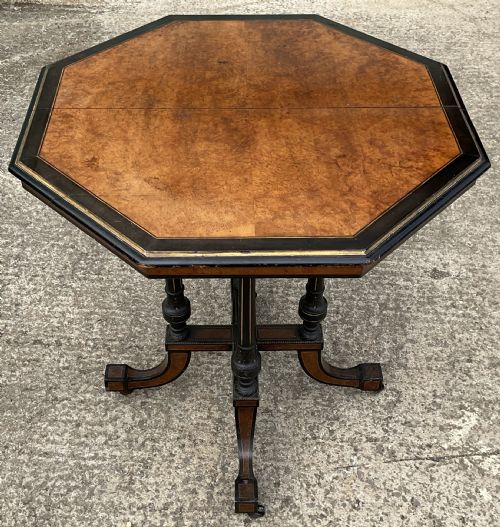


Ebonised Inlaid Occasional Table
An ebonised inlaid occasional table brings dark polished surfaces and contrasting marquetry into a room, serving as a versatile stand for lamps or display.

Ebonised Inlaid Occasional Table
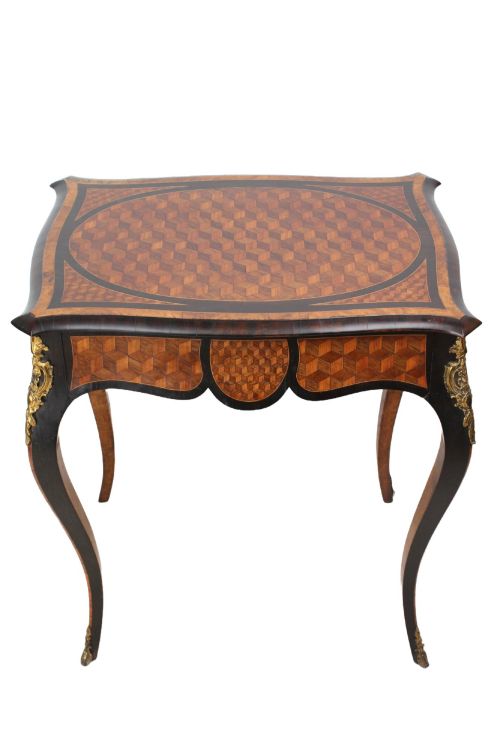
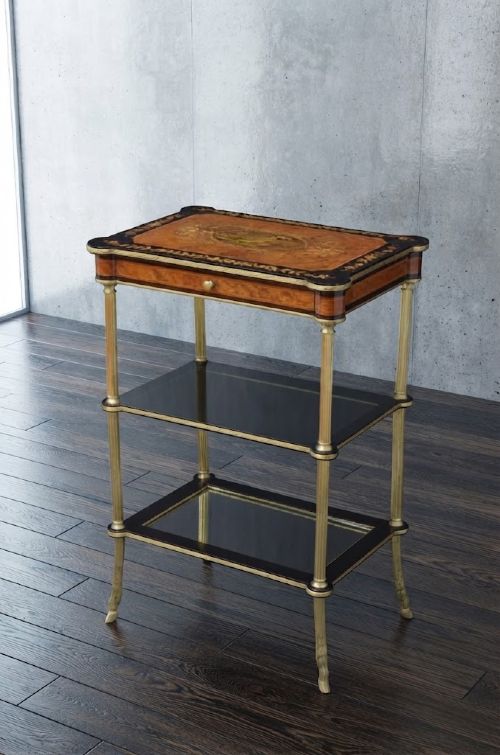
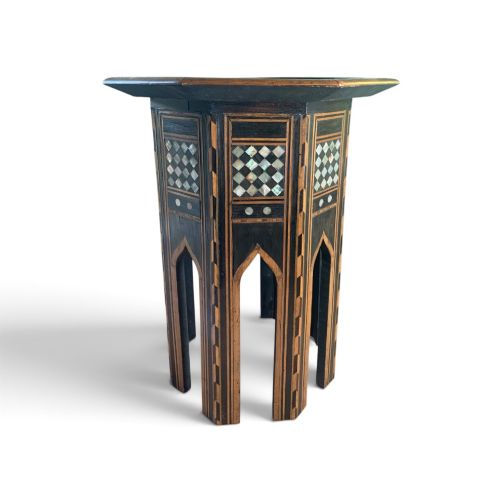
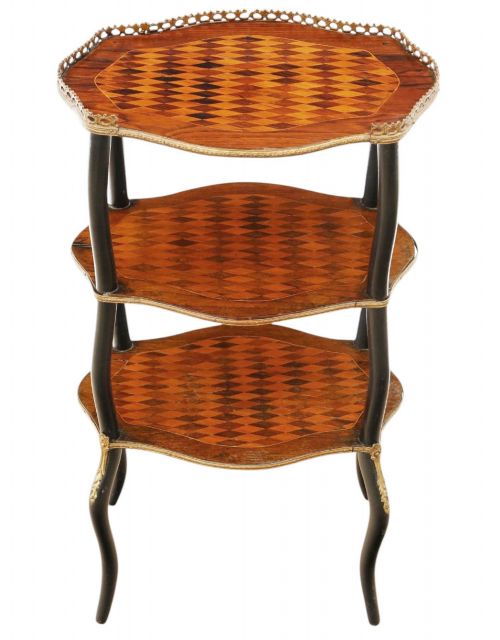
An ebonised inlaid occasional table typically takes the form of a small side table, centre table, etagere, or pedestal stand created during the nineteenth century and the Edwardian era. These pieces appear in styles ranging from Victorian and Aesthetic Movement to Napoleon III, Moorish Revival, and Louis XV Revival, reflecting diverse international tastes for dark woods and decorative surface work.
How they were made
The construction relies on timber bases - often walnut, burr walnut, oak, or birch - treated with an ebonised finish to mimic costly ebony, complemented by contrasting inlays of brass, mother-of-pearl, bone, ivory, satinwood, and exotic woods. Makers utilised marquetry and parquetry techniques to set intricate geometric patterns or floral motifs directly into the surface.
Many examples incorporate gilt bronze or ormolu mounts, mirrored tiers, or specimen marble tops, requiring precise joinery to support heavy stone or multi-level tiers. Structural framing ranges from simple tripod bases and stretcher supports to complex pedestal columns and folding handkerchief mechanisms.
Listings feature 19th Century, Victorian, and Edwardian pieces, utilising materials such as Ebonised Wood, Brass, Walnut, Burr Walnut, Ormolu, Rosewood, Amboyna, and Ebony.
What varies in quality
The distinction between standard production and top-tier examples lies in the crispness of the marquetry cut and the depth of the ebonised finish. Finer pieces employ superior secondary timbers, complex multi-wood pictorial inlays, and heavier cast ormolu mounts rather than simpler stencilled decoration.
Attribution to documented makers or specific international design movements elevates the standing of a table, as does the integration of uncommon forms like musical boxes, tiered etageres, or specialised specimen wood collections.
JAS Shoolbred·Liberty & Co·Gillows·Carlo Bugatti
The Ebonised Inlaid Occasional Table Glossary
- Ebonised
- Wood stained or painted black to imitate true ebony. This finish became popular in Victorian and Aesthetic Movement furniture to provide stark contrast for bright inlays.
- Marquetry
- Decorative veneer applied to furniture in patterned wood designs forming pictures or abstract motifs. Craftsmen cut contrasting veneers together so the pieces fit seamlessly into the ground.
- Parquetry
- Geometric mosaic woodwork used for floors or table tops. Unlike marquetry, it relies on repeating angular shapes like cubes or triangles.
- Etagere
- A piece of furniture consisting of a set of open shelves for displaying small objects. These tiered stands frequently appear in French and English nineteenth-century rooms.
- Ormolu
- Gilded bronze mounts applied to furniture for decoration. The technique involves coating brass or bronze in a gold amalgam and heating it.
Ebonised Inlaid Occasional Table: Frequently Asked Questions
Where were ebonised inlaid occasional tables used?
These tables served primarily in nineteenth-century drawing rooms, parlours, and hallways as movable surfaces for holding lamps, books, or decorative objects. Their compact sizes allowed owners to shift them around rooms as social habits demanded.
More elaborate tiered examples or etageres functioned specifically to display collections of small ornaments, ceramics, or potted plants in formal reception spaces.
How do I care for ebonised wood?
Ebonised surfaces require gentle dusting with a soft, dry cloth to prevent the dark finish from scratching or showing dull patches. Avoid commercial polishes containing silicone, which can build up and degrade the historic surface over time.
Keep the tables away from direct sunlight and strong heat sources to prevent the underlying timber from shrinking and the delicate marquetry or bone inlay from lifting.
How do I distinguish French from English pieces?
French pieces from the nineteenth century often display pronounced revival styles such as Napoleon III or Louis XV, frequently featuring extensive ormolu mounts, boullework, and highly polished marquetry. English examples tend to align with Victorian, Regency, or Aesthetic Movement sensibilities, sometimes favouring simpler geometric inlays and contrasting oak, walnut, or ebonised carcases.
Construction methods and secondary woods inside drawers or underneath tiers also provide clues to the workshop's regional origin.
What is an Aesthetic Movement table?
Aesthetic Movement tables reflect the late nineteenth-century push for art for art's sake, often incorporating Japanese-inspired motifs, ebonised frames, and simple rectilinear or folding forms. They frequently use mixed materials like oak and ebony to create graphic, minimalist contrasts.
These pieces emphasise craftsmanship and structural honesty over heavy historic revival ornamentation, making them distinct from standard Victorian furniture.