


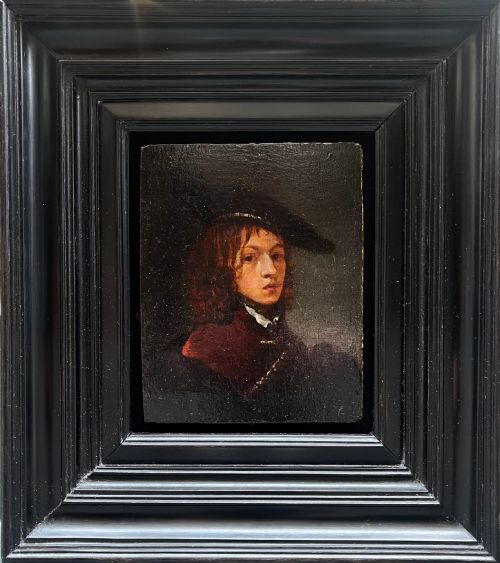
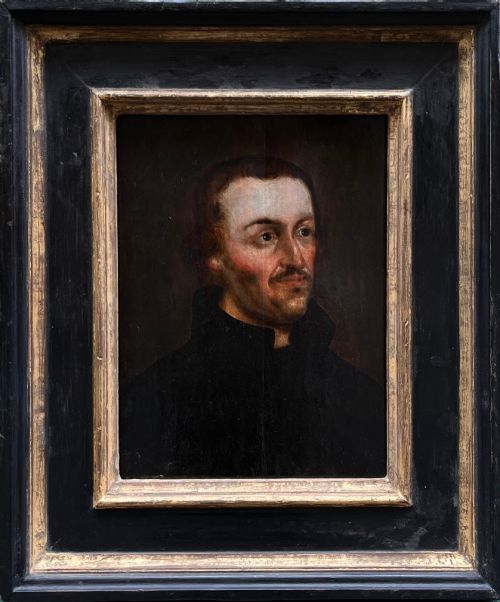
Ebonised Frame Painting
An ebonised frame painting brings dark, lustrous timber surrounds to historic portraits, landscapes and miniatures.
Ebonised Frame Painting
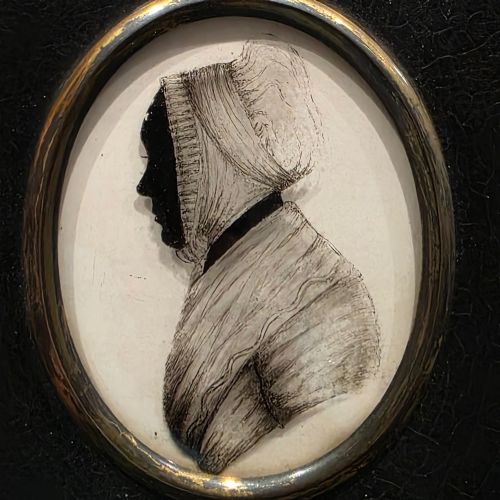
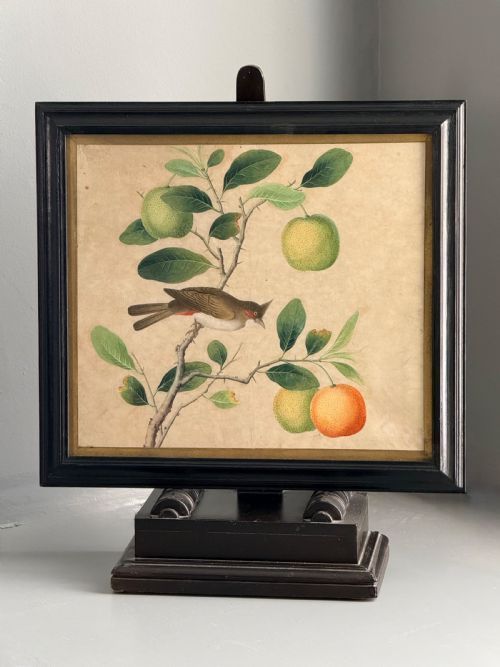
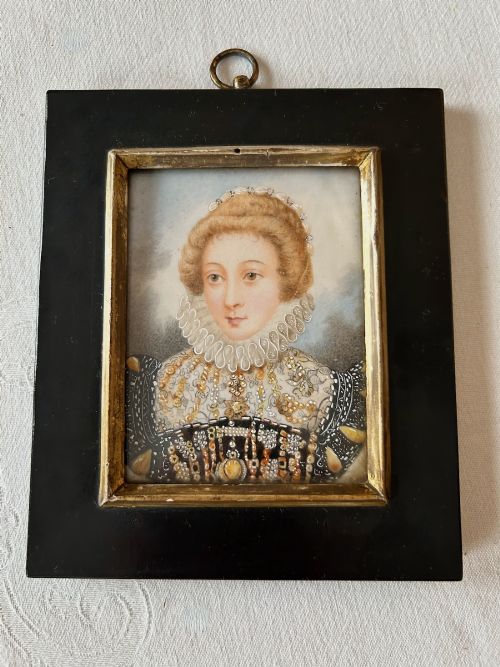
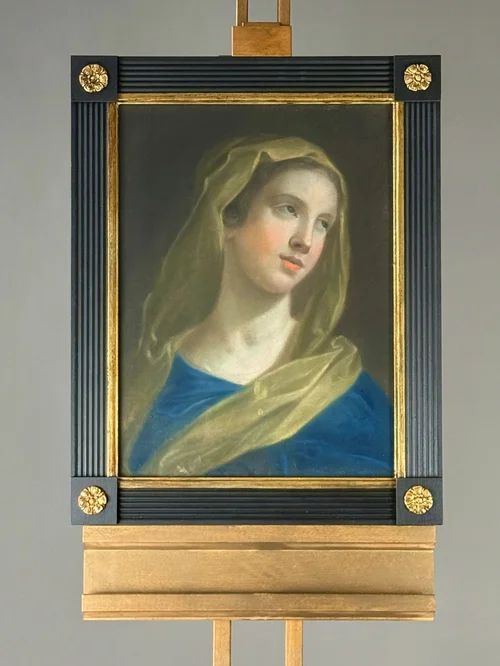
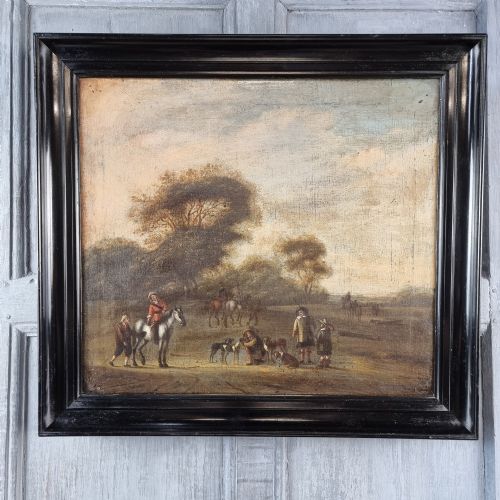
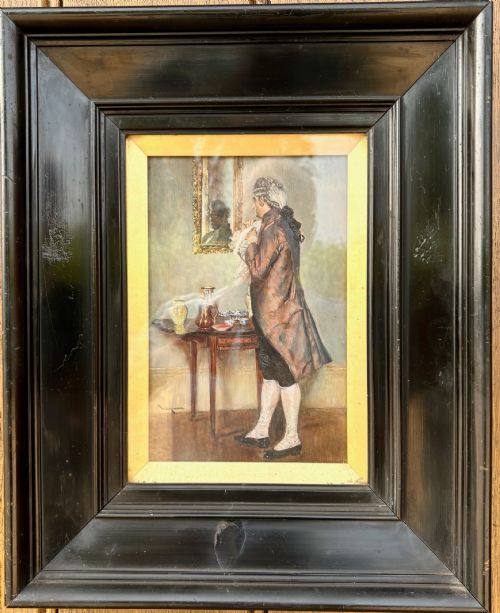
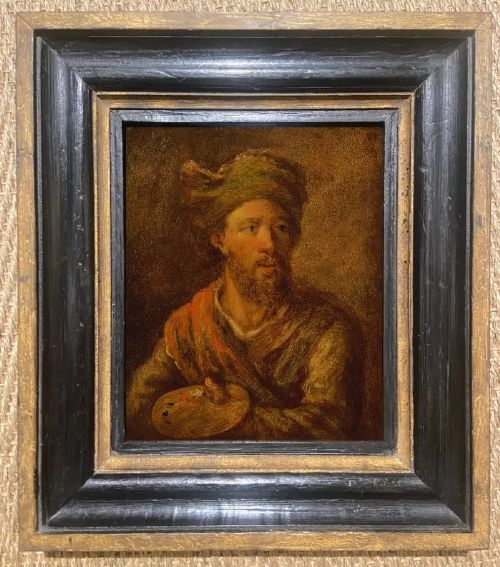
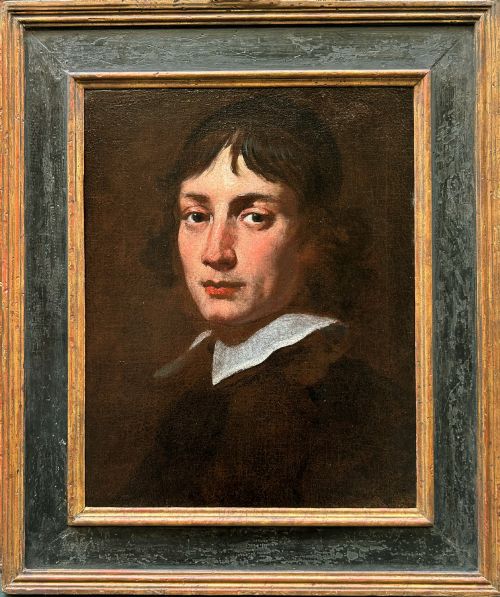
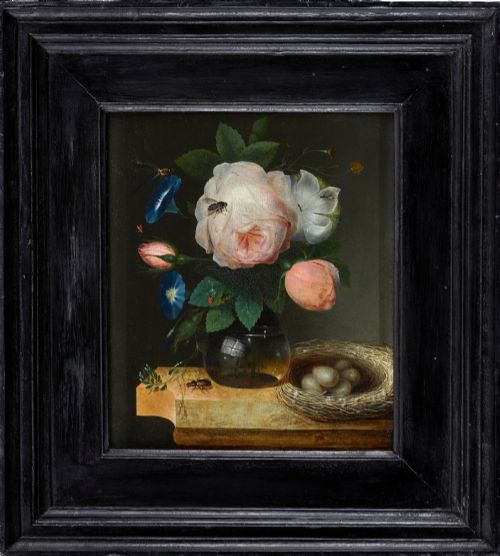
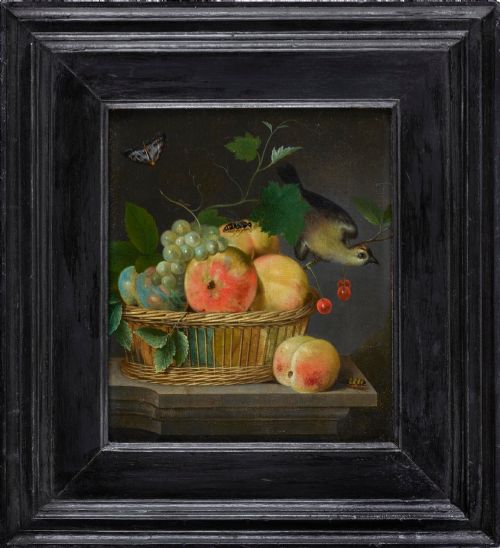
When searching for an ebonised frame painting, buyers encounter works ranging from 17th century English School portraits to 19th century miniatures and watercolours. These pieces combine historic artwork with dark, treated wood borders that contrast sharply with the pigments inside.
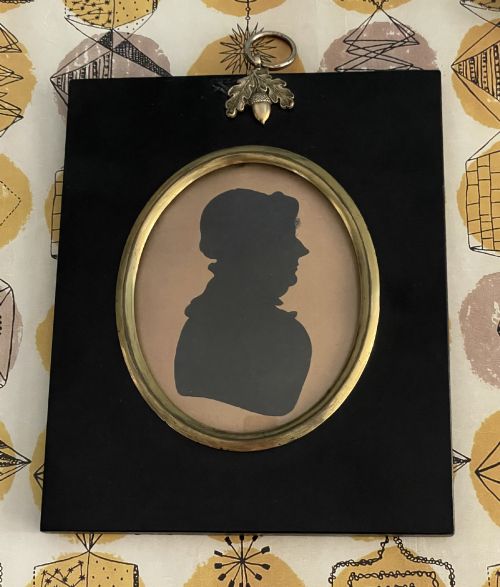
The selections on this page span several centuries of artistic production, including Georgian silhouettes, Victorian watercolours and Dutch Golden Age style oils. Each piece pairs period imagery with the heavy, dark visual weight of a blackened wooden moulding.
Materials and construction
The physical objects rely on wood frames treated with black finishes or pigments to imitate ebony, paired with supports such as canvas, panel, paper or glass. Artists applied oil paint, watercolour, gouache or reverse printing techniques to create the central imagery.
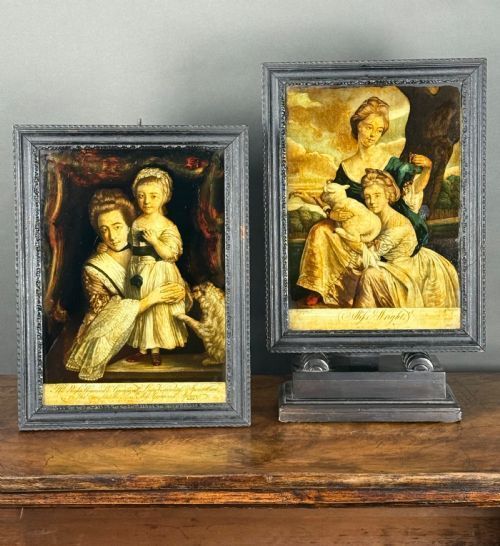
Makers often utilised glass plates for reverse paintings and mezzotints, protecting the delicate pigments beneath. Wood and brass elements frequently complete the construction of the surrounds.
Materials documented across the inventory include brass, gold leaf, pith paper, and ebonised wood.
Distinctions in quality
Quality rests upon the handling of the pigment and the integrity of the original wood border. Works displaying refined brushwork or precise reverse glass application separate themselves from simpler decorative productions.
The relationship between the artwork and its dark surround dictates visual success. Cohesion between the period timber moulding and the painted surface elevates an item within its category.
Henri Fradelle·Sebastiaan Vrancx·Benedetto Luti·Gaspar Peeter Verbruggen·Albin Mattenheimer
The Ebonised Frame Painting Glossary
- Ebonised wood
- Timber treated with stain, paint or chemical processes to resemble costly ebony. This dark finish provides a stark, formal boundary for portraits and miniatures.
- Reverse glass painting
- An image applied directly to the rear side of a glass panel so that the final composition is viewed through the transparent front. This technique yields a glossy, reflective surface.
- Portrait miniature
- A small-scale likeness created on ivory, vellum, paper or card, often housed in a protective case or tight frame. These personal items were frequently kept as tokens of affection.
- Gouache
- An opaque water-based paint composed of pigment, water, and a binding agent such as gum arabic. It dries to a matte finish that highlights bright details.
- Mezzotint
- A printmaking process of the intaglio family where the plate is roughened to achieve tones and dark areas. It allows for subtle graduations of light and shadow.
Ebonised Frame Painting: Frequently Asked Questions
What is an ebonised frame?
An ebonised frame is a wooden moulding treated to achieve a deep black appearance, mimicking solid ebony.
Craftsmen used this method historically to frame fine artworks without distracting from the colours within.
How do you date these paintings?
Dating relies on the style of the clothing, the construction of the wooden backing, and the medium used.
Early examples feature 17th century canvas techniques, while later pieces adopt 19th century watercolour and silhouette formats.
Where were reverse glass paintings made?
Reverse glass painting flourished across various European workshops and found popularity in Chinese export markets.
Artists applied the paint in reverse layers, starting with the foreground details and finishing with the background.
How should these artworks be displayed?
These pieces require placement away from direct sunlight to protect fragile watercolours, oils, and paper supports.
Stable indoor humidity levels ensure the wooden frames and glass panels remain secure over time.