

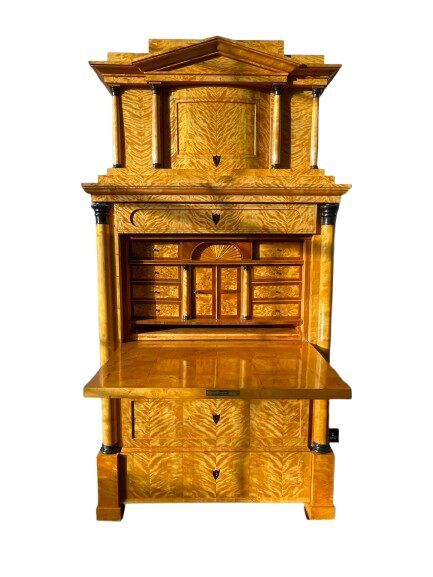
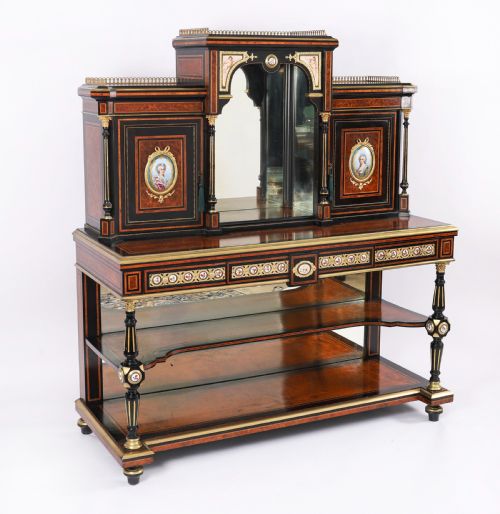


Ebonised Desk Cabinet
An ebonised desk cabinet brings dark, striking surfaces and practical writing space together, offering a refined focal point for any study or drawing room.
Ebonised Desk Cabinet
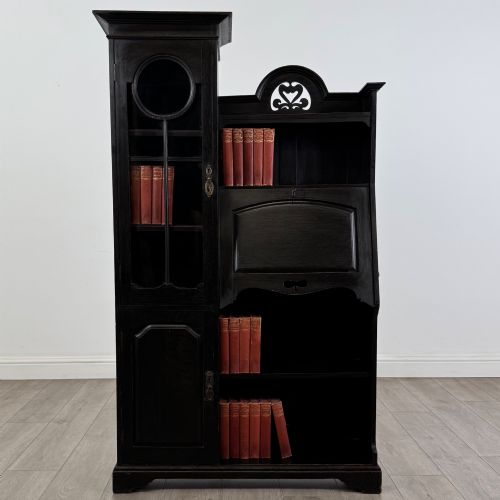
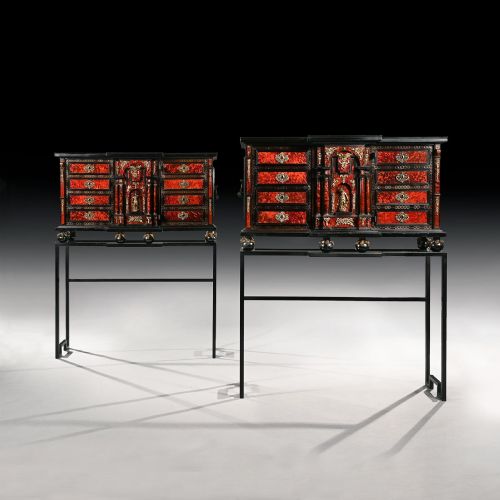
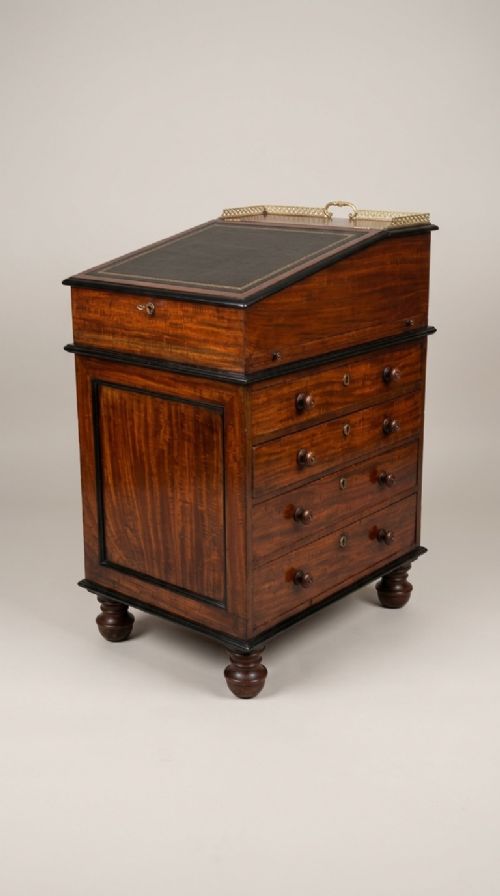
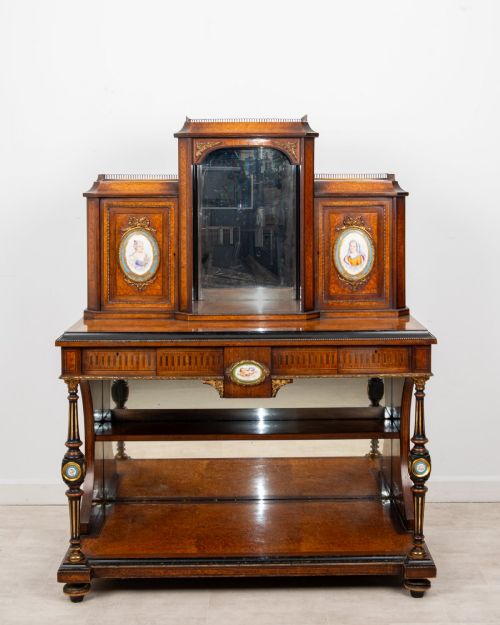
The ebonised desk cabinet combines dark, polished woodwork with functional writing surfaces, appearing across periods from the seventeenth century to the Edwardian era. You will encounter forms ranging from compact table cabinets and writing desks to elaborate bureau bookcases and bonheur du jours.
These pieces emerge from diverse regional traditions, including Spanish Baroque, French Napoleon III, and Biedermeier design. The underlying structures utilise writing desks and cabinets on stands, reflecting the varied domestic needs of past centuries.
Buyers seeking this phrase find items that bridge storage and writing utility. The selection spans centuries of craftsmanship, uniting varied proportions and compartments within dark wood finishes.
Distinctions in craftsmanship
The refinement of the dark finish and the precision of mounts separate standard items from superior examples. Better pieces display seamless integration of brass, tortoiseshell, or porcelain plaques into the timber structure.
Proportion and the handling of secondary woods indicate the maker's intent. Superior execution shows in the crispness of mouldings, the stability of stands, and the smooth operation of interior drawers.
Materials recorded on this page include ebonised wood, burr walnut, tortoiseshell, porcelain, and gilt bronze mounts.
Gillows·Befort Jeune·Mathieu Befort
The Ebonised Desk Cabinet Glossary
- Ebonised wood
- Timber treated to achieve the deep, dark appearance of ebony. This finish is common on nineteenth-century revival pieces and earlier cabinetwork.
- Bonheur du jour
- A light lady's writing desk featuring a small cabinet or set of drawers on top. The form gained popularity in France during the eighteenth century.
- Ormolu
- Gilded bronze mounts applied to furniture for decoration. Artisans cast and chased the metal before gilding it to accent corners and panels.
- Pietra dura
- Inlay work using polished, coloured stones to create pictorial designs. Craftsmen set these hardstones directly into the wooden surfaces of high-status cabinets.
- Boulle
- Marquetry technique utilising brass and tortoiseshell. The method produces intricate patterns that reflect light across dark cabinet surfaces.
Ebonised Desk Cabinet: Frequently Asked Questions
What is an ebonised desk cabinet?
An ebonised desk cabinet is a piece of furniture that combines a dark, treated wooden finish with compartments for writing and storage. These items range from small table cabinets to elaborate bureau bookcases.
They reflect diverse stylistic periods, incorporating materials like brass, tortoiseshell, and porcelain mounts into their design.
How do I date an ebonised desk cabinet?
Dating relies on identifying the underlying style, such as Spanish Baroque, Regency, or Biedermeier, along with the construction methods used in the interior drawers. Secondary woods and mounting techniques also provide clues to the period of origin.
Changes in hardware and decorative motifs help distinguish seventeenth-century work from nineteenth-century revivals.
Where should I place a desk cabinet?
These cabinets suit studies, living rooms, or hallways where their dark surfaces can serve as a visual anchor. Their compact forms allow them to function as writing desks or display surfaces.
Placing them away from direct sunlight protects vulnerable materials like tortoiseshell and polished finishes from fading.
What materials were used in these cabinets?
The primary structure typically consists of timbers like walnut, birch, or mahogany treated with an ebonised finish. Decoration often includes brass, ormolu, porcelain plaques, and gilt bronze.
Interiors may feature contrasting veneers such as burr walnut or satinwood alongside glass panels.