


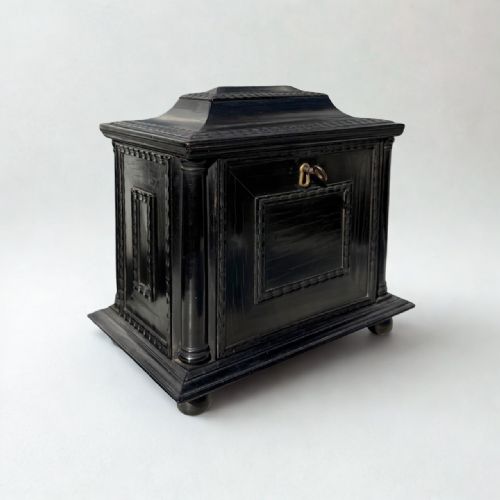


Baroque Table Chest
These baroque table chest pieces are substantial tabletop storage containers built to hold valuables and documents, offering compact historic utility.
Baroque Table Chest
A baroque table chest sits upon a desk or surface, providing secure containment for small precious items like jewellery or letters. The examples available here span the seventeenth century, eighteenth century, and pre-sixteenth century periods, reflecting diverse continental origins.
Forms vary considerably from tabletop cabinets and jewelery cabinets to caskets, strongboxes, and serpentine bedside chests. These items originate from Italian, Spanish, Flemish, and Dutch traditions, showing the widespread reach of the style across Europe.
The seventeenth century and eighteenth century dominate the surviving stock, presenting substantial timber construction alongside specialised storage compartments. Buyers encounter pieces intended for intimate domestic use rather than large architectural furniture.
How they were made
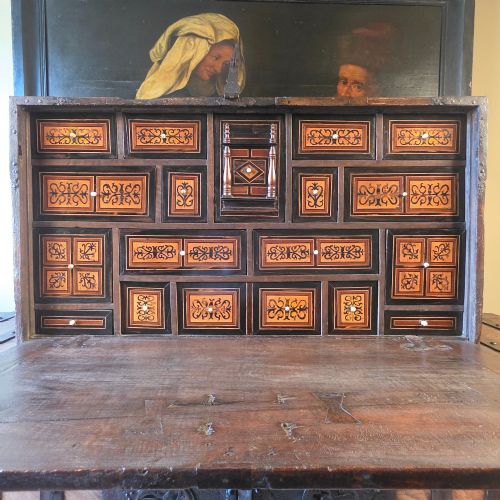
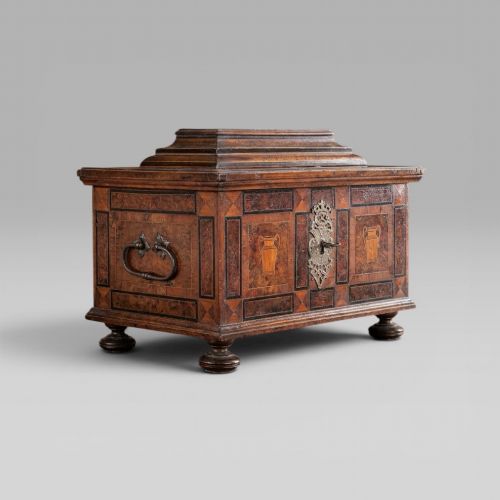
Cabinetmakers constructed these objects using robust timbers such as walnut, burr walnut, kingwood, and ebony, often applied as veneers over secondary woods. Ebonised wood appears frequently to mimic more costly materials, paired with intricate parquetry and marquetry patterns.
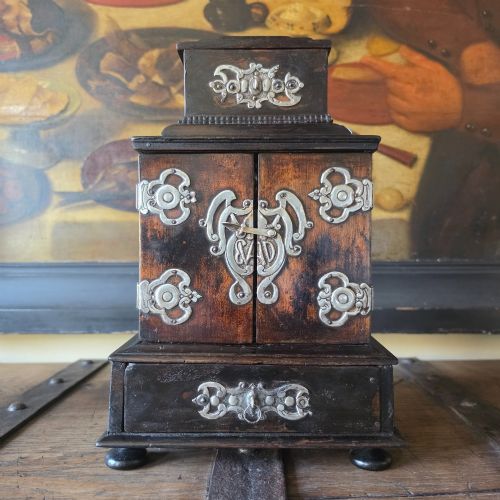
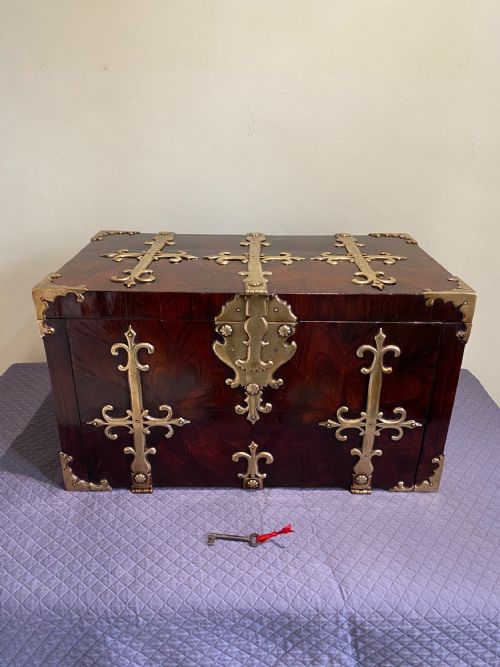
Metalwork played a critical functional and decorative role, with brass and iron mounts, hinges, and lock plates securing the structure. Artisans also incorporated delicate bone inlay to create striking visual contrast against dark tropical and native hardwoods.
Several miniature cabinets hide secret internal compartments designed to outwit curious guests and prying servants alike.
What varies in quality
The refinement of the timber selection dictates the visual impact, particularly in the use of burr walnut figures and precise parquetry arrangements. Superior examples display seamless integration of exotic woods like kingwood and ebony across every surface.
Hardware execution separates standard workshop production from exceptional craftsmanship, visible in the hand-chased brass mounts and complex iron locking mechanisms. The intricacy of bone inlay work also signals the tier of the original commission.
The Baroque Table Chest Glossary
- Parquetry
- Geometric wood inlay patterns forming decorative surfaces on panels and drawers. It relies on contrasting timber colours and grains to create visual depth.
- Ebonised
- Wood treated to imitate ebony through staining or painting dark. This technique was popular in seventeenth-century furniture production.
- Serpentine
- A curved line of furniture frontals featuring a convex centre flanked by concave curves. The Italian bedside chests utilise this shape.
- Casket
- A small decorative box designed for storing precious items or documents. These objects often feature secure locking mechanisms.
- Burr walnut
- Timber taken from a tree growth featuring swirling grain patterns. It provides highly decorative surfaces for luxury cabinet work.
Baroque Table Chest: Frequently Asked Questions
What is a baroque table chest?
A baroque table chest is a portable storage box or small cabinet designed to sit on a desk or table. These pieces held valuables, documents, or jewellery in secure compartments.
Craftsmen built them using rich timbers and decorative inlays suited for prominent display in historic domestic interiors.
How were these chests used?
Owners used these small cabinets to store personal wealth, letters, and precious trinkets within easy reach. Their portable nature allowed them to move between rooms or travel securely.
Many contained hidden drawers or complex locking systems to protect sensitive items from theft.
Where did these pieces originate?
The listings show origins across continental Europe, including Italy, Spain, Flanders, and the Netherlands. Each region developed distinct stylistic interpretations of the baroque aesthetic.
Local timber availability and regional cabinetmaking traditions influenced the specific decorative details on each box.
How do I care for antique wood?
Protect antique wood surfaces by keeping them away from direct sunlight and sudden temperature changes. Maintaining stable indoor humidity prevents timber splitting and veneer lifting.
Apply suitable waxes sparingly to nourish the historic polish without building up excess residue.
How can I tell the period?
Dating relies on construction methods, timber choices, and stylistic markers specific to the seventeenth and eighteenth centuries. Regional decorative vocabulary, such as Dutch marquetry or Spanish tortoiseshell, also points toward specific eras.
Examining internal secondary woods and hardware types helps confirm the age of the piece.