





Ebonised Collectors Cabinet
An ebonised collectors cabinet brings dark wood and historic craftsmanship together to house small treasures securely.
Ebonised Collectors Cabinet
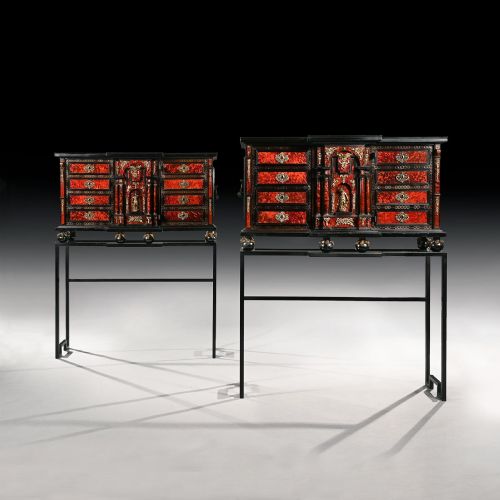
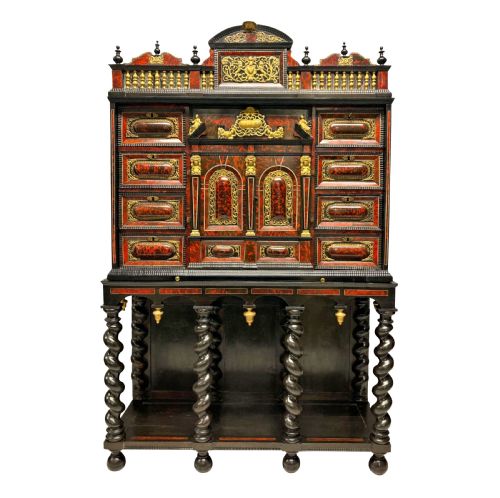
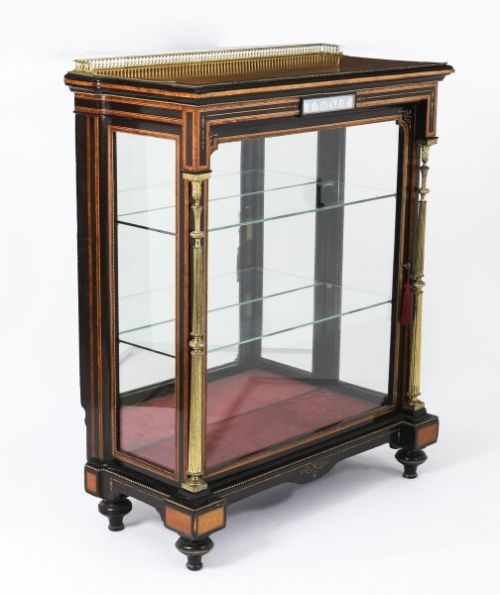
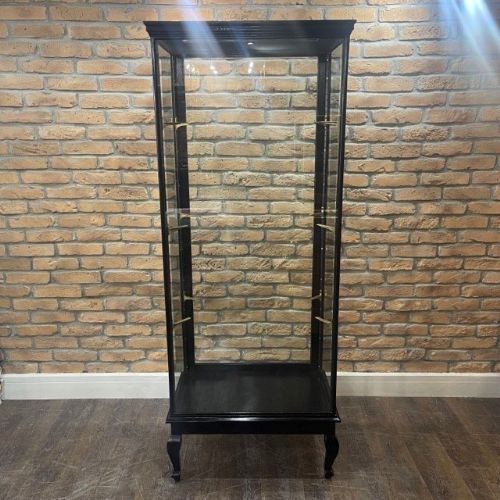
An ebonised collectors cabinet takes several forms, ranging from elaborate seventeenth-century stands to simpler Victorian and twentieth-century display pieces. The selection includes architectural table cabinets, tall tower units, and intricate pieces mounted with gilt bronze.
Spanish and Flemish Baroque influences appear frequently alongside later Victorian and Edwardian examples. Buyers encounter display cabinets, table cabinets, and cabinets on stands shaped by centuries of woodworking traditions.
How they were made
Craftsmen utilised ebonised wood, ebony, and painted wood to achieve a dark, uniform finish, often combining these surfaces with glass panels and brass fittings. Tortoiseshell, gilt bronze, kingwood, and walnut appear as primary structural and decorative elements.
Joinery methods range from heavy architectural framing on seventeenth-century stands to lighter glazed show cases from the nineteenth and twentieth centuries. Interior fittings reflect the specific storage needs of collectors across different eras.
Listings span periods from the seventeenth century through to the 1930s, featuring materials such as tortoiseshell, gilt bronze, and pitch pine.
What varies in quality
The refinement of the surface finish and the depth of the ebonisation set finer examples apart from standard utility items. The integration of specialised materials such as tortoiseshell and gilt bronze alters the visual weight of each piece.
Proportion and the execution of architectural mouldings dictate the architectural success of seventeenth-century and Baroque pieces. Later retail and countertop display versions depend on the clarity of the glass and the crispness of the framing.
The Ebonised Collectors Cabinet Glossary
- Ebonised
- Wood treated to imitate ebony through staining, painting, or chemical processes. This finish provides a dense, dark surface popular in various Baroque and Victorian furniture styles.
- Tortoiseshell
- Material sourced from sea turtles used for decorative veneering. It adds mottled amber and brown patterns to cabinet panels and architectural details.
- Gilt bronze
- Metal cast and covered in a thin layer of gold. It appears as decorative mounts and hardware on seventeenth-century and Baroque cabinets.
- Table cabinet
- A small storage unit designed to sit on a desk or table rather than directly on the floor. These pieces often feature multiple internal drawers for small items.
- Cabinet on stand
- A primary storage box supported by a dedicated matching base or table frame. This form elevates the cabinet to display eye level.
Ebonised Collectors Cabinet: Frequently Asked Questions
What is an ebonised collectors cabinet?
An ebonised collectors cabinet is a specialised storage unit finished in dark or black wood to display and protect small objects. These pieces range from seventeenth-century Baroque table units to twentieth-century countertop display cases.
Craftsmen built them to house prized possessions, utilising glass panels, internal drawers, and decorative veneers to combine security with visual presentation.
How do I date a cabinet?
Dating relies on examining the construction methods, wood types, and decorative motifs present in the piece. Seventeenth-century examples often feature architectural facades and tortoiseshell mounts, while Victorian and Edwardian pieces utilise simpler glazed framing.
Hardware styles and finishing techniques also provide clear indicators of the period in which the cabinet was constructed.
Where were these cabinets used?
These cabinets served domestic purposes in private homes to display natural history specimens, coins, and miniatures. Retail environments also utilised countertop and shop display versions to showcase goods to customers.
Their placement varied from private studies and drawing rooms to commercial shop interiors depending on the specific form.
How should I clean ebonised wood?
Cleaning ebonised wood requires gentle dusting with a soft, dry cloth to prevent scratching the dark surface. Avoid harsh chemical cleaners and excessive moisture that might damage the historic finish or underlying veneers.
Period surfaces benefit from occasional specialist wax application where appropriate for the specific timber and finish.