

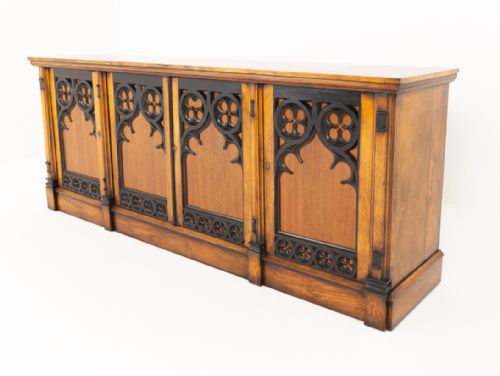
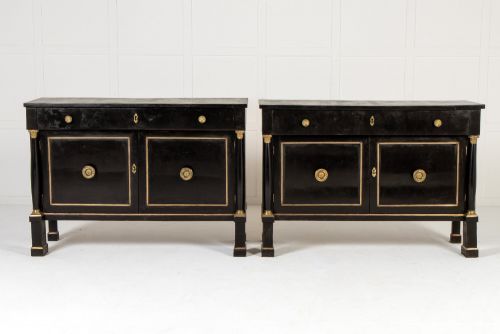
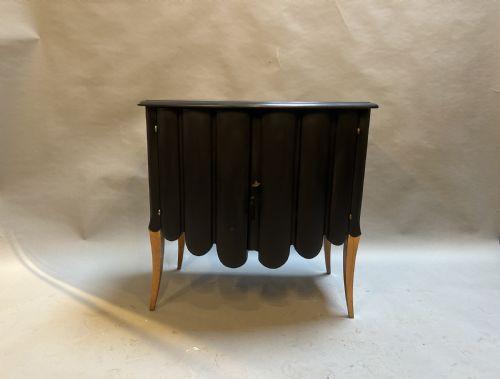
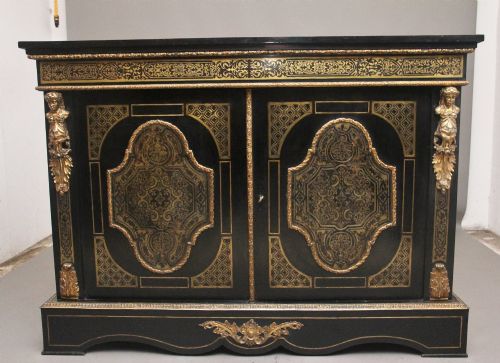




Ebonised Credenza Cupboard
These ebonised credenza cupboards combine dark polished timber with bright metal mounts to anchor a room with serious presence.
Ebonised Credenza Cupboard
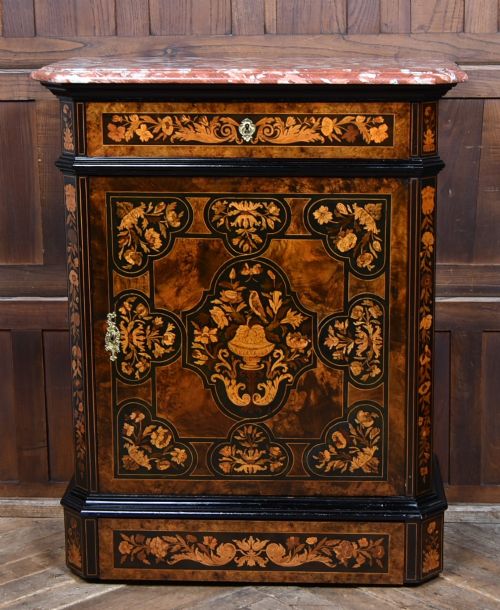
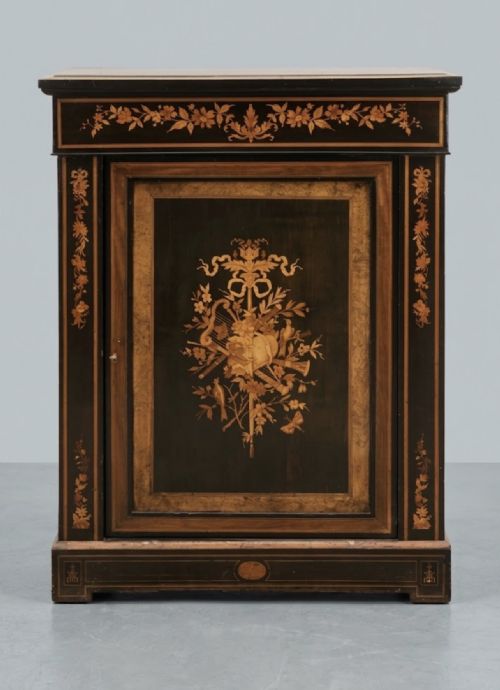
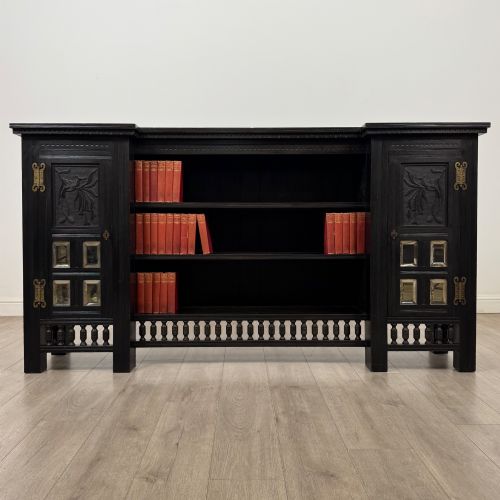
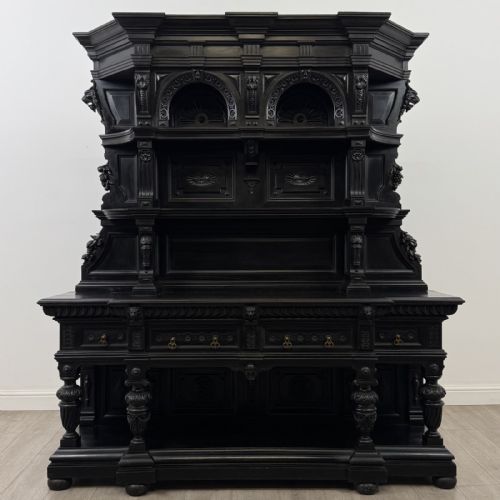
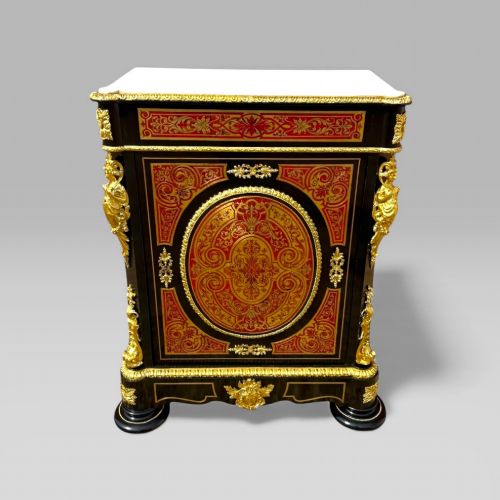
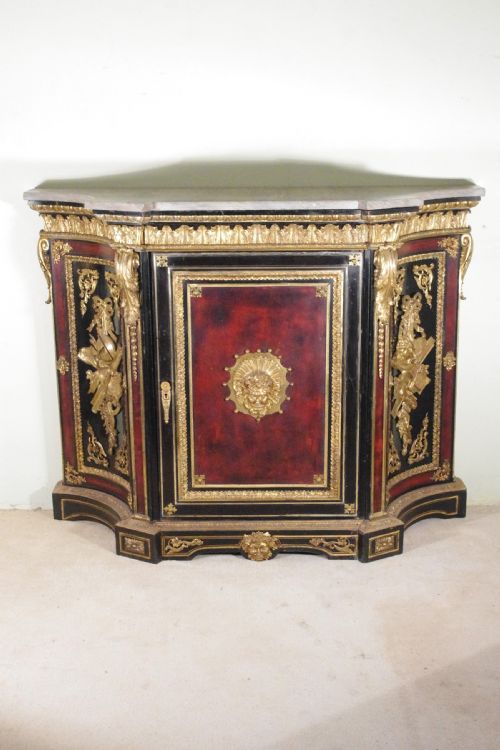
An ebonised credenza cupboard offers a substantial low storage option for a dining room or parlour, drawing on styles from the nineteenth century onward. Most examples on this page date to the Victorian era and the French Napoleon III period, bringing dark wood surfaces into formal reception spaces.
Form varies from pier cabinets and display units to serpentine fronted sideboards and demi lune credenzas. The fundamental form is a low cabinet designed to stand against a wall, frequently topped with marble or fitted with glazed doors for display.
How they were made
Cabinet makers blackened timber to imitate expensive ebony, creating a dense dark surface that contrasted sharply with applied decoration. This ebonised wood formed the chassis for elaborate marquetry, brass inlay, and tortoiseshell work.
Mounts in ormolu and gilt-metal embellished corners and borders, whilst Sevres style porcelain plaques and marble tops added colour and weight to the finished piece.
Ebonised Credenza Cupboard Retail Price Guide 2026
Typical asking prices for ebonised credenza cupboard among the pieces listed under this phrase on Sellingantiques today, from the lower quarter to the upper quarter. They describe what is for sale here now, not the wider market.
Listings feature walnut, pollard oak, and satinwood alongside ebonised finishes across the nineteenth century.
What varies in quality
The refinement of the cast bronze or ormolu mounts separates standard production from exceptional work, as sharper chiselling and heavier gilding denote superior craftsmanship. The precision of the brass inlay and tortoiseshell boulle work similarly marks out better pieces.
The choice of secondary timbers and the weight of the marble top influence the structural integrity and overall presence of the cabinet.
Gordovil Spain·Gillows
The Ebonised Credenza Cupboard Glossary
- Ebonised
- Wood treated with stain, paint, or polish to imitate the deep black appearance of genuine ebony. It became especially popular during the Victorian period for formal cabinet work.
- Boulle
- A style of marquetry using brass and tortoiseshell inlaid in contrasting patterns, named after the famous French cabinet maker. It catches candlelight and daylight alike.
- Ormolu
- Gilt-bronze mounts applied to furniture for decorative effect and to protect vulnerable corners. The quality of the chasing defines the work.
- Credenza
- A low sideboard or cabinet originally used for serving food or displaying plate. In nineteenth century interiors it served as a principal display surface.
Ebonised Credenza Cupboard: Frequently Asked Questions
Where should I place an ebonised credenza cupboard?
These low cabinets suit dining rooms, long hallways, or formal reception spaces where their dark timber and bright mounts provide a focal point.
Ensure the room has adequate light to reflect off the polished surfaces and any gilt metal mounts.
How do I care for the ebonised finish?
Dust regularly with a dry soft cloth and avoid chemical polishes that can lift the dark stain or damage the underlying wood.
Keep the cabinet away from direct sunlight and heat sources to protect the delicate tortoiseshell and brass inlay.
What is the difference between a credenza and a pier cabinet?
A credenza is typically a long, low sideboard used for storage and display, whereas a pier cabinet is narrower and designed to sit in the wall space between windows.
Both forms appear frequently in nineteenth century ebonised designs with glass doors or open shelving.
Are marble tops original to these cabinets?
Many nineteenth century French and Victorian cabinets were constructed to receive fitted marble tops, which provided a durable and decorative upper surface.
Inspect the seating of the marble slab to ensure it matches the proportions and age of the timber base below.