
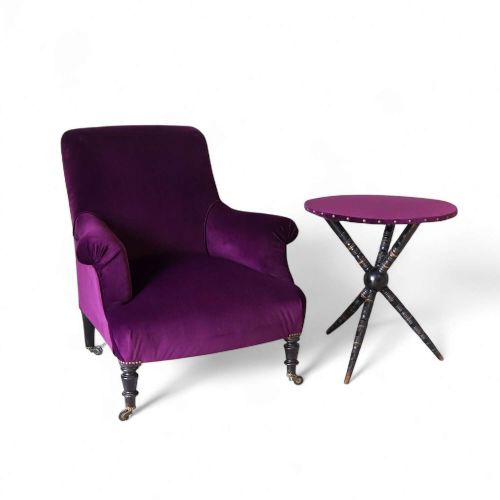
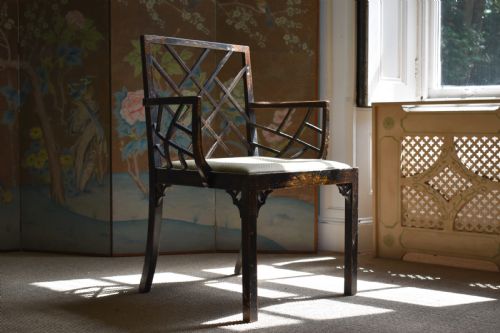


Ebonised Arm Chair
An ebonised arm chair brings deep dark wood tones and classic nineteenth-century elegance into a modern room.
Ebonised Arm Chair
An ebonised arm chair is a seating piece finished in a dark, blackened surface designed to mimic costly ebony timber. These seating pieces span periods from the eighteenth century through the Victorian era and into the early twentieth century.
The selections on this page reveal diverse influences, including Regency elegance, Napoleon III styling, and the simpler lines of the Aesthetic Movement. Many examples incorporate turned wood or gilded highlights.
Buyers will encounter library chairs, rocking chairs, and salon suites featuring this characteristic dark finish. Beech, mahogany, and birch serve as the underlying timber foundations.
How they were made
Craftsmen built these frames from accessible timbers such as beech, birch, and mahogany before applying a dark stain or paint to achieve the dense black ebonised surface. Gilding, brass mounts, and painted decorations frequently accent the dark frames.
Upholstery methods varied from simple cane panels and drop-in seats to deep buttoning covered in velvet, leather, or embroidered textiles. Structural integrity depended on traditional joinery combined with turned spindles or carved components.
Some nineteenth-century makers applied the black finish so convincingly that owners spent generations believing their beech chairs were solid ebony.
What varies in quality
The distinction between standard production and top-tier pieces rests on the crispness of the turning, the precision of the gilt details, and the integrity of the underlying frame. Original upholstery methods and period textiles elevate certain examples above later replacements.
Attribution to known designers or workshops, such as Gillows or William Morris, separates standard domestic seating from highly collectible specimens. The depth and durability of the blackened finish also indicate superior workshop execution.
Gillows·William Morris·Philip Webb·John Gee·Liberty London
The Ebonised Arm Chair Glossary
- Ebonised
- Wood stained or painted black to imitate ebony. This finish gained immense popularity during the Victorian and Regency periods.
- Bergère
- An enclosed upholstered armchair with wooden framing around the sides and back. These often feature cane work or padded armrests.
- Aesthetic Movement
- A late nineteenth-century design style focusing on art for art's sake. Pieces from this movement often utilise ebonised finishes and gilt highlights.
- Regency
- A style period spanning the early nineteenth century defined by classical restraint and Grecian influences. Chairs from this era frequently display sabre legs and gilt decorations.
- Parcel gilt
- Partially gilded wood surfaces where gold leaf highlights specific carved details or mouldings. This technique creates a striking contrast against black ebonised timber.
Ebonised Arm Chair: Frequently Asked Questions
How do I date an ebonised arm chair?
Dating relies on examining the underlying timber, joinery techniques, and stylistic clues such as sabre legs or spindle backs. Nineteenth-century examples often combine ebonised finishes with gilt highlights or Victorian upholstery methods.
Comparing the construction details to dated pieces from the Regency or Aesthetic Movement helps narrow down the exact decade of manufacture.
Are ebonised chairs original or painted later?
Many Victorian and Regency pieces were manufactured with a blackened finish from the outset, often to emulate expensive exotic hardwoods. Close inspection under magnification reveals whether the black layer sits directly on the primary timber or covers older layers of paint.
Original ebonising typically shows consistent wear patterns integrated naturally with the age of the wooden frame.
What fabrics work best on these chairs?
Historically, these seating pieces featured velvet, leather, embroidered tapestry, or woven textiles depending on the decade and style. Selecting fabrics that align with the period ensures the upholstery complements the dark wood frame.
Victorian salon models suit rich jewel tones, while Aesthetic Movement pieces pair well with simpler textured wools or printed cottons.
How should I care for the dark finish?
Maintain the ebonised surface by dusting gently with a soft dry cloth and avoiding harsh chemical cleaning agents. Occasional application of appropriate wax preserves the sheen of the blackened wood.
Keep the chair away from direct sunlight and radiators to prevent the timber from drying out or splitting.