



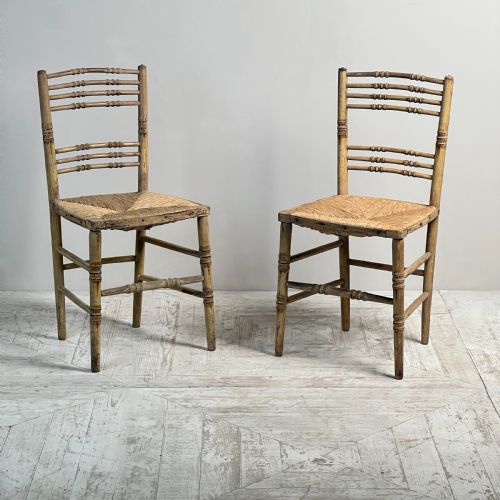


Georgian Chinoiserie Chair
These georgian chinoiserie chair examples bring together painted finishes and oriental motifs, offering characterful seating for any traditional interior.
Georgian Chinoiserie Chair
When you search for georgian chinoiserie chair, you are looking at seating influenced by eastern design traditions, spanning armchairs, side chairs and dining chairs. The pieces on this page range from early examples up to later revivals, reflecting diverse interpretations of the style across different centuries.
You will encounter various forms including library chairs and tub chairs, alongside dining sets and occasional seating. Materials such as mahogany and ebonised wood appear frequently alongside painted finishes and cane seats.
How they were made
Craftsmen utilised traditional timbers like mahogany and satinwood, alongside painted wood, ebonised wood and bamboo effects. Surface decoration involved intricate paintwork and japanned lacquering to achieve distinctive oriental motifs.
Structural elements incorporated cane, rush and upholstered fabric seats. Gilt and brass details frequently highlighted the decorative frames of these chairs.
The listings span multiple centuries, incorporating Regency, Georgian, and Edwardian periods alongside later twentieth century interpretations.
What varies in quality
The sophistication of the painted or japanned decoration distinguishes finer examples from simpler production. Original surface treatments and crisp carving details elevate the overall standard of a piece.
The choice of primary timber, such as solid mahogany or satinwood, alongside the preservation of original cane or fabric seating, dictates the standing of the chair.
Waugh & Son·Thomas Chippendale
The Georgian Chinoiserie Chair Glossary
- Chinoiserie
- European decorative art influenced by Chinese and East Asian artistic traditions. This style manifests in painted scenes and fretwork patterns across furniture frames.
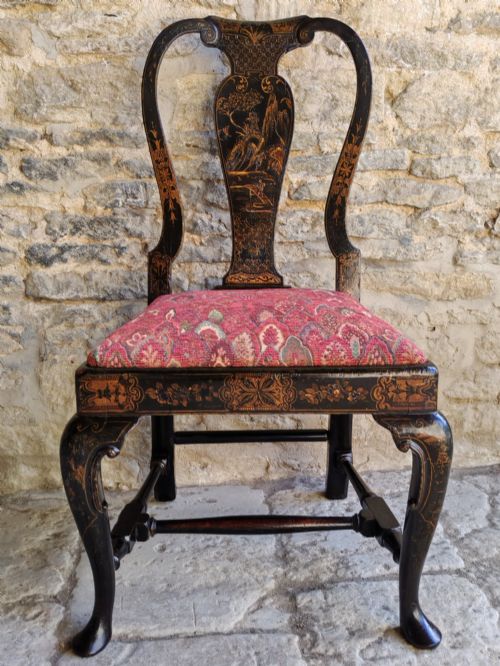
- Japanned
- A European imitation of East Asian lacquerwork involving layered varnishes and painted designs. It appears on several chairs in this collection.
- Faux bamboo
- Wood turned and painted to resemble natural bamboo stalks. Makers utilised this technique extensively during the Regency period.
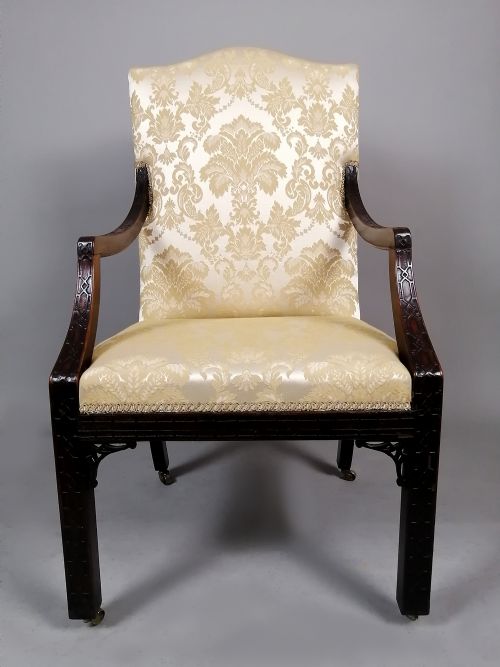
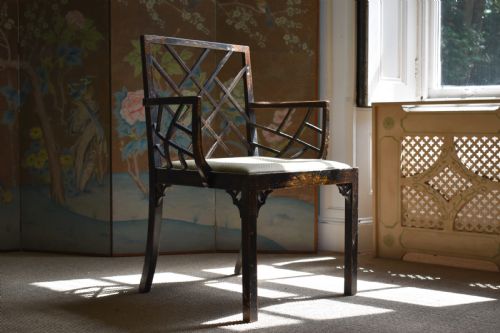
- Cockpen
- A lattice design associated with Chinese Chippendale seating, characterised by geometric intersecting bars. This pattern provides both structural support and visual lightness.
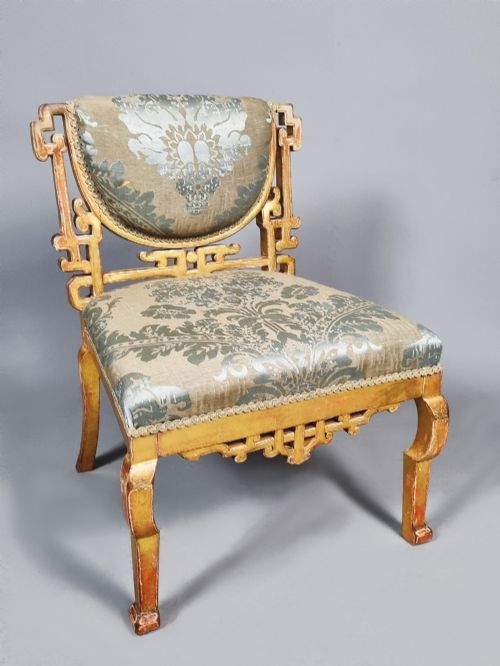
- Giltwood
- Timber treated with gold leaf or gold paint to create a metallic sheen. It highlights carved details on select nineteenth century pieces.
Georgian Chinoiserie Chair: Frequently Asked Questions
How do I care for a painted antique chair?
Keep wooden and painted surfaces away from direct sunlight and sudden temperature changes to protect the finish.
Dust gently with a dry, soft cloth and avoid chemical polishes that might damage aged paint or lacquer.
Can I use these chairs for daily dining?
Many of these chairs function well for everyday dining, provided the frame remains stable and secure.
Heavier use suits sturdy mahogany frames better than delicate bamboo or cane variants.
How do I distinguish original paint from later decoration?
Original painted surfaces show uniform wear patterns and ageing consistent with the period of manufacture.
Examinations under magnification often reveal the underlying layers and craquelure expected in historical pigments.