


Ebonised Amboyna Furniture
Ebonised amboyna furniture combines dark blackened wood with exotic speckled veneer, offering a striking Victorian centrepiece for a discerning collector.
Ebonised Amboyna Furniture
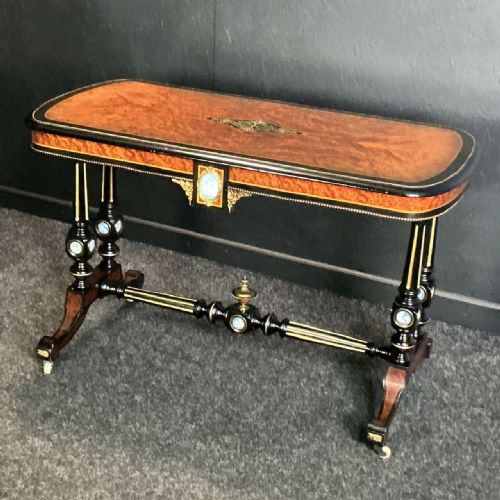
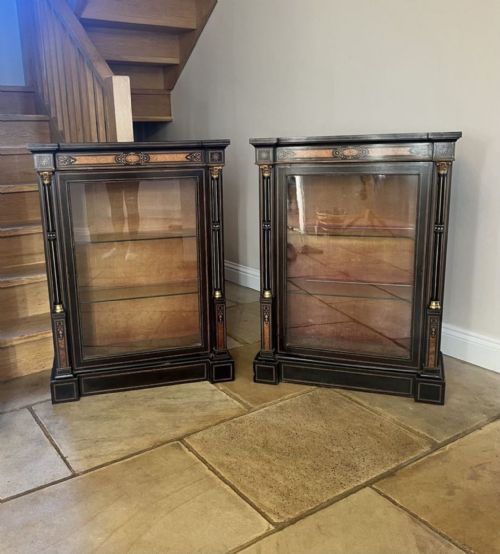
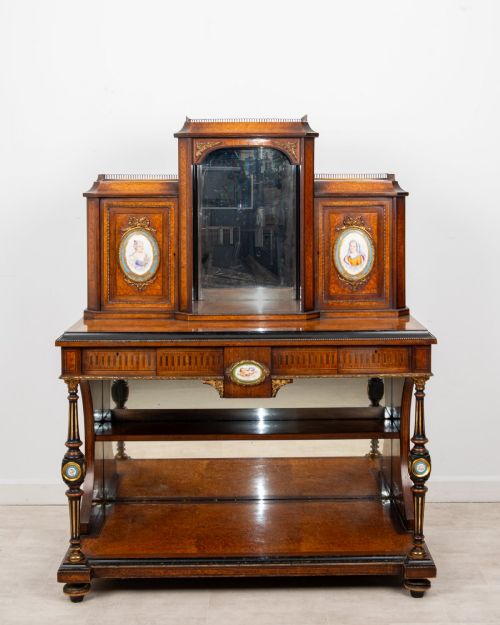
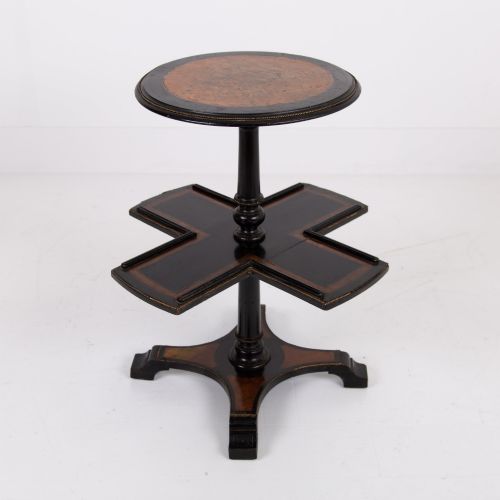
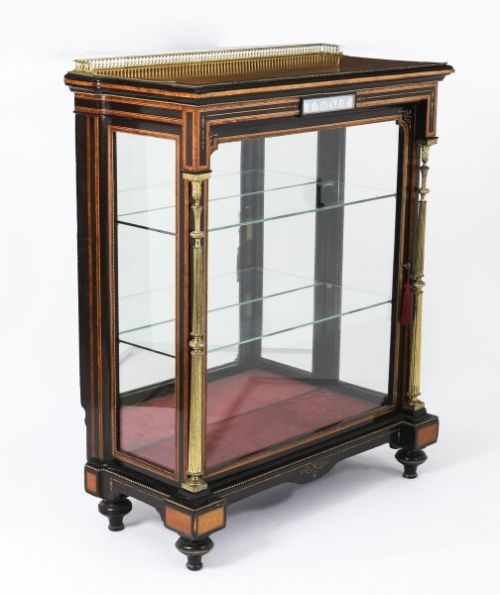
Ebonised amboyna furniture comprises nineteenth-century tables, desks, and cabinets that pair deep black surfaces with richly figured timber. When you search for ebonised amboyna furniture, you encounter Victorian and French Napoleon III designs from the eighteen-fifties through to the turn of the century. These pieces range from occasional tables and display cabinets to elaborate writing desks fitted with porcelain plaques.
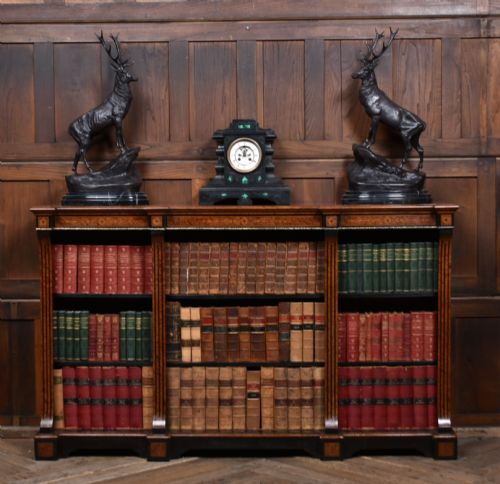
The domestic forms appearing on this page include centre tables, side cabinets, bookcases, and etagere side tables. Many examples reflect the Aesthetic Movement or French Revival styles popular during the nineteenth century. Buyers typically select these items to bring dark contrast and exotic wood grain into a period interior.
How they were made
Cabinetmakers constructed these pieces using dense hardwoods finished with a dark ebonised coating to imitate ebony. Amboyna veneer was then applied to key surfaces to display the distinctive speckled and mottled grain of the timber. Ormolu mounts, brass stringing, and porcelain plaques frequently decorate the structural carcase.
Makers utilised contrasting inlays and gold work alongside the amboyna panels to create visual depth against the black wood. Glass panels appear in display cabinets and pier cabinets, while turned and carved supports form the legs of tables and desks.
Some nineteenth-century writers kept their ink away from the amboyna by storing it in porcelain wells.
What varies in quality
The quality of these items depends on the crispness of the ebonisation and the natural figuring of the amboyna veneer. Superior examples display symmetrical grain patterns and precise application of brass and ormolu mounts. The inclusion of painted porcelain plaques adds a higher level of decorative ambition.
Construction methods and timber selection separate standard production from exceptional cabinetwork. Pieces bearing maker attribution or originating from prominent workshops demonstrate superior joinery and more ambitious proportions across desks and display cabinets.
Edward’s And Robert’s·Lamb of Manchester·Gillows
The Ebonised Amboyna Furniture Glossary
- Ebonised
- Wood treated with stain or pigment to imitate genuine ebony. This dark finish provides a contrasting background for inlaid lighter timbers.
- Amboyna
- A richly mottled and speckled exotic veneer derived from the burl of the narra tree. It yields highly decorative patterns prized by nineteenth-century cabinetmakers.
- Ormolu
- Gilt-bronze ornamentation applied to furniture mounts and details. The technique involves treating metal with a mercury and gold amalgam.
- Bonheur du jour
- A light lady's writing desk featuring a tiered superstructure with shelves, drawers, or a small cupboard above the main writing surface.
- Aesthetic Movement
- A late nineteenth-century design style emphasising visual beauty and artistic expression over traditional historical revivalism.
Ebonised Amboyna Furniture: Frequently Asked Questions
How do I clean ebonised amboyna?
Dust surfaces regularly with a soft, dry cloth to protect the dark ebonised finish and delicate veneer. Avoid commercial polishes containing silicone or heavy solvents.
Maintain low humidity in the room to prevent the amboyna veneer from lifting or cracking over time. Professional conservation is recommended for any structural repairs.
What periods do these pieces date from?
The pieces span the nineteenth century, with specific examples recorded from eighteen-fifty through to nineteen-hundred. Victorian and French Napoleon III aesthetics dominate the selection.
Stylistic influences include the Aesthetic Movement and French Revival tastes popular during the mid-to-late Victorian era.
Where were these pieces used originally?
Owners placed these decorative items in principal reception rooms, drawing rooms, and studies of Victorian homes. Display cabinets and pier cabinets showcased porcelain and curiosities.
Writing desks like the bonheur du jour served as private writing spaces in feminine sitting rooms, while centre tables stood as room centrepieces.