


Eastern European Flatweave
Eastern European flatweave rugs offer rich floral patterns and geometric motifs woven in wool and cotton across the late nineteenth and early twentieth centuries.
Eastern European Flatweave
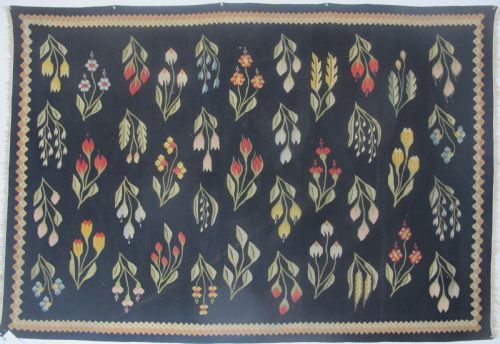
When you search for eastern european flatweave, you are looking at practical floor coverings and wall hangings originating from regions including Bessarabia, the Caucasus, Ukraine, Moldova, and Thrace. These textiles date from the 1880s through the 1930s, spanning distinct periods of regional folk art traditions.
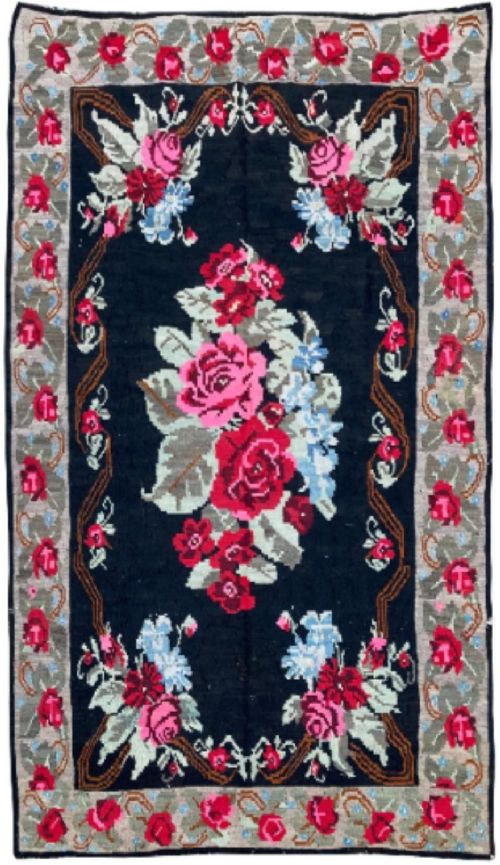
The selections you meet on this page lean heavily towards antique Bessarabian kilims featuring large-scale floral arrangements. Alongside these, you find Caucasian Karabagh pieces, Ukrainian and Moldovan examples, and Thracian work.
Buyers choose these rugs to ground a room in historic texture and deep botanical colour. The flat weave construction makes them versatile for placement beneath furniture or as prominent wall art.
How they were made
These textiles are constructed primarily from wool, often combined with cotton foundations to provide structural stability. The weaving technique relies on a flatweave structure without a piled surface, creating a smooth and durable textile.
Dyes derived from natural sources give these pieces their characteristic palette, which deepens gracefully over the decades. Artisans worked on traditional upright looms, passing coloured wool through the warps to build up botanical and geometric compositions.
Listings feature wool and cotton materials across production dates from the 1880s to the 1930s.
What varies in quality
The distinction between standard examples and the finest pieces rests in the handling of the wool and the complexity of the floral drawing. Superior pieces display intricate shading within the petals and leaves, creating a sense of depth that lesser examples lack.
Structural integrity also separates the grades of these textiles, particularly in the tightness of the weave and the preservation of the original borders. A well-preserved edge and a stable foundation indicate careful historic use and skilled initial construction.
The Eastern European Flatweave Glossary
- Kilim
- A flatwoven carpet or rug produced without a pile. This method creates a lighter textile that sits flat on the floor.
- Bessarabian
- A style of textile originating from the historical region between the Black Sea and the Prut river. These pieces are particularly noted for dark grounds paired with naturalistic floral sprays.
- Karabagh
- A style originating from a mountainous region in the southern Caucasus. These flatweaves often incorporate geometric elements alongside traditional motifs.
- Warp
- The vertical threads held in tension on a loom before the weaving begins. The horizontal weft is passed through these threads to form the cloth.
- Flatweave
- A textile produced by interlocking warp and weft threads without knotting pile tufts. This results in a smooth finish on both sides.
Eastern European Flatweave: Frequently Asked Questions
How do I clean an antique flatweave?
These wool and cotton textiles require gentle care to preserve their structure and dye integrity. Regular light vacuuming without a rotating brush helps remove surface dust.
Professional specialist cleaning is recommended for deeper maintenance. Water saturation and harsh detergents should be avoided to prevent dye migration and fibre degradation.
Can I place these rugs in high traffic areas?
Flatweave rugs were built for everyday utility, yet antique pieces require some consideration regarding placement. Lighter use areas allow the wool and cotton to endure without excessive friction.
Using a quality underlay provides cushioning and prevents slipping. This extra layer reduces direct wear between the flatweave and the floorboards beneath.
How do I date an eastern european flatweave?
Dating relies on stylistic markers, wool characteristics, and regional weaving conventions. Pieces from the late nineteenth century often display specific botanical layouts distinct from later 1930s production.
Structural examination of the edges and the tones of the dyed wool helps confirm the period. Comparing the floral drawing to documented examples from regions like Bessarabia narrows the timeline further.
Are these rugs suitable for hanging on walls?
Wall display is a traditional method for showcasing flatweaves while minimising ground-level wear. This approach protects the textile from foot traffic and highlights the full composition of the floral tapestry.
A non-damaging sleeve or specialist mounting system distributes the weight evenly across the top edge. This prevents distortion of the wool and cotton warps over time.