




Easel Dressing Mirror
An easel dressing mirror brings functional reflection and decorative metalwork to a surface, offering the practical convenience of adjustable tabletop positioning.
Easel Dressing Mirror
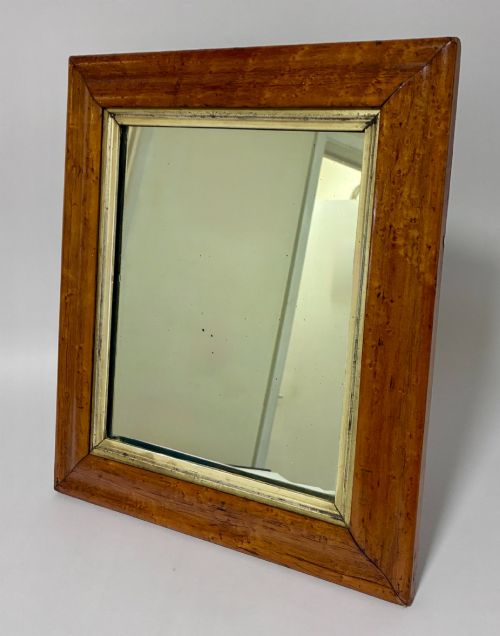
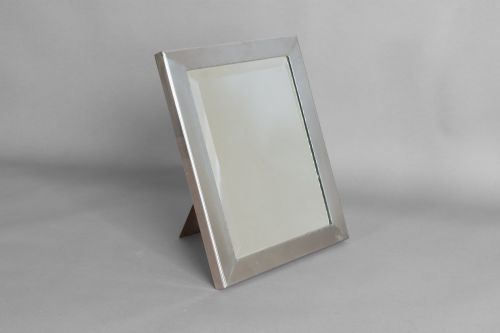
An easel dressing mirror is a portable tabletop looking glass supported by a hinged back prop, designed to sit upon a chest, dresser, or vanity. When you search for this phrase, you encounter forms that range from compact travelling accessories to substantial display pieces intended for permanent bedroom placement.
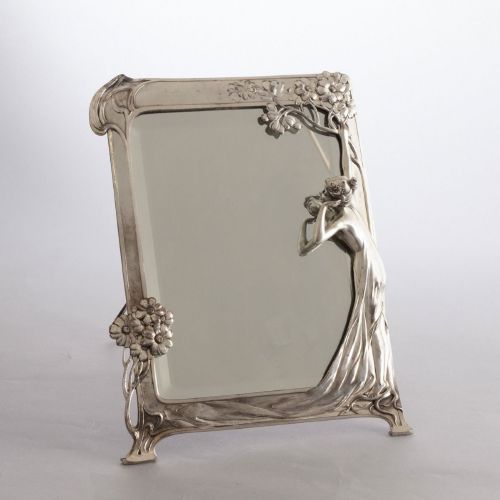
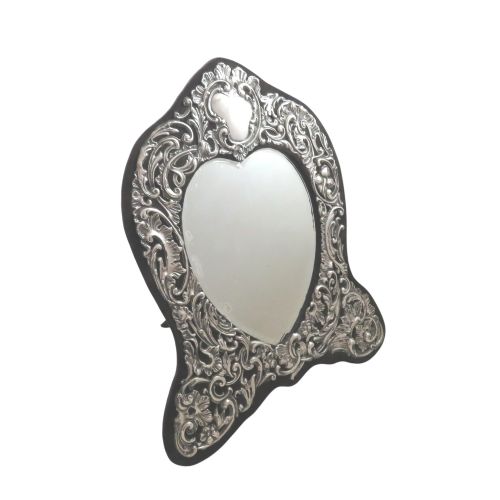
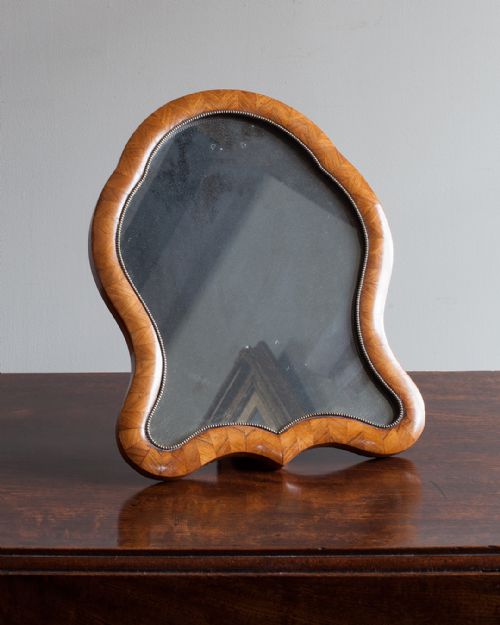
The pieces on this page span the Victorian and Edwardian periods into the Art Nouveau and Art Deco eras, capturing shifts in domestic interior taste. You meet small circular or heart-shaped frames alongside large rectangular or oval models, produced in workshops across England, France, and Germany.
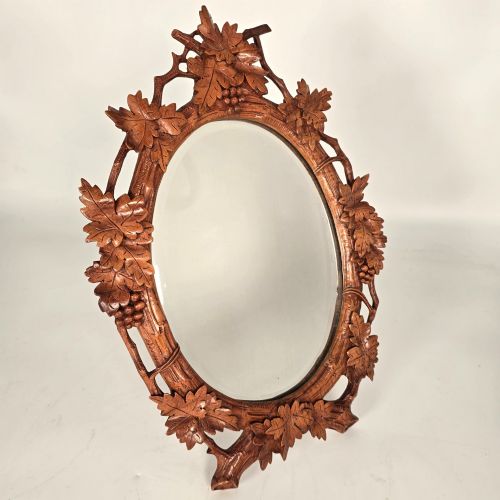
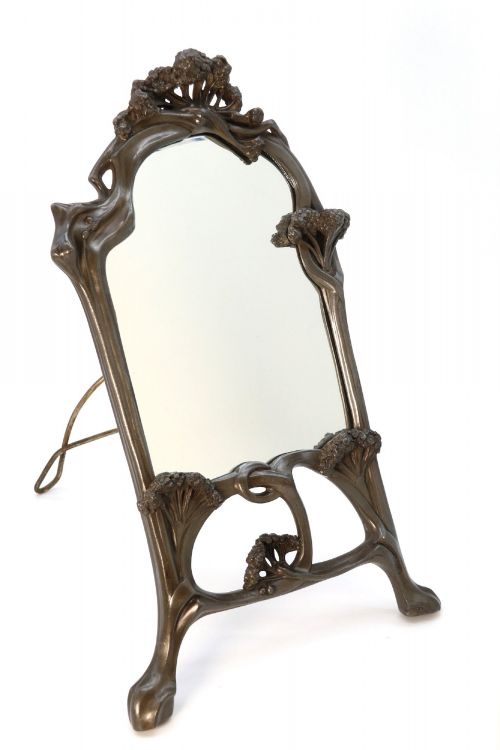
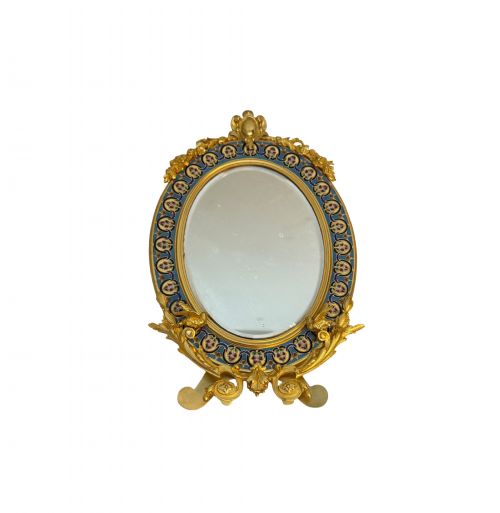
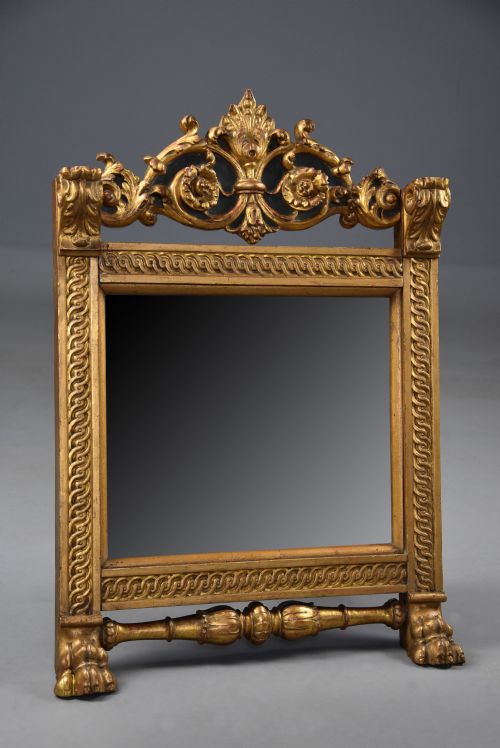
Table mirrors appear in diverse regional interpretations, from Swiss carved lime wood to French gilt bronze and English sterling silver. Each variation reflects the prevailing design language of its decade, whether that means ornate floral repoussé or clean geometric lines.
Materials and construction
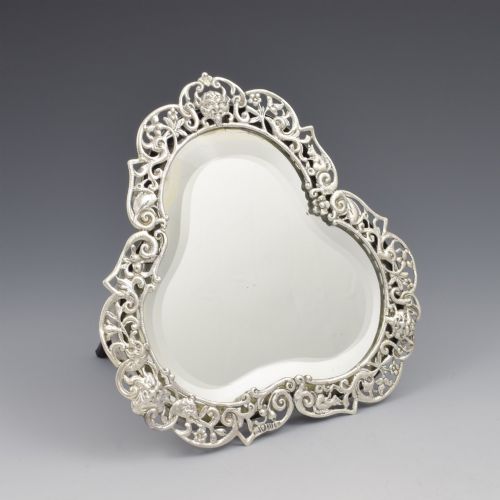
Makers constructed these frames using timber, base metals, and precious silver, mounting mirror glass within rigid structures backed by wooden struts or velvet-lined easels. Metal frames often utilised brass, pewter, or gilt bronze, sometimes enhanced with champlevé enamel or pierced openwork decoration.
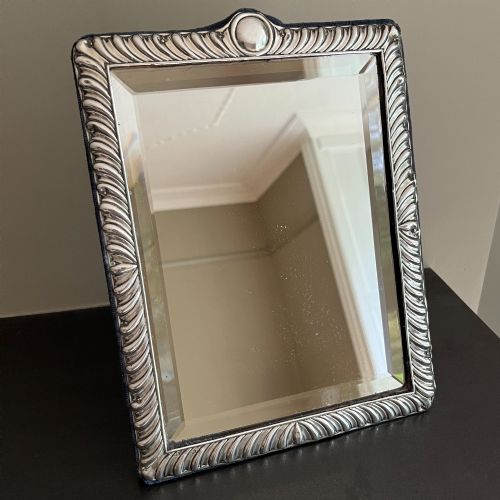
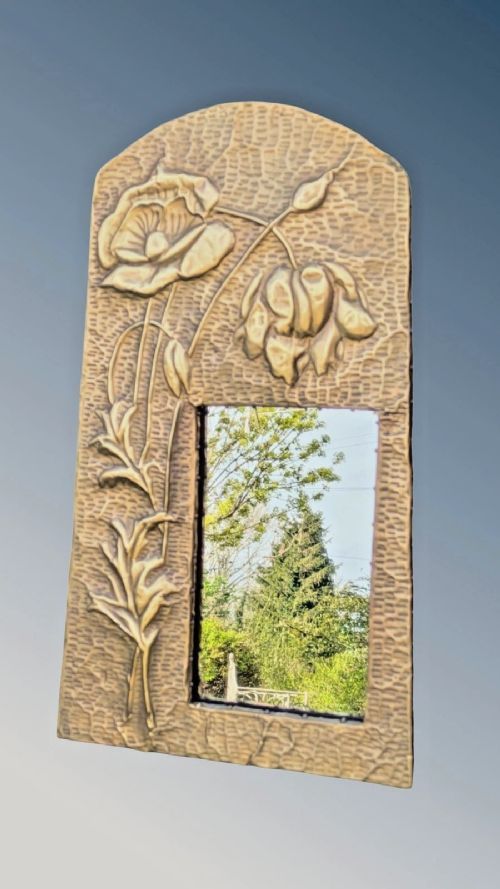
Silver-mounted examples relied on repoussé and chasing techniques to press intricate floral, animal, or scroll motifs into thin sheet metal before securing it to a wooden core. Wooden variants display hand-carving in lime wood, mahogany, or kingwood, while ceramic models utilise porcelain bodies shaped into figural or floral surrounds.
Easel Dressing Mirror Retail Price Guide 2026
Typical asking prices for easel dressing mirror among the pieces listed under this phrase on Sellingantiques today, from the lower quarter to the upper quarter. They describe what is for sale here now, not the wider market.
The documented periods stretch from the early nineteenth century through the Victorian, Edwardian, and Art Deco eras.
Distinctions in standard
Quality separates mass-produced stamped items from pieces bearing deep, crisp hand-chasing and substantial gauge metal. A superior frame shows crisp definition in cast ornament and tight joinery where the easel prop meets the backing.
The weight of the silver or bronze and the clarity of the original bevelled glass indicate the original tier of production. Finer examples retain intact original backing materials, secure hinges, and clear hallmarks or maker stamps that verify their origin.
William Comyns·Henry Matthews·Louis Auguste Moreau·WMF·Sitzendorf
The Easel Dressing Mirror Glossary
- Easel back
- A hinged leg attached to the reverse of a frame that props the mirror upright on a horizontal surface. This support allows the glass to tilt at a usable angle.
- Repoussé
- A metalworking technique where a smith hammers metal from the reverse side to form a raised design in relief. Details are subsequently refined from the front using chisels.
- Champlevé
- An enamelling process where troughs are carved into a metal surface and filled with vitreous paste before firing. The piece is then polished flat to reveal the metal outlines.
- Strut mirror
- An alternative term for an easel mirror, describing the vertical prop that holds the glass upright. These items were common fixtures on late nineteenth-century dressing tables.
- Hallmark
- A stamp or series of marks applied to precious metals indicating the standard of purity, the assay office, the maker, and the year of manufacture. English silver pieces carry these indicators on the border.
Easel Dressing Mirror: Frequently Asked Questions
How do I date an easel dressing mirror?
Dating relies on a combination of hallmarks, stylistic cues, and construction methods. Sterling silver examples frequently carry assay office stamps and date letters that pinpoint the exact year of manufacture.
Unmarked pieces reveal their age through design movements. Art Nouveau whiplash curves, Edwardian neoclassical symmetry, and Art Deco geometric forms all correspond to distinct decades of production.
Were these mirrors meant for travel?
Certain smaller versions served as travelling accessories for gentlemen and ladies, featuring folding leather or wooden cases to protect the glass. Shaving mirrors and compact vanity pieces were built for portability between rooms or during transit.
Larger specimens weighing several pounds remained stationary on bedroom dressing tables. Their substantial silver or bronze frames required a stable surface rather than a travelling pouch.
How do I care for the silver frames?
Silver-mounted frames require gentle dusting with a soft cloth to prevent the accumulation of airborne grime. Polishing should be undertaken sparingly with a non-abrasive silver cloth, taking care to avoid touching the mirror glass or backing fabric.
Harsh liquid dips must be avoided because they damage the weighted plaster or wood cores hidden beneath the metal shell. Proper preservation involves maintaining stable room humidity to protect the structural backing.
What is the difference between a vanity mirror and a dressing mirror?
The terms are often used interchangeably to describe tabletop looking glasses used during personal grooming. Historically, dressing mirrors accompanied larger chests of drawers or dedicated dressing tables.
Vanity mirrors tended to be smaller items placed on boudoir surfaces alongside cosmetic jars and brushes. Both types rely on easel supports to position the reflection.