


Earthenware Pottery Ornament
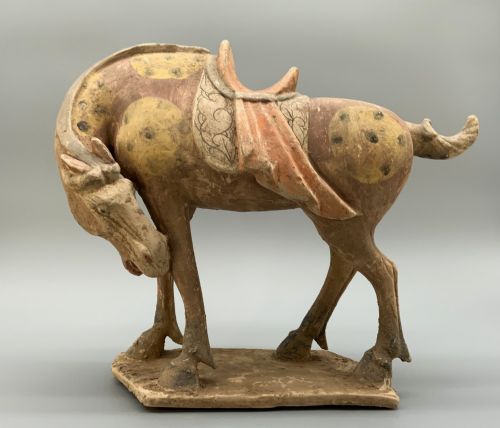
These earthenware pottery ornament pieces bring character into a room through nineteenth-century figures and animals.
Earthenware Pottery Ornament
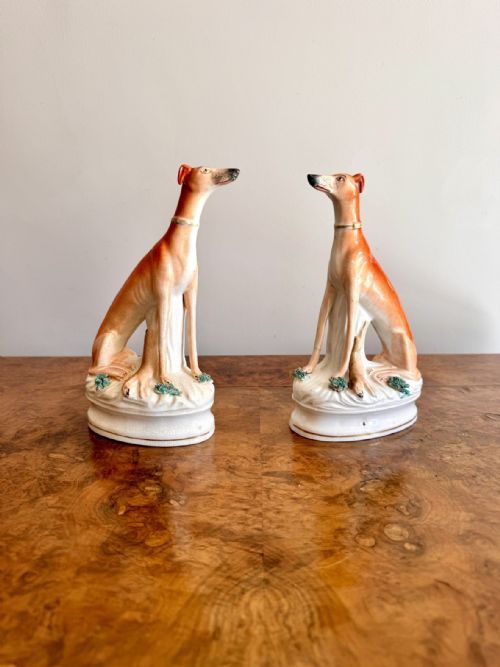
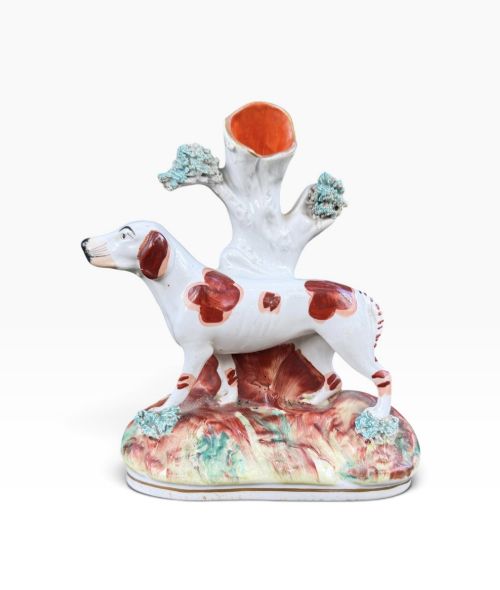
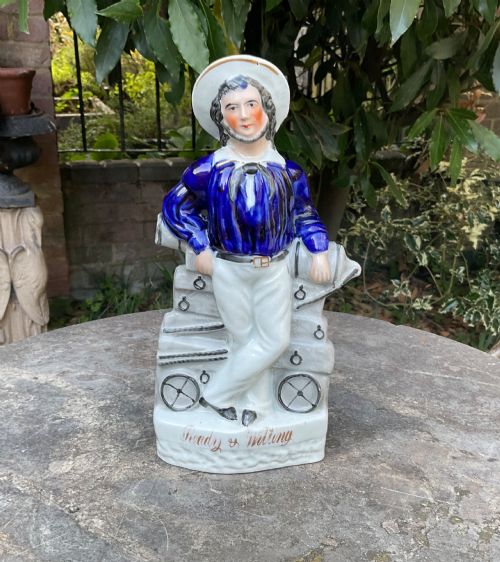
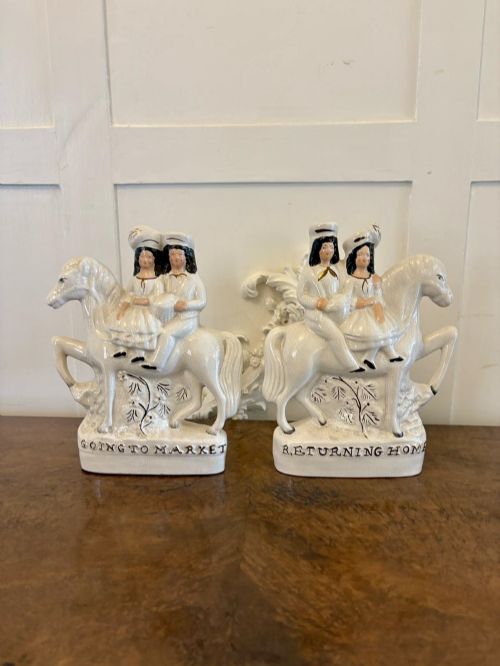
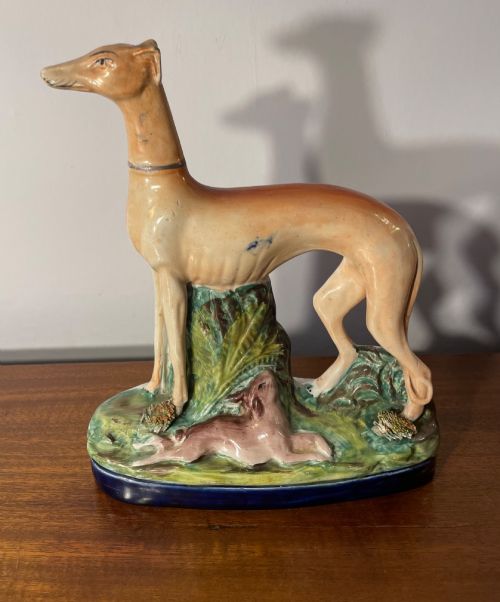
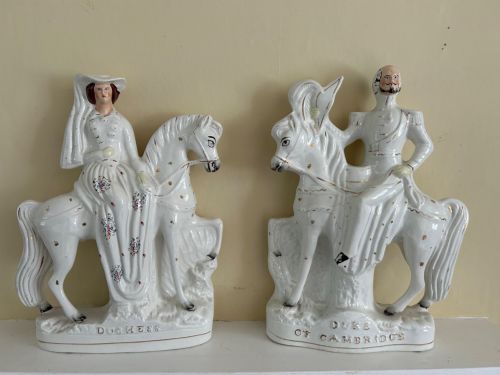
An earthenware pottery ornament encompasses decorative figures, spill vases and sculptural groups designed for domestic display. The pieces met most frequently on this page originate in the nineteenth century, with Victorian Staffordshire animals and portrait figures forming the bulk of the selection.
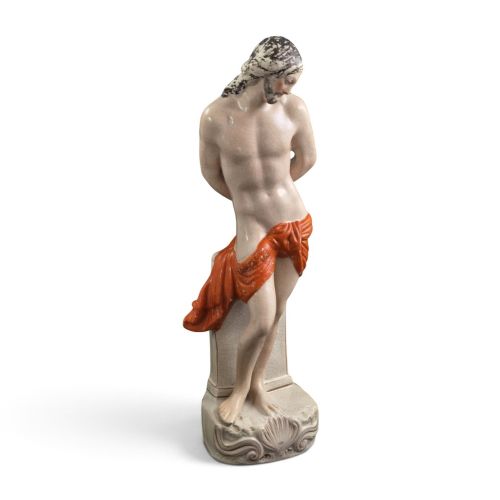
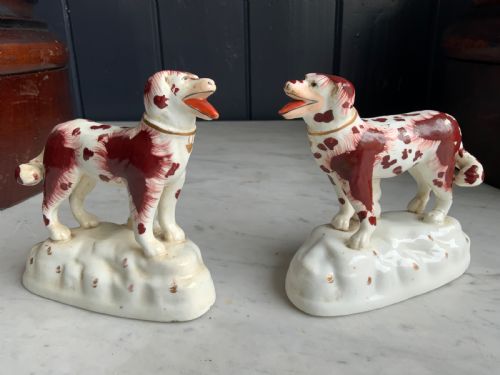
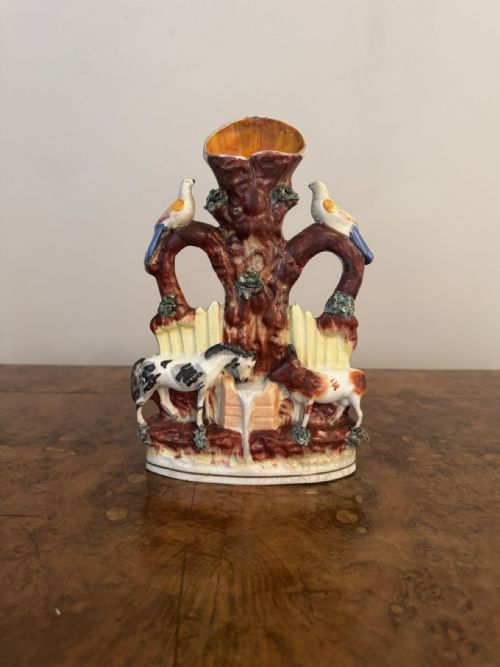
Buyers encounter matched pairs of dogs, poodles, lions and cows, alongside theatrical subjects, historical figures and spill vases intended to hold tapers. Studio pottery and French faience also appear, showing how makers expanded these decorative forms across different periods.
Materials and production methods
These items use porous earthenware clay bodies finished with glazes, enamels and occasional gold leaf details. Potters shaped the ceramic forms using moulds or hand sculpting, then applied surface decoration by hand before firing.
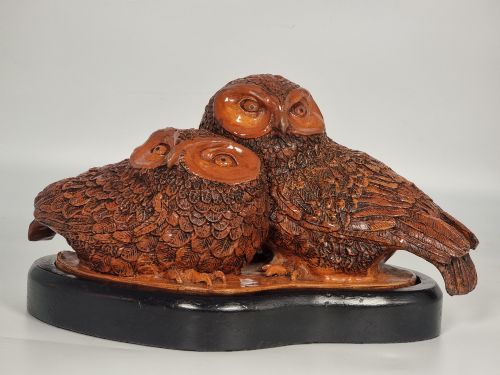
Lead glaze and enamel colours provide the characteristic glossy surface seen on Staffordshire figures and Dutch Delftware cows. Ebonised wooden bases sometimes support modelled pottery owls, combining different materials in a single display object.
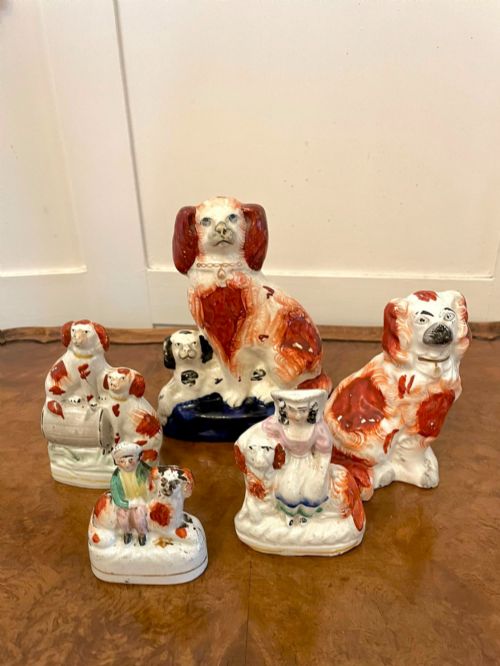
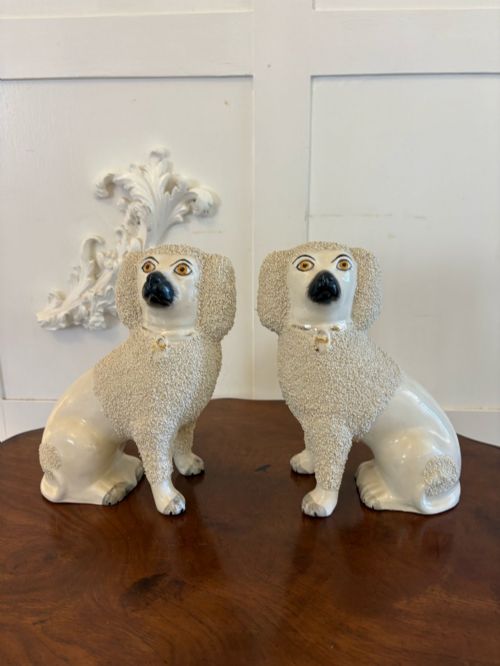
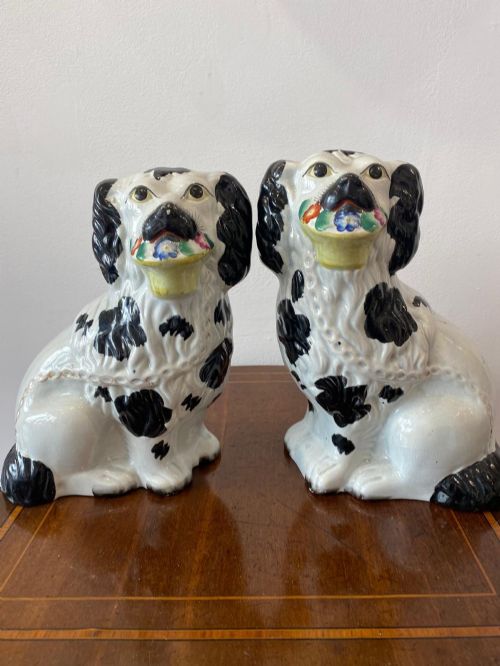
Seated Staffordshire poodles and comforter spaniels keep a quiet, ceramic watch over nineteenth-century mantelpieces.
Factors influencing quality
Original matched pairs and well-preserved glaze surfaces elevate the standing of a piece. Depth in the colour palette and careful execution of secondary details separate standard workshop output from exceptional studio figures.
Charles Vyse
The Earthenware Pottery Ornament Glossary
- Flatback
- A figure moulded with a decorated front and a flat, unglazed or minimally finished back meant to stand against a wall.
- Spill vase
- A hollow pottery vessel designed to hold wooden tapers used for lighting fires or pipes.
- Pearlware
- A refined type of earthenware with a bluish-white glaze developed in the late eighteenth century.
- Faience
- European tin-glazed earthenware, frequently associated with French and Dutch production.
- Staffordshire figure
- A ceramic ornament produced by various potteries in the Staffordshire region during the nineteenth century.
Earthenware Pottery Ornament: Frequently Asked Questions
What are Staffordshire flatback figures?
Staffordshire flatbacks are ceramic ornaments shaped with a detailed front and a flat reverse designed to sit on a mantelpiece against a wall.
Potters produced these figures to depict royalty, theatrical characters, animals and historical events during the Victorian period.
How were spill vases used?
Spill vases combined a decorative ceramic animal or figure with an integrated hollow tube designed to hold thin wooden spills.
Household members pulled these wooden tapers from the vase to transfer flames from the fireplace to candles or lamps.
How do I identify nineteenth-century pieces?
Nineteenth-century earthenware ornaments display characteristic hand-painted enamel colours over lead glazes and typical Victorian subject matter.
Weight, crazing in the ceramic glaze and the modelling style of figures such as poodles or portrait subjects help confirm the period.
Where were these ornaments displayed?
Victorian households placed these ceramic figures on mantelpieces, sideboards and parlor tables to display current tastes and interests.
Pairs of dogs, lions and sheep were arranged symmetrically to decorate living spaces.