
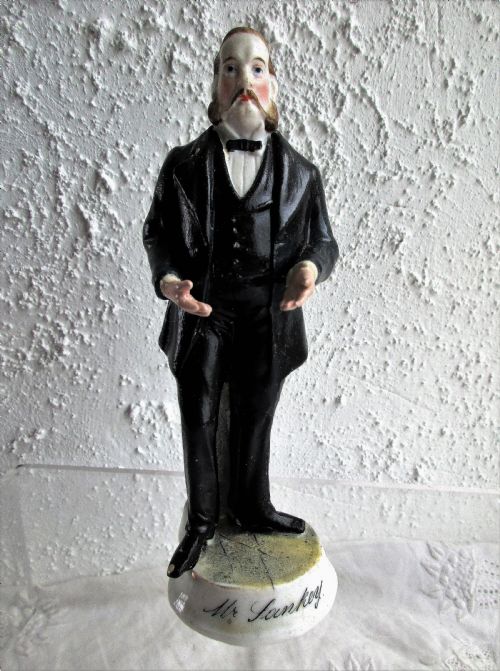


Earthenware Portrait Figurine
These earthenware portrait figurines capture monarchs, reformers and theatrical stars in pottery, offering a tangible connection to nineteenth-century public life.

Earthenware Portrait Figurine
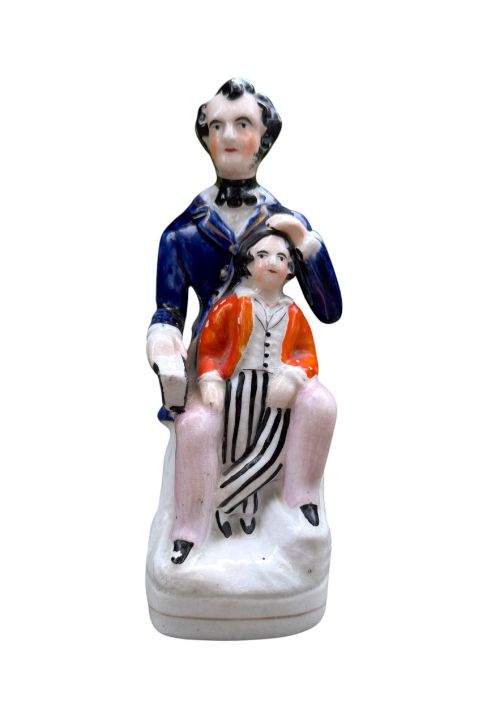
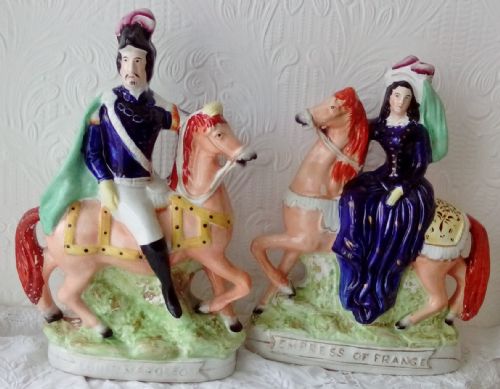
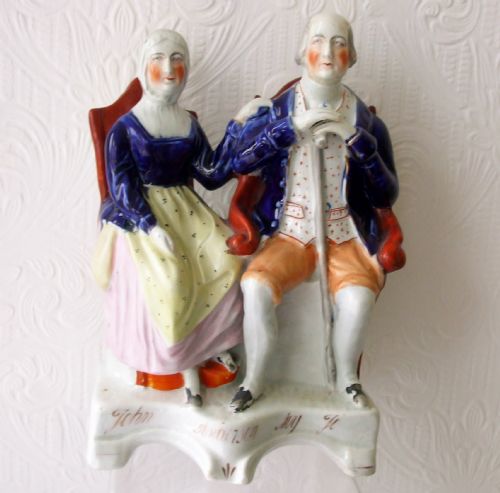
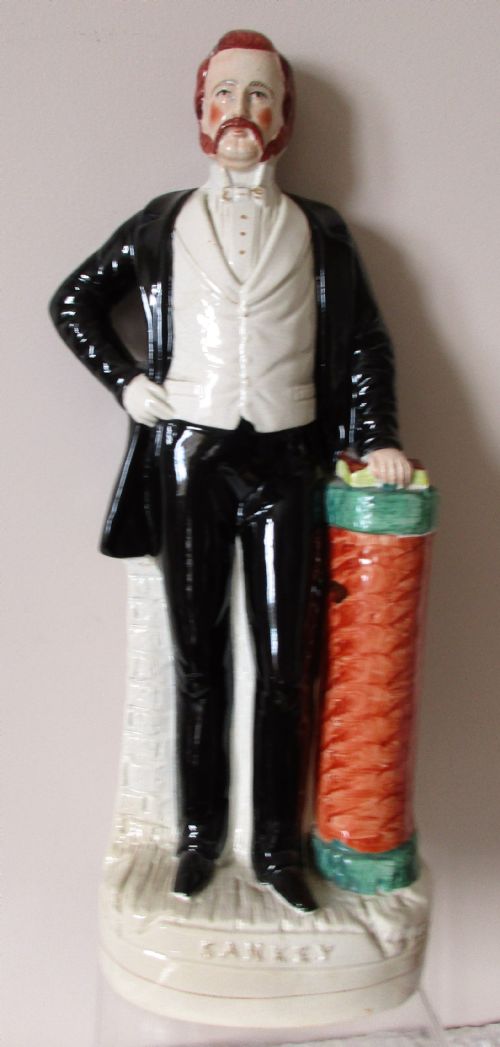
An earthenware portrait figurine represents notable figures from the nineteenth century, including royalty, military leaders, politicians and performers. These ceramic works depict subjects such as Queen Victoria, Lord Shaftesbury and Jenny Lind, serving as popular likenesses for domestic mantelpieces.
Most examples originate from the Victorian period, spanning the mid to late nineteenth century. The selection includes single figures, pairs and group compositions depicting historical alliances or royal weddings.
Makers produced these decorative objects to commemorate public events or celebrate famous personalities of the era. Buyers encounter flatback variants intended to stand against a wall, alongside fully modelled figures.
Materials and construction
Potters shaped these figures from earthenware clay, applying lead glaze to seal the porous body and create a smooth surface. Artisans then added surface detail using enamel paint and occasional gilt highlights.
Listings span the nineteenth century, featuring Victorian eras and specific years from eighteen-forty-eight to eighteen-eighty.
Judging the work
The application of the enamel paint and the smoothness of the lead glaze dictate visual success. Stronger pieces retain vibrant colour and clean lines without excessive blurring or misalignment in the decoration.
The Earthenware Portrait Figurine Glossary
- Earthenware
- A porous pottery body fired at lower temperatures than stoneware or porcelain. It forms the base material for the vast majority of these figures.
- Flatback
- A style of figure moulded with a finished front and a plain, unglazed or minimally glazed rear. This design allowed the piece to sit flush against a wall or mantelpiece.
- Lead glaze
- A glossy coating containing lead oxide applied to the ceramic body before firing. It provides a shiny protective finish that enhances the underlying enamel colours.
- Enamel paint
- A type of opaque paint applied over the fired glaze to add colour to the figure. Artisans used it to render hair, clothing and facial expressions.
- Gilt
- A thin layer of gold applied as a decorative highlight to details such as lettering or uniforms. It denotes a more ornate finish on select figures.
Earthenware Portrait Figurine: Frequently Asked Questions
How do I identify the subject of the figure?
Makers frequently inscribed the name of the sitter directly onto the front of the base in raised or painted capital letters. Researching the historical person named can help verify the context of the piece.
Portraits also rely on characteristic clothing, regalia or associated symbols typical of nineteenth-century portraiture.
Were these figures made as pairs?
Workshops produced certain subjects, such as royal couples or political allies, as matched pairs intended to face one another on a mantelpiece. Other notable figures appear as individual standalone pieces or part of larger group settings.
Pairs often feature complementary poses and shared decorative bases matching the historical event commemorated.
Where should I display these figures at home?
These ceramic works suit stable surfaces away from direct sunlight and heavy foot traffic to protect the painted enamel and glaze. Placing them on mantelpieces or within enclosed shelving highlights their detailed modelling.
Flatback examples work particularly well when positioned close to a wall, echoing their original nineteenth-century placement.
What distinguishes porcelain from earthenware versions?
Porcelain is a denser, vitrified ceramic material fired at higher temperatures, resulting in a whiter, non-porous body. Earthenware is more porous and softer, representing the primary medium used for these nineteenth-century portrait pieces.
While most listings record earthenware, occasional porcelain variants appear with similar portrait subjects.