


Earthenware Olive Pot
When you search for earthenware olive pot, you are hunting for honest utilitarian vessels of clay that bring genuine Mediterranean rustic character to an interior.
Earthenware Olive Pot
When you search for earthenware olive pot, you encounter functional storage and transport vessels rooted in Mediterranean rustic traditions. These items span periods from the eighteenth century through to the early twentieth century, taking forms such as amphorae, jars, jugs, and garden planters.
The pieces you are most likely to meet on this page originate from France and Turkey, displaying styles ranging from French Country to Mediterranean Folk Art. They include multi-handled vessels, walnut oil pots, and confit jars made for agricultural and domestic use.
Makers and workshops across these regions produced varied utilitarian forms, sometimes incorporating wrought iron stands or featuring painted finishes. Their enduring appeal lies in this practical history, which suits modern garden displays and interior rustic styling.
How they were made
These vessels are formed from clay and terracotta, shaped by hand into robust utilitarian forms designed to hold oil, water, or olives. Artisans utilised traditional throwing and moulding techniques to create thick walls capable of withstanding heavy agricultural use.
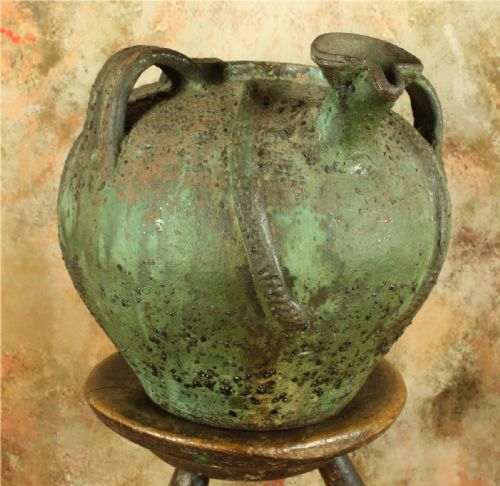
Surfaces often feature a ceramic glaze or green glaze applied over the terracotta body, while other examples remain in raw clay or carry painted decoration. Some pieces are paired with wrought iron mounts, combining earthen materials with simple metalwork.
The listings here feature pieces made from terracotta, earthenware, and glazed ceramic, spanning the eighteenth to the twentieth centuries.
What varies in quality
Quality in these pieces rests upon the balance of the thrown form and the character of the surface finish. Stronger examples exhibit harmonious proportions in handles and bodies, alongside even application of historic green glazes or patinated terracotta.
The distinction between ordinary utility items and superior examples lies in the integrity of the surviving material and the depth of age. Vessels retaining original painted surfaces or distinct regional potting marks stand apart from plain utilitarian stock.
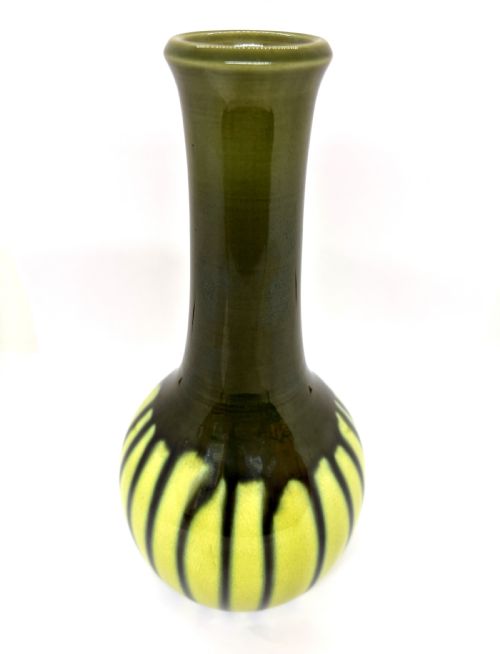
Burmantoft's Pottery
The Earthenware Olive Pot Glossary
- Terracotta
- A porous fired clay used widely for utilitarian vessels and garden pots. It acquires a distinct earthy warmth and patination over time.
- Amphora
- A tall ancient storage vessel with two handles and a narrow neck, traditionally used for wine or oil. Later folk interpretations retain this classic silhouette.
- Confit Jar
- A glazed earthenware pot made in France for preserving food items. They typically feature a dipped glaze over a terracotta body.
- Glaze
- A vitreous coating fused to the ceramic body through firing. In these pieces, it provides both waterproofing and decorative colour.
Earthenware Olive Pot: Frequently Asked Questions
What is an earthenware olive pot?
These are traditional clay and terracotta vessels originally utilised for storing and transporting oil, water, or olives in Mediterranean regions. They span several centuries of rural craftsmanship.
Today, buyers use them as decorative focal points in gardens and interiors, appreciating their honest shapes and historic patination.
How were these pots used historically?
Farmers and merchants relied on these robust containers for daily agricultural storage and transport across the Mediterranean and France. Their thick walls helped protect contents from temperature changes.
Different handle configurations and forms suited specific tasks, such as pouring walnut oil or holding water.
How do I date an olive pot?
Dating relies on observing the potting style, the type of clay, and the characteristics of any applied glaze or paintwork. Pieces range from eighteenth-century multi-handled jugs to early twentieth-century garden pots.
Comparing form variations and regional styles helps narrow down the period of manufacture.
Can I use these pots outdoors?
Many of these vessels function well as garden urns and planters, provided they are protected from hard frost that can damage porous terracotta. Their rustic forms integrate naturally into outdoor spaces.
Evaluating the wall thickness and existing material condition helps determine suitability for garden use.