


Earthenware Hearth Dogs
These earthenware hearth dogs bring traditional English character to a mantelpiece, offering the classic appeal of nineteenth-century pottery figures.
Earthenware Hearth Dogs
Earthenware hearth dogs are ceramic figurines designed to sit by the fireplace, capturing the domestic charm of Victorian interiors. The search for earthenware hearth dogs leads most directly to pairs of seated spaniels and poodles originating from the nineteenth century.
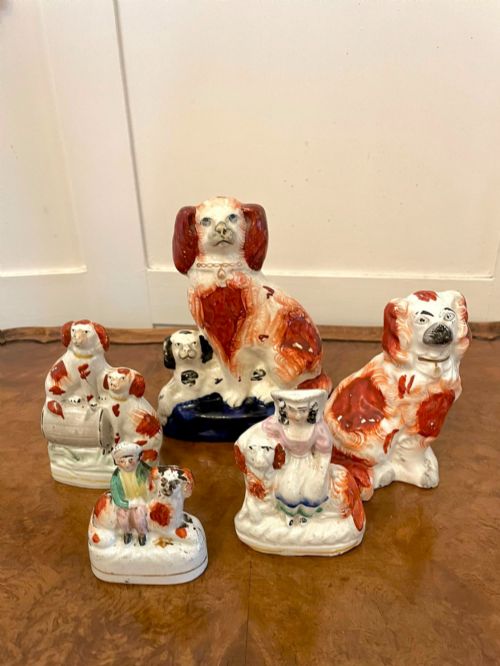
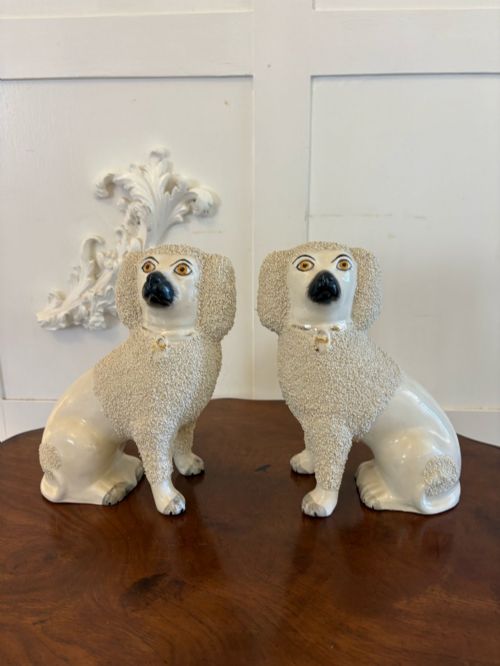
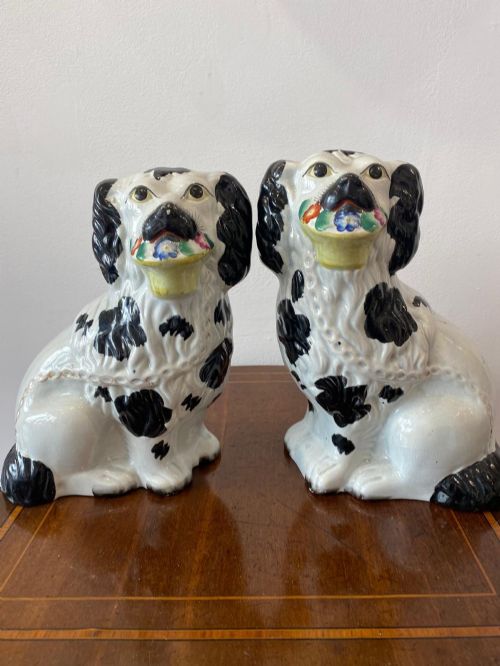
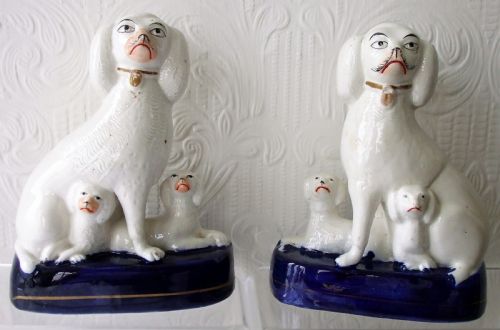
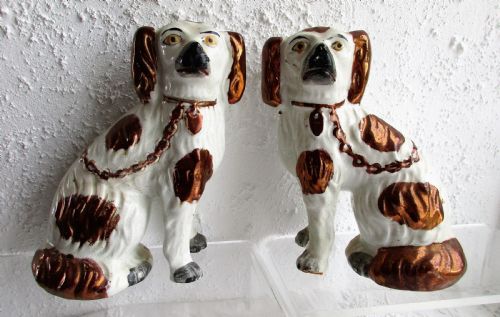
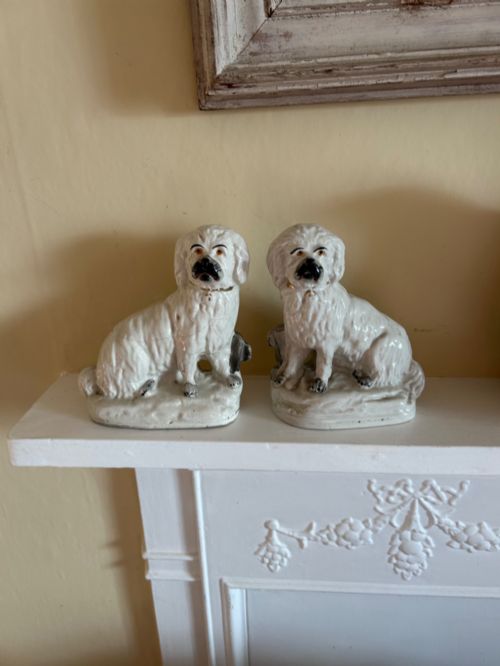
Most examples found here date from the Victorian period, spanning the years around eighteen sixty to nineteen hundred. These decorative objects take the form of spaniels, poodles with pups, Maltese terriers, and comforter spaniels.
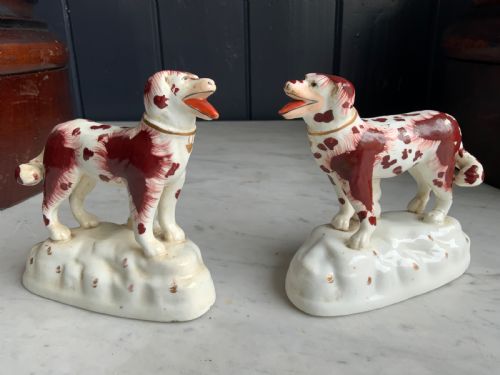
Makers produced these figurines in collections and pairs, often modelled as seated dogs facing one another. They appear in various finishes, including plain white, red and white markings, and copper lustre.
Surface finish and modelling
Quality in these earthenware figures rests upon the precision of the hand painting and the clarity of the underlying ceramic form. Pieces with well-preserved enamel colours and crisp facial details stand apart from simpler work.
Some poodles arrive with sculptural pups tucked close, ensuring the hearth stays crowded with ceramic dogs.
Beswick
The Earthenware Hearth Dogs Glossary
- Earthenware
- Porous pottery fired at lower temperatures, serving as the primary ceramic body for these nineteenth-century figures.
- Comforter spaniels
- Staffordshire ceramic dogs traditionally placed on either side of a fireplace as hearth ornaments during the Victorian era.
- Copper lustre
- A metallic glaze finish applied to pottery to create a reflective, iridescent copper sheen on the surface.
- Enamel
- Opaque glass-like paint applied over the glaze and fired again to add permanent colour to decorative figurines.
Earthenware Hearth Dogs: Frequently Asked Questions
Where did people place these dogs?
Owners traditionally positioned these ceramic figures on the mantelpiece above the fireplace or directly on the hearth.
Pairs were arranged facing inwards toward each other to frame the domestic fire.
What breeds are represented?
The most common breed found in these nineteenth-century ceramics is the spaniel, often referred to as comforter spaniels.
Other variations include poodles, sometimes shown with pups, and Maltese terriers.
How do I date these figures?
Dating relies on stylistic clues, manufacturing techniques, and the type of glaze or enamel decoration used by the pottery.
Most pieces on this page originate from the Victorian era and the later decades of the nineteenth century.
Are they sold as pairs?
Many of these decorative objects were produced and sold as matching pairs designed to sit symmetrically.
Collections also include groups of four, five, or six individual ceramic figurines.