




Vintage Porcelain Dog Pair
These vintage porcelain dog pair selections are matching mantel ornaments and decorative figures shaped as spaniels, greyhounds, and poodles.
Vintage Porcelain Dog Pair
When you search for a vintage porcelain dog pair, you encounter matching mantel ornaments and decorative figures shaped as spaniels, greyhounds, poodles, and Shi lions. These ceramic companions sit in pairs designed to face one another across a fireplace, shelf, or table.
The versions you are most likely to meet on this page hail from the nineteenth and twentieth centuries, taking the form of earthenware and glazed ceramic figures. They originate from Victorian Staffordshire potteries alongside English and continental workshops.
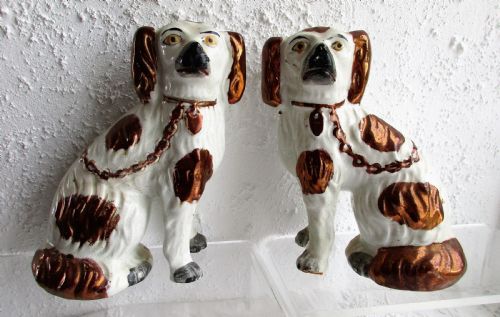
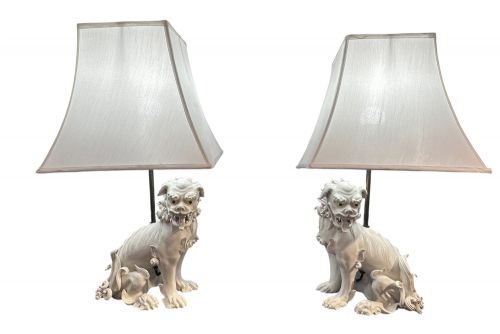
Many of these decorative objects serve purely as shelf ornaments, while others incorporate practical elements like quill holders or table lamp fittings. The listings include traditional white models, gilded versions, and pieces finished in bright enamels or copper lustre.
How they were made
Potters shaped these figures from earthenware and porcelain bodies using traditional moulds, capturing the distinct postures of spaniels, greyhounds, and poodles. Artisans then applied liquid glazes to seal the ceramic before firing the pieces in kilns.
Makers finished the fired surfaces with hand-painted enamel details, copper lustre highlights, and touches of gold leaf or gilt. Some iterations received plain white glazes, known as blanc de Chine, while others gained intricate Chinoiserie patterns.
What varies in quality
The application of surface decoration also dictates quality, distinguishing between simple monochrome glazes and rich embellishments involving gold leaf, copper lustre, and multi-coloured enamel work.
Royal Capodimonte Factory·Royal Dolton·Beswick
The Vintage Porcelain Dog Pair Glossary
- Staffordshire pottery
- Ceramic wares produced in the various kilns and factories operating within the Staffordshire Potteries region of England. Many nineteenth-century dog figures originate from this district.
- Blanc de Chine
- A French term translating to white from China, used to describe Chinese and European porcelains finished in a uniform white glaze. It highlights the clean lines of the ceramic form.
- Copper lustre
- A metallic pottery glaze containing copper that produces a reflective, iridescent surface sheen. Makers utilised this technique to add warm, gleaming borders and accents to earthenware figures.
- Quill holder
- A hollow ceramic base or figurine fitted with an aperture designed to hold writing feathers. These functional items combine decorative animal forms with practical desk accessories.
Vintage Porcelain Dog Pair: Frequently Asked Questions
Where did these ceramic dogs sit?
Victorian households traditionally placed these matching canine figures upon mantelpieces in pairs, positioning each animal to look inward toward the centre of the hearth.
Owners also arranged them on side tables, chests of drawers, and an array of domestic shelving to display the decorative ornaments.
How do I identify Victorian pieces?
Victorian Staffordshire figures typically display characteristic nineteenth-century moulding styles, often featuring gold gilt accents, copper lustre, or hand-painted enamel coats.
Examining the unglazed base allows you to inspect the aged ceramic body and any historical crazing within the glaze.
What are comforter spaniels?
Comforter spaniels represent a specific style of nineteenth-century Staffordshire pottery modelled after King Charles spaniels. Victorian owners kept these decorative figures as substitutes for real lapdogs.
The ceramic versions feature characteristic drooping ears, painted patches, and golden chains painted across their chests.
Can I use these as lamps?
Certain figures, such as Shi lion or Dog of Fo lamps from the early twentieth century, arrive adapted with electrical fittings. These pieces function as table lamps while retaining their sculptural form.
You should consult a qualified electrician to check older wiring before plugging in vintage lamp adaptations.