


Painted Ceramic Spaniels
Painted ceramic spaniels are decorative Victorian figurines that bring a traditional fireside charm to any mantelpiece.
Painted Ceramic Spaniels
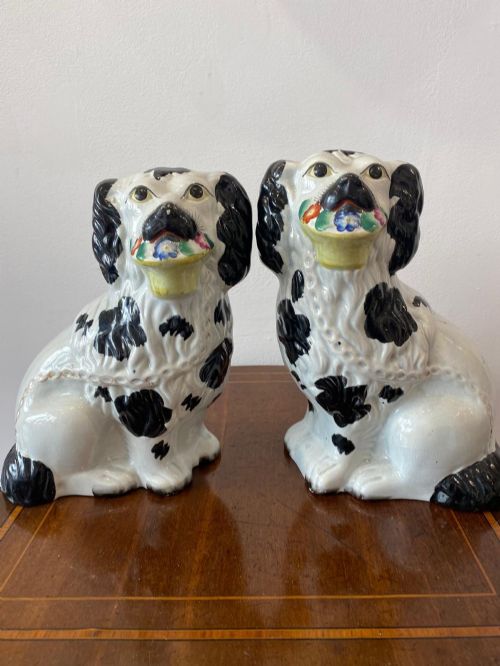
Painted ceramic spaniels are earthenware pottery figurines designed during the nineteenth century, most frequently appearing in pairs. These decorative objects were made to sit on either side of a fireplace, a tradition that earned them the name comforter spaniels. Most examples on this page date from the Victorian period, spanning the decades between eighteen sixty and nineteen hundred.
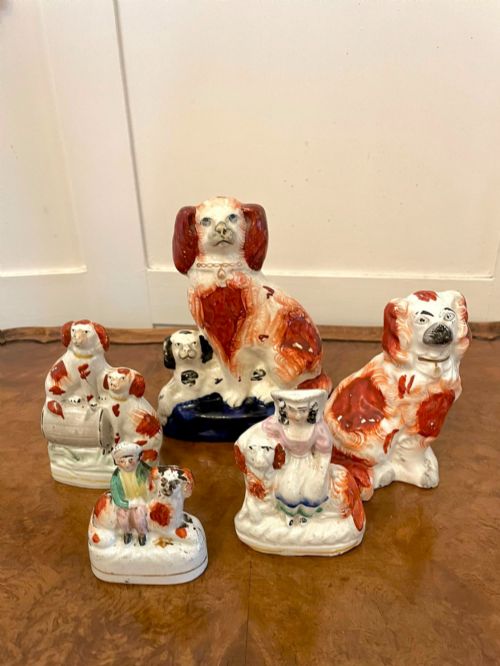
The selection includes standard seated spaniels alongside rarer variants such as red and white Staffordshire dogs and Maltese terriers. While the vast majority originate from nineteenth-century English potteries, the evidence also encompasses eighteenth-century Chinese export porcelain dog statues. Buyers encounter everything from single decorative figures to collections of four or six matching pieces.
How they were made
These figures are formed from earthenware and ceramic bodies, shaped into decorative figurines through traditional moulding techniques. Once shaped, the clay is fired and coated with glaze to create a smooth surface finish.
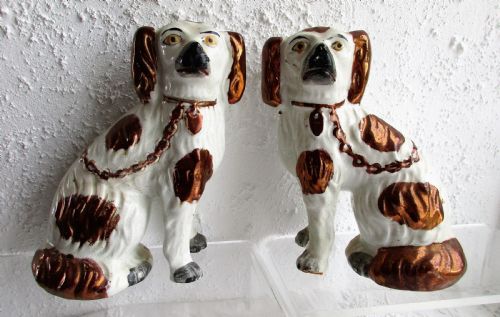
Makers applied enamel paint and enamel details over the glaze to render the facial expressions, collars, and patches of the dogs. Certain pieces incorporate copper lustre highlights to add metallic warmth to the decoration.
Listings span the eighteenth, nineteenth, and early twentieth centuries, utilising earthenware, porcelain, and copper lustre.
What varies in quality
The Painted Ceramic Spaniels Glossary
- Earthenware
- A porous pottery body fired at lower temperatures, commonly used for nineteenth-century Staffordshire figures. It forms the structural base beneath the glaze and paint layers.
- Copper lustre
- A metallic glaze technique producing a coppery sheen on ceramic surfaces. Potters used this to accent collars and chains on canine figurines.
- Enamel paint
- Opaque glass-based paints fused to the glazed surface during a low-temperature firing. This medium provides the characteristic red and black markings on the spaniels.
- Comforter spaniels
- A nineteenth-century term for pairs of ceramic dogs placed on fireplace mantels. They were believed to bring comfort and protection to the Victorian household.
Painted Ceramic Spaniels: Frequently Asked Questions
Where did people display these dogs?
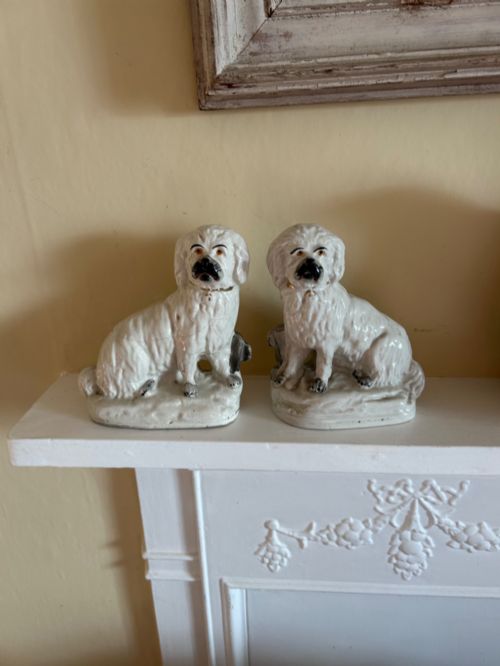
Victorian households placed these painted ceramic spaniels on the mantelpiece above the fireplace. They typically sat in mirror-image pairs facing inward toward the hearth.
Over time, collectors began arranging smaller collections of four or six dogs on side tables and dressers.
Are all these spaniels from the same period?
The pieces span several decades of the nineteenth century, with strong representation from eighteen sixty onwards. Victorian examples form the core of the available selection.
Earlier pieces, such as eighteenth-century Chinese porcelain dog statues, appear occasionally alongside the standard earthenware pottery.
Do painted ceramic spaniels come in pairs?
Many examples are offered as matched pairs designed to sit symmetrically on either side of a domestic hearth. This paired arrangement reflects how nineteenth-century makers originally sold them.
Listings also feature individual figures as well as larger grouped collections of four or six dogs.
What colours do these spaniels feature?
The palette relies heavily on enamel paint applied over a white glazed ceramic body. Red and white markings dominate the traditional Staffordshire spaniel appearance.
Additional visual interest comes from copper lustre accents and painted black details defining the eyes, noses, and collars.