

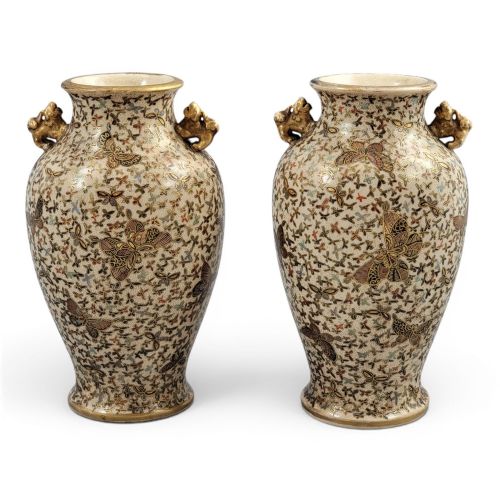


Earthenware Ceramic Lions
These earthenware ceramic lions bring character to a room, ranging from robust Staffordshire figures to detailed Japanese models.
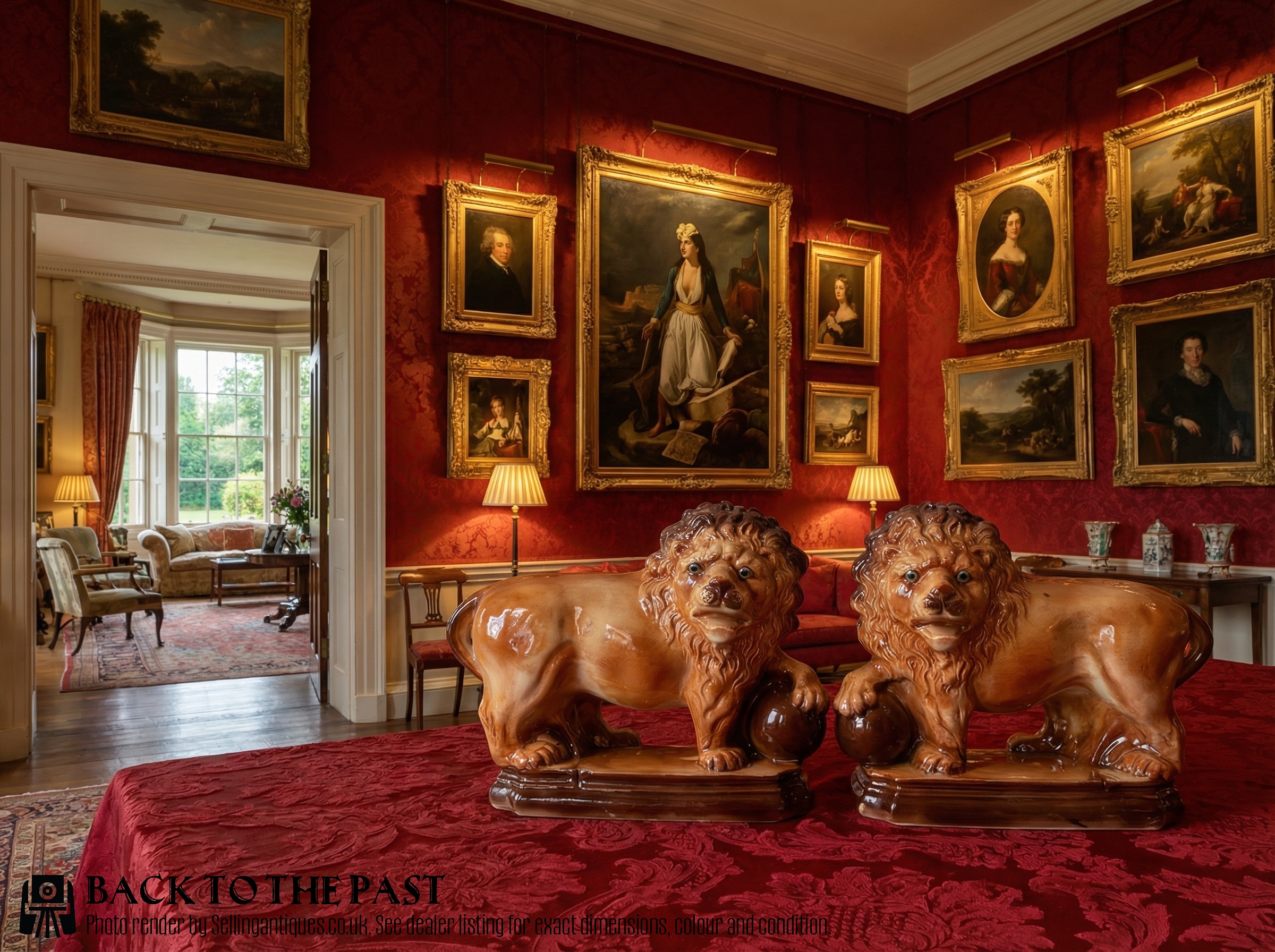
Earthenware Ceramic Lions
When you search for earthenware ceramic lions, you encounter a diverse group of sculptural objects spanning the eighteenth, nineteenth, and early twentieth centuries. These figures take various forms, from decorative mantel ornaments and bookends to jelly moulds and architectural planters.
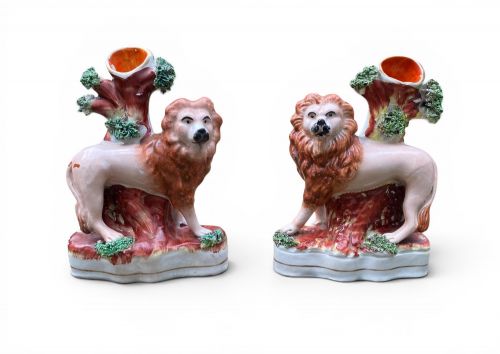
The version you are most likely to meet on this page is the Victorian Staffordshire figure, often modelled in pairs with distinct glazes. Alongside English pieces, the listings include continental European tin-glazed examples and Asian ceramic representations of Buddhist lions.
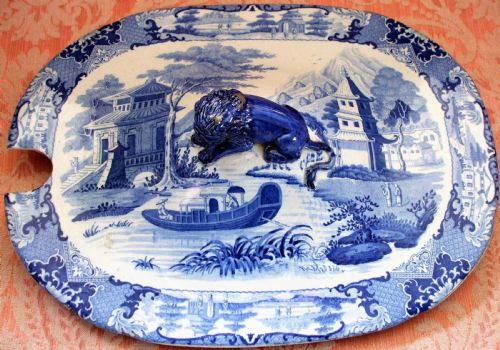
Makers such as Lancaster and Sons of Hanley and factories like Rockingham and Minton produced these wares using traditional ceramic methods. The collection also captures functional kitchenware and tableware incorporating lion motifs, such as tureen covers and sugar bowls.
Materials and methods
Moulding techniques allowed workshops to produce uniform figures in pairs, such as recumbent lions and spill vases, which were subsequently hand-finished with incised or painted details. Transfer printing appears on related domestic vessels, applying blue and white or mulberry patterns to earthenware bodies.
The listings span from the eighteenth century to the twentieth century, uniting English earthenware with Japanese Satsuma and German tin-glazed pottery.
Distinctions in quality
The standard of modelling defines the finer pieces, where the sculptor captures the muscle structure and expression of the animal rather than relying on generic factory output. Sharpness in the moulding and precision in the hand-painted enamels or glaze application distinguish superior figures from simpler commercial wares.
Depth and richness of glaze also mark out the better examples, particularly where treacle glazes, tin glazes, or lustre effects display an even coverage and good gloss. The presence of clear factory marks or attributed signatures adds historical weight to specific English and Japanese pieces.
Robert Hamilton·Rockingham Pottery·Minton·Rogers·Lancaster and Sons of Hanley
The Earthenware Ceramic Lions Glossary
- Earthenware
- Porous pottery fired at lower temperatures than stoneware or porcelain, requiring a glaze to achieve impermeability. It serves as the primary body for the majority of these nineteenth-century figures.
- Treacle glaze
- A dark, translucent brown glaze applied over earthenware, highly characteristic of Staffordshire and Rockingham potteries. It gives figures a glossy, molasses-like appearance.
- Spill vase
- A hollow ceramic vessel designed to hold wooden spills used for lighting fires or pipes. They often stand directly behind or beside a figural subject.
- Shishi
- A traditional East Asian guardian lion or Foo dog, frequently rendered in Japanese ceramics and Satsuma wares. These mythical beasts symbolise protection and strength.
- Tin glaze
- An opaque white glaze made by adding tin oxide to a lead glaze, providing a smooth surface for painted decoration. It is commonly found on earlier European earthenwares.
Earthenware Ceramic Lions: Frequently Asked Questions
How do I display ceramic lions?
Pairs of figures work well balanced on a mantelpiece, sideboard, or bookshelf where their symmetrical forms can be appreciated.
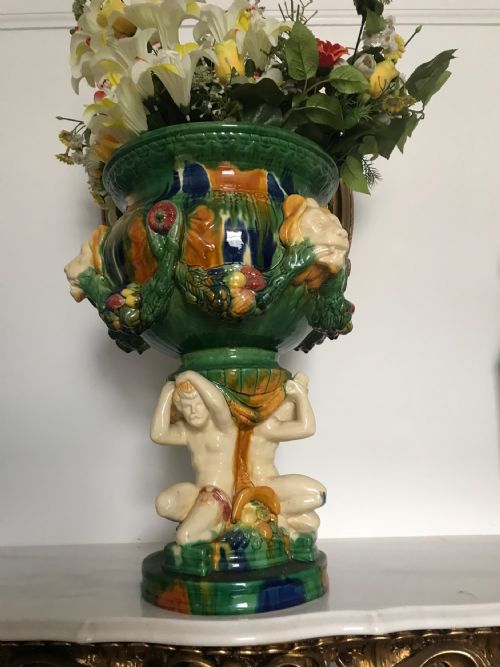
Larger items like planters or jardinieres function effectively as standalone display pieces filled with greenery or dried arrangements.
Are these lions English or foreign?
The selection includes a strong representation of nineteenth-century English Staffordshire pieces alongside continental European glazed pottery.
You will also find Japanese Satsuma and Kutani ceramic models depicting traditional Buddhist guardian lions.
What is a Medici lion?
A Medici lion is a representation of the famous marble sculptures guarding the Villa Medici in Rome, typically shown with one paw resting on a sphere.
Staffordshire potters frequently adopted this classical stance for their earthenware ceramic figures and jelly moulds.
How do I date these figures?
Dating relies on stylistic clues, glaze characteristics, and any impressed factory marks or signatures present on the ceramic body.
Victorian pieces often display characteristic crackle, treacle glazes, or transfer-printed details typical of the nineteenth century.