


Pair Ceramic Lion Ornaments
Pair ceramic lion ornaments bring character to a room, ranging from Staffordshire mantel figures to large garden terracottas.
Pair Ceramic Lion Ornaments
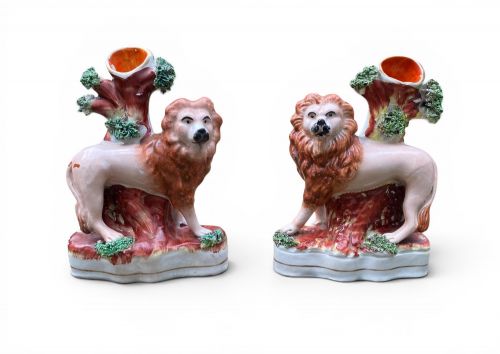
When you search for pair ceramic lion ornaments, you encounter varied forms intended for different settings, from domestic mantelpieces to garden terraces. The domestic examples take the shape of Staffordshire pottery figures, spill vases, and bookends.
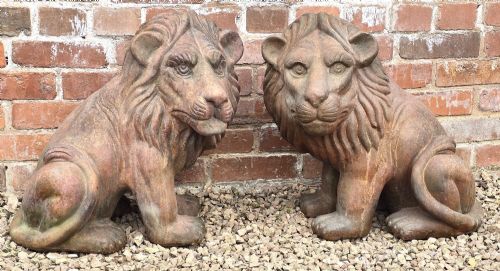
Larger outdoor versions appear in terracotta and salt-glazed pottery, often modeled as garden statues and sculptures. The selection includes Victorian British designs alongside Italianate pieces and Chinese figures.
Most entries belong to the nineteenth century, spanning figures from the eighteen-forties to nineteen-twenty. Buyers frequently meet Staffordshire pottery and terracotta models across these listings.
How they were made
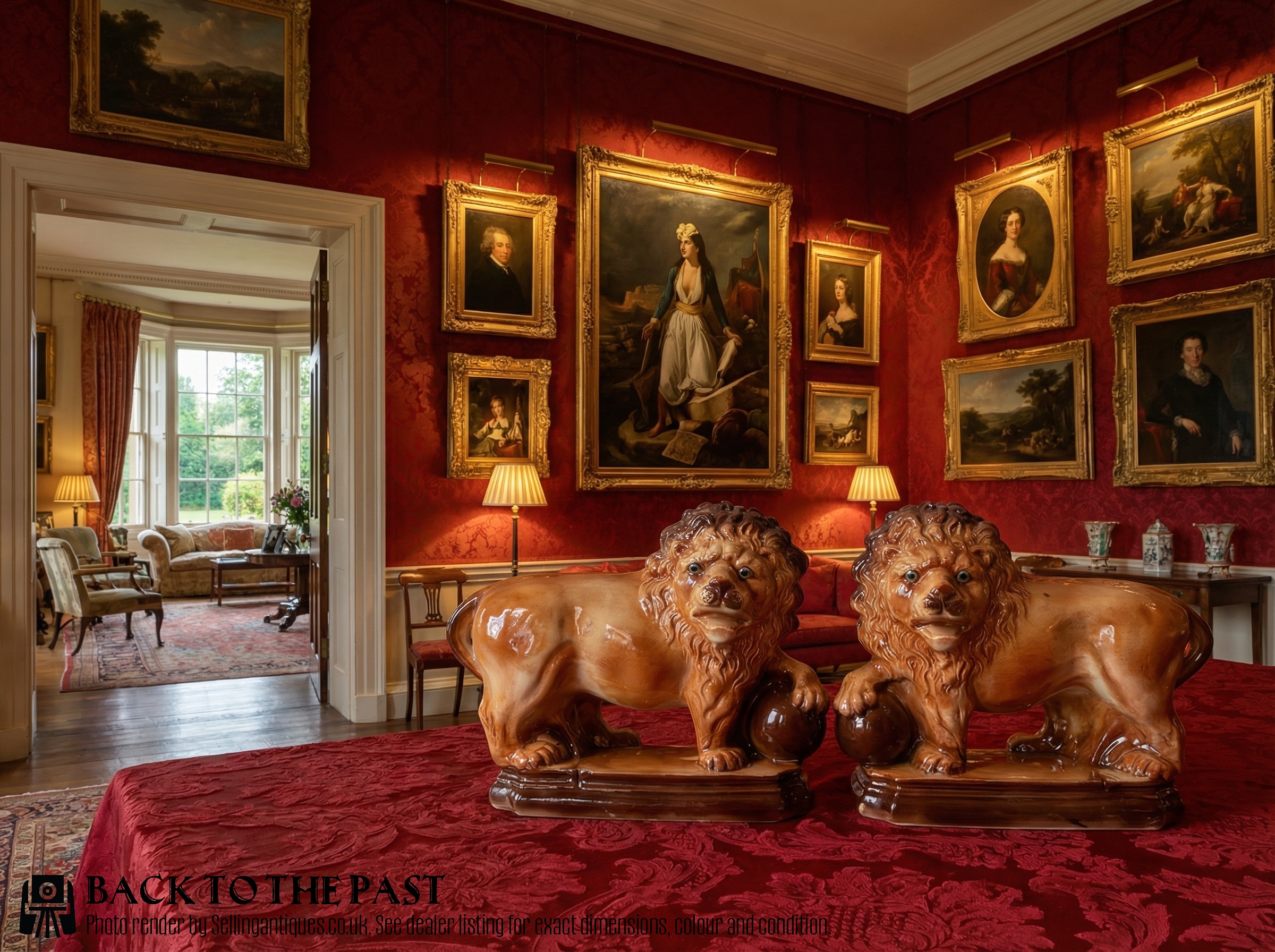
Potters shaped these figures using earthenware, terracotta, and ceramic bodies, often applying lead glaze, treacle glaze, or sancai colouring. Some domestic mantel examples incorporate gilding and glass eyes to add detail.
Larger garden statuary relies on terracotta and salt-glazed pottery, fired to withstand outdoor conditions. Hand sculpting appears on Italianate pieces, while Staffordshire workshops utilised moulded construction.
Some ceramic lions hold expressions of mild bewilderment rather than royal ferocity.
What varies in quality
The distinction between standard figures and superior pieces lies in the crispness of the moulding and the depth of the glaze. Hand-sculpted examples display finer anatomical detail in the modeling than mass-produced moulded pairs.
Scale and presence separate domestic spill vases from large garden statuary. Impressive scale and uniform colour distribution elevate the visual impact of nineteenth-century terracottas.
Lancaster and Sons of Hanley·Hurlford Kilmarnock
The Pair Ceramic Lion Ornaments Glossary
- Staffordshire pottery
- Earthenware figures produced in the pottery towns of Staffordshire during the nineteenth century. These mantel ornaments often depict lions paired symmetrically.
- Spill vase
- A hollow figurine designed to hold taper spills for lighting fires or pipes. They frequently accompany figures of lions on domestic mantelpieces.
- Treacle glaze
- A dark, translucent brown lead glaze used on nineteenth-century ceramics to give a rich, glossy surface. It appears on several pottery lion figures.
- Terracotta
- Fired unglazed clay ranging from buff to red in colour. This porous material suits substantial garden sculptures and statues.
- Sancai
- A traditional three-colour lead glaze technique used on Chinese ceramics. It appears on figures such as Dogs of Foo.
- Salt glaze
- A glassy coating formed by throwing salt into the kiln during high-temperature firing. This finish protects utilitarian garden pottery.
Pair Ceramic Lion Ornaments: Frequently Asked Questions
Where were Staffordshire lions displayed?
Staffordshire lion figures traditionally stood on mantelpieces in pairs, facing inward toward each other. They served as decorative mantel ornaments in nineteenth-century homes.
Smaller versions also functioned as bookends or held tapers in attached spill vases.
How do I date a ceramic lion?
Dating relies on stylistic clues, glaze types, and manufacturing methods recorded in nineteenth-century traditions. Treacle glazes, lead glazes, and sancai finishes point to specific periods of production.
Makers such as Lancaster and Sons or Hurlford Kilmarnock help narrow down the timeline.
Can terracotta lions stay outside?
Terracotta garden statues and sculptures are designed for outdoor placement on terraces and bases. Their fired clay composition suits garden settings when protected from severe frost.
Glazed earthenware and mantel figures remain strictly for indoor display.
What is a spill vase?
A spill vase incorporates a small vertical cylinder alongside a decorative figure. Victorian households used them to hold wooden spill splints for lighting candles and coal fires.
Pairs often feature a lion standing beside or behind the vase.