



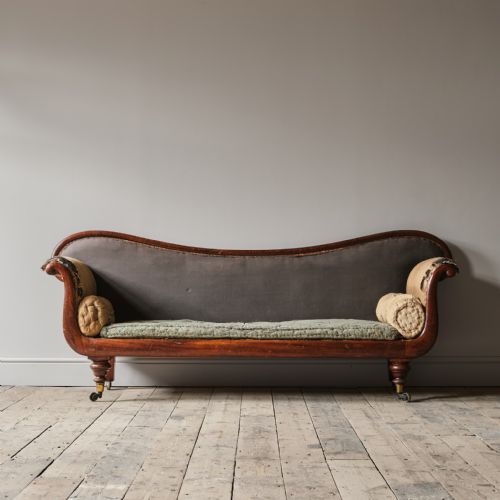


Early Victorian Sofa
An early victorian sofa brings substantial nineteenth-century seating and rich timber frames into a room, offering deep comfort and formal presence.

Early Victorian Sofa
An early victorian sofa encompasses large upholstered seating pieces designed in the nineteenth century, often appearing as scroll end settees, conversation seats, and chaise longues. These pieces serve as the main seating focal point in a reception room, combining deep wooden frames with sprung upholstery.
The versions most common on this page date from the middle of the nineteenth century and display styles such as Early Victorian, William IV, and Regency influences. They emerge from periods spanning the 1830s through to the 1850s, constructed with solid timbers and heavy textile coverings.
Buyers also encounter variations like double spoon back settees and buttoned reclining action pieces alongside grand country house sofas. Each form reflects the domestic comfort and reception requirements of its original nineteenth-century household.
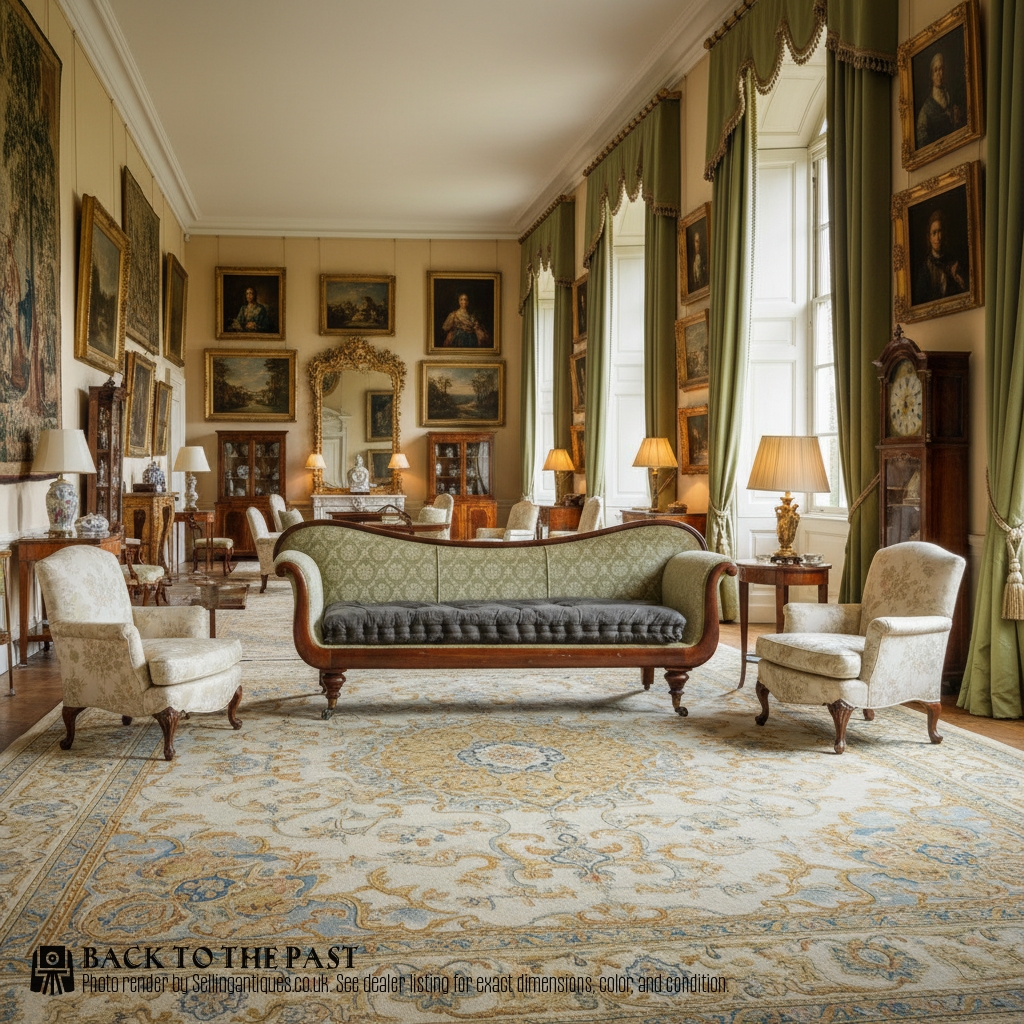
How They Were Made
Makers constructed these frames predominantly from solid mahogany, rosewood, burr walnut, and occasional giltwood, utilising dense hardwoods to support heavy upholstery. Carved wooden details, showwood frames, and turned legs give structural strength while displaying the grain of the timber.
Upholstery techniques combined traditional stuffing with durable fabric, velvet, and leather coverings, often secured with precise buttoning. Scroll ends and carved wooden frames required skilled joinery to shape the complex curves seen on these nineteenth-century seats.
Conversation seats allowed two people to sit facing opposite directions while maintaining a polite, upright posture.
What Varies in Quality
The refinement of the carved wooden decoration and the choice of primary timber distinguish pieces across the range. Finer examples display deeply carved rosewood or mahogany frames with intricate scrollwork, whereas simpler pieces rely on plain turned legs and standard mahogany.
Proportion and scale also determine the calibre of a piece, with larger country house settees and elaborate double spoon back designs requiring more ambitious carpentry. The integrity of the original showwood frame and the harmony of the proportions dictate the overall distinction of the seating.
Heal & Son
The Early Victorian Sofa Glossary
- Scroll end
- A wooden framework feature where the arms curve outward and downward in a tight spiral. This shape characterises many early nineteenth-century seating designs.
- Showwood
- Polished wooden framing left visible around the upholstered portions of a sofa or settee. It highlights the grain of mahogany or rosewood.
- Chaise longue
- An elongated upholstered seat intended for reclining, combining a chair back with an extended foot rest. These often feature carved rosewood or mahogany frames.
- Spoon back
- An upholstered chair or settee back shaped in the concave contour of a spoon bowl. This form provides ergonomic support for the spine.
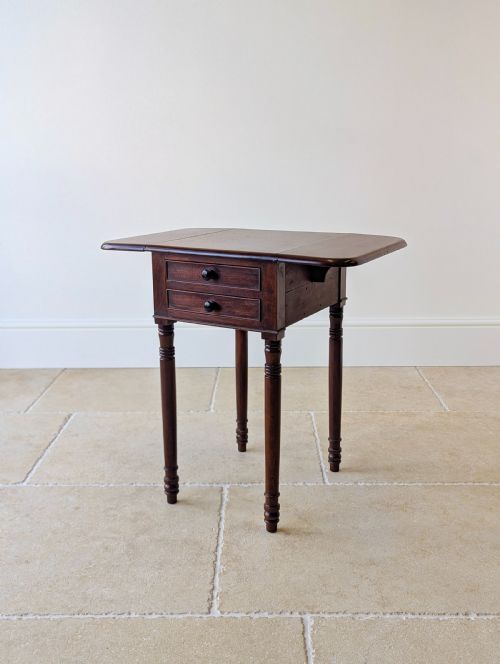
- Pembroke table
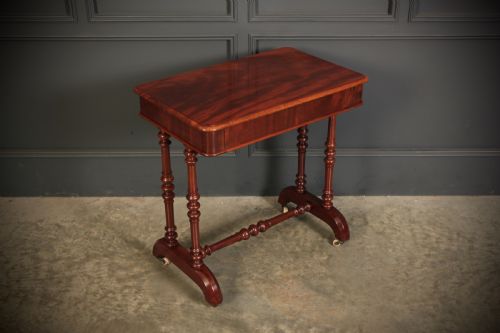
- A small table with hinged drop leaves supported by folding brackets. While primarily a table form, it shares materials with related seating furniture.
Early Victorian Sofa: Frequently Asked Questions
How do I identify an early victorian sofa?
Look for heavy timber frames made from rosewood or mahogany, often featuring scroll end arms or carved showwood details. These structural markers place the seating firmly in the middle of the nineteenth century.
Examine the legs and woodwork for signs of traditional hand-carving and period turning styles. The presence of buttoned upholstery or double spoon backs further points to this specific era.
Where were these sofas placed in nineteenth-century homes?
Owners typically positioned large sofas in principal reception rooms, parlours, and formal drawing rooms where guests were entertained. Their substantial presence suited expansive country houses and town residences alike.
Chaise longues and conversation seats often found places in private dressing rooms or large libraries. These specialised seating forms catered to specific domestic habits of rest and social gathering.
What materials cover these antique sofas?
Original and replacement coverings include heavy velvet, textured fabric, and durable leather. Upholsters matched these textiles to the status of the room and the underlying wood of the frame.
Rosewood and mahogany form the primary visible woodwork, sometimes complemented by brass fittings or giltwood accents. The combination of dense hardwood and rich fabric defined the aesthetic of the period.
How should I care for a historic sofa frame?
Maintain the polished mahogany or rosewood surfaces by applying appropriate furniture wax sparingly with a soft cloth. Avoid placing the timber frame in direct sunlight to prevent the wood grain from fading.
Protect the structural integrity of the joints by avoiding excessive weight or movement on the antique frame. Regular light dusting preserves the finish of both the showwood and the surrounding upholstery.