




Early Victorian Oil Painting
An early victorian oil painting brings nineteenth-century portraiture, maritime scenes, and landscapes into a room with the quiet depth of original canvas and gold leaf.
Early Victorian Oil Painting
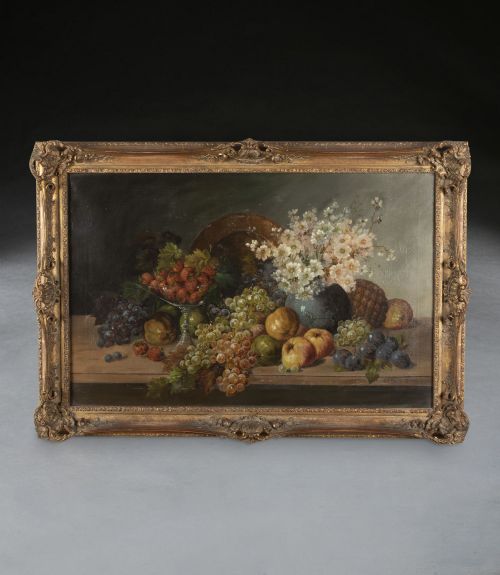
An early victorian oil painting captures the subjects that mattered to nineteenth-century households, from portraits of gentlemen and ladies to shipping scenes and architectural views. These works emerge from the English School, the English Provincial School, and various regional traditions across the nineteenth century.
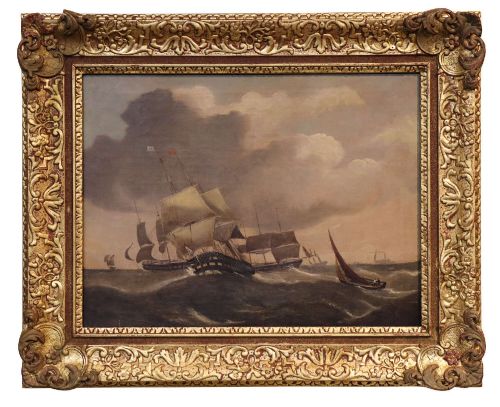
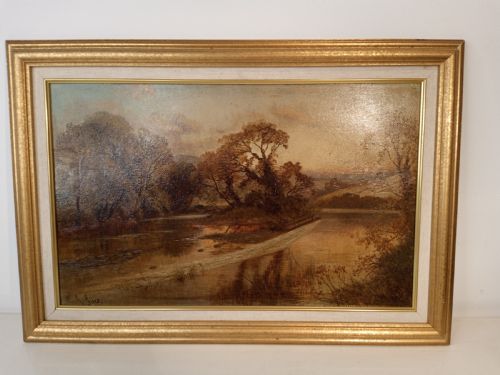
Portraits dominate the selection, showing sitters in half-length poses or detailed dress, while marine paintings and landscapes record ships in heavy seas or historic settings like Conwy Castle. Buyers will frequently encounter works executed on canvas stretched over wood frames, alongside occasional examples on board.
The aesthetic bridges Regency traditions and later Victorian tastes, encompassing naive approaches as well as accomplished academic portraiture. Each canvas carries the physical record of its period, framed in gilt or giltwood that often shares the age of the painting itself.
How They Were Made
These works rely on oil paint applied to prepared canvas supported by wooden stretchers, or occasionally painted directly onto wood board. Painters built up compositions using layered oil pigments that dried slowly, allowing for subtle tonal gradations in flesh, fabric, and sky.
Frames play an integral structural and aesthetic role, constructed from wood and finished with layers of gold leaf or gilt. Guilders applied leaf over preparatory grounds to create the reflective borders that define nineteenth-century wall art.
Marine subjects in the archive feature named vessels navigating heavy seas alongside coastal architectural views.
What Varies in Quality
The distinction between works rests upon the confidence of the brushwork and the anatomical conviction of the figures or perspective of the subject. Accomplished hands achieve depth in a sitter's expression or the swell of a marine wave with precise economy, whereas provincial or naive examples prioritize direct charm over academic proportion.
Materials and framing further differentiate the range, as original giltwood surrounds and well-preserved canvas tension maintain the historical integrity of the piece. The presence of identified sitters, inscribed backs, or documented circles of known painters adds documentary weight to the visual impact.
William Egley·Lewis J Wood·George Chinnery·John Syer junior·Henry James Pidding·George Morland
The Early Victorian Oil Painting Glossary
- Oil on Canvas
- A painting technique where oil-based pigments are applied to a woven fabric support stretched across a wooden frame. This medium allowed artists to achieve rich colours and smooth blending.
- Giltwood
- Wood carved and coated with gold leaf or metallic paint to create a decorative, reflective surface. It is commonly found on nineteenth-century picture frames.
- British School
- A term used to classify artists trained or working in Britain whose specific identities are lost or grouped by regional tradition. It connects diverse portraits and landscapes under a shared national aesthetic.
- English Naive School
- A descriptor for paintings created outside the formal academic tradition, often characterised by flat perspective and direct observation. These works offer a charmingly unpretentious record of everyday life and portraiture.
- Marinescape
- A painting depicting ships, maritime activities, or the sea. These works often focus on naval vessels or shipping in heavy weather.
Early Victorian Oil Painting: Frequently Asked Questions
How do I identify an early nineteenth-century canvas?
Examine the stretcher construction at the back of the painting, where older frames often feature hand-planed wood and square-headed nails. The texture of the canvas weave and the character of the preparatory ground layer also offer clues to the period.
Inscriptions, artist signatures, or back-stamps from nineteenth-century colourmen provide additional chronological anchors. Comparing the style of dress and hair on portrait sitters helps narrow down the decade of execution.
Where should I hang an oil painting?
Select a wall away from direct sunlight and strong heat sources, which can dry out canvas and crack oil paint over time. Stable indoor humidity helps preserve both the wooden stretcher and the gilt frame.
Ensure the wall can support the weight of the frame, particularly for larger giltwood pieces. Position the artwork at eye level to best appreciate the detail of the brushwork.
What is the difference between academic and naive works?
Academic works follow formal rules of perspective, anatomy, and tonal blending taught through official art schools. These pieces aim for a naturalistic representation of the subject.
Naive works bypass formal training, resulting in a distinct perspective where proportion and scale are secondary to direct storytelling. Collectors often prize naive paintings for their honest and unvarnished view of period life.
How should I clean a historic painting?
Dust the surface and frame gently with a soft, dry, lint-free brush to prevent particulate buildup. Avoid using water, household cleaners, or chemical solvents on the painted canvas or gilt surfaces.
Professional conservators should handle any deeper cleaning, varnish removal, or canvas repairs. Regular gentle dusting is all that is required for daily maintenance.