




Early Oak Open Armchair
An early oak open armchair offers honest construction and enduring character, built from solid timber to anchor any room with historical weight.
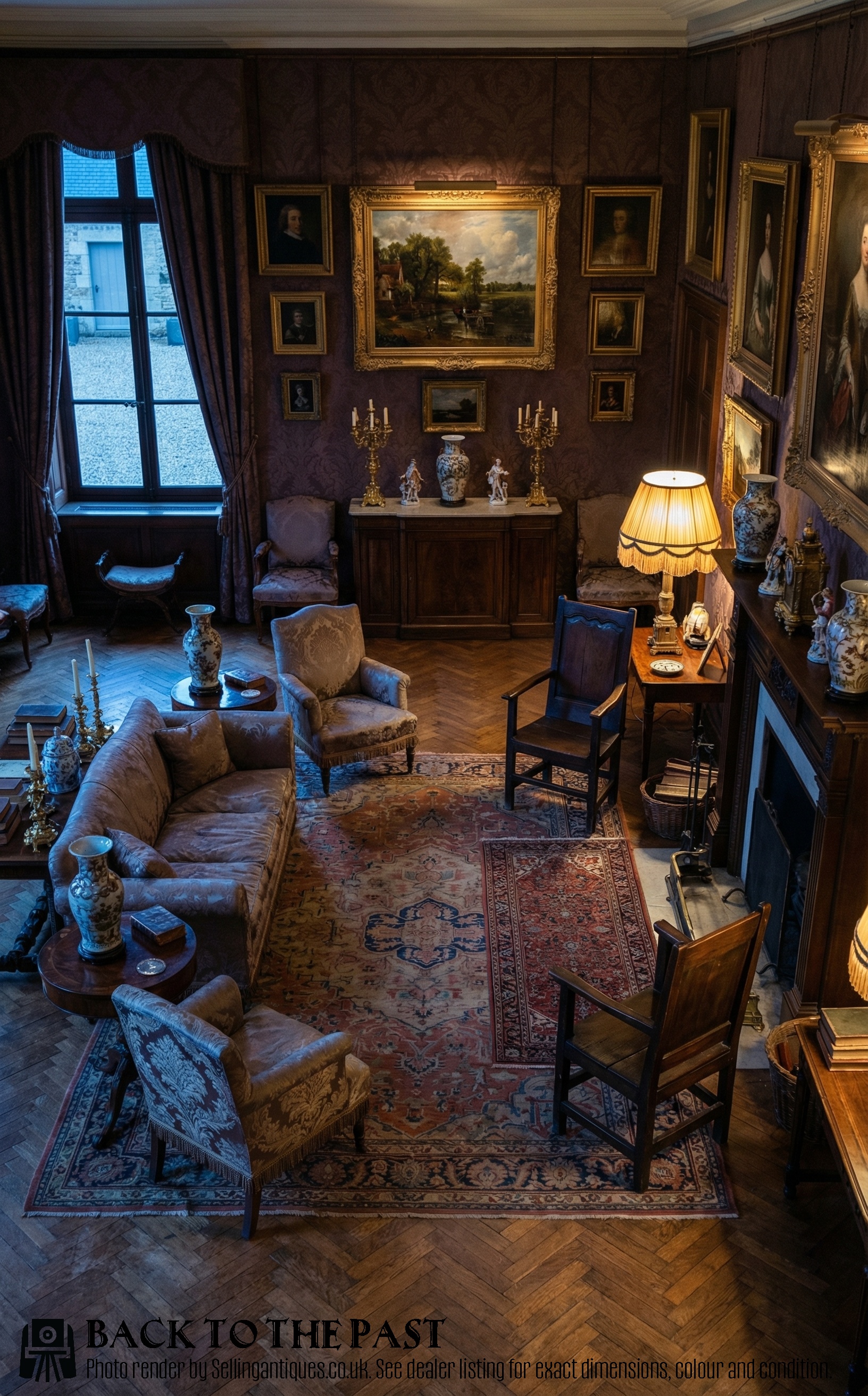
Early Oak Open Armchair
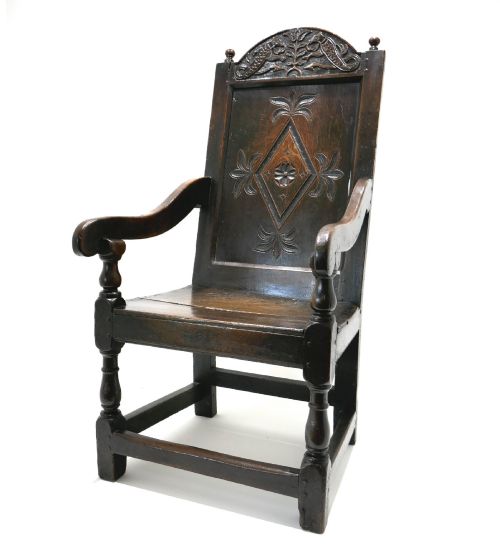
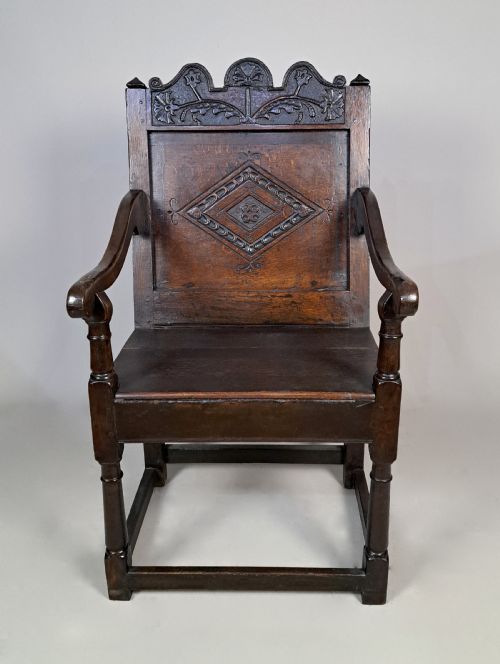
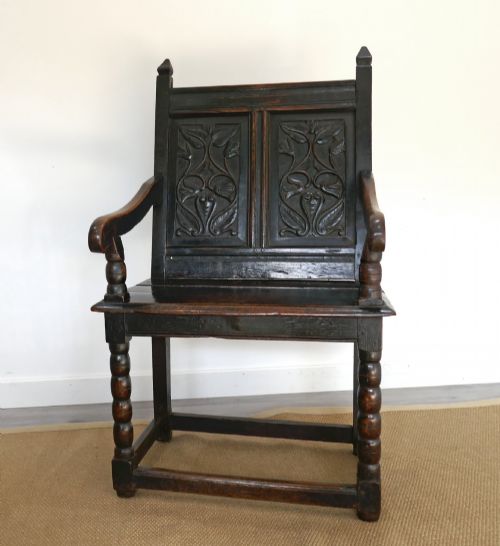
An early oak open armchair stands as a solid representative of historical seating, built primarily from sturdy oak during the seventeenth and eighteenth centuries. These chairs frequently take the form of wainscot or panelled designs, originating from regional workshops across England, Scotland, and Wales. Buyers on this page will most commonly encounter seventeenth-century wainscot armchairs and eighteenth-century country variants featuring exposed timber frames.
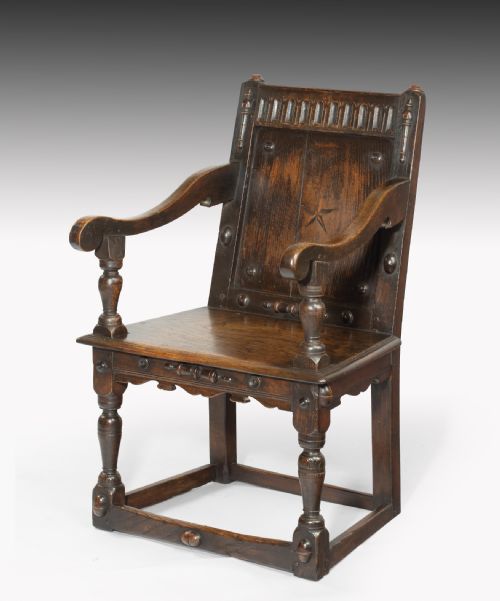
Regional variations shape much of what appears in this selection, ranging from Lancashire and Cheshire pieces to Scottish masters chairs and Welsh panelled examples. Makers constructed these seats for utilitarian strength, utilising heavy timber and upright backs that define the early domestic interior. The presence of wood inlay or sweeping arms occasionally marks out specific provincial styles from the broader Jacobean and English country traditions.
How they were made
Craftsmen built these chairs from solid oak, relying on traditional joinery techniques such as mortise and tenon to lock the heavy framework together without metal fasteners. Panels were fitted into grooved framing to allow for the natural seasonal movement of the timber as humidity shifted within the room. Workshops occasionally applied simple wood inlay to enrich the flat expanses of the back panels and crest rails.
Upholstery, where present on later iterations, relies on materials like velvet fixed directly to the frame, though many surviving examples retain bare wooden seats designed for cushions. Surfaces developed their character through centuries of wax application and handling, leaving an unpolished timber grain that records the tool marks of early carpenters.
Early Oak Open Armchair Retail Price Guide 2026
Typical asking prices for early oak open armchair among the pieces listed under this phrase on Sellingantiques today, from the lower quarter to the upper quarter. They describe what is for sale here now, not the wider market.
The listings span from the seventeenth century through to 1850, featuring solid oak, wood inlay, and velvet materials across English, Welsh, and Scottish regional styles.
What varies in quality
Quality in an early oak open armchair rests upon the integrity of the original timber and the crispness of any carved detailing on the crest rail and panel. Chairs that retain their full height, substantial arm supports, and unaltered stretchers command greater respect among collectors than those trimmed down over generations. The subtlety of the regional design and the depth of the natural patination on the oak surfaces further distinguish finer examples from standard provincial work.
The Early Oak Open Armchair Glossary
- Wainscot chair
- A heavy wooden armchair, typically constructed from oak with a panelled back and solid seat, common in the seventeenth century.
- Jacobean
- A design style associated with the reign of James I, characterised by sturdy proportions and geometric ornamentation.
- Crest rail
- The horizontal top member of a chair back, often shaped or carved with decorative motifs.
- Stretcher
- A horizontal wooden brace connecting the legs of a chair to provide structural rigidity.
Early Oak Open Armchair: Frequently Asked Questions
What is an early oak open armchair?
These are heavy wooden seats constructed primarily during the seventeenth and eighteenth centuries, using solid oak panels and sturdy upright framing. They served as principal seating in early domestic interiors.
Most examples feature high panelled backs and open arms, representing regional craftsmanship from English, Welsh, and Scottish workshops.
How were wainscot chairs used?
Historically, these chairs held positions of importance in the household, often reserved for the head of the house or esteemed guests due to their cost and substantial weight. They stood against panelled walls in halls or parlours.
In modern spaces, they function well as standalone statement pieces in studies or hallways, where their architectural lines can be appreciated.
How do I care for antique oak furniture?
Maintain the timber by applying a traditional beeswax polish sparingly to nourish the dry wood and preserve the historic surface finish. Avoid placing the chair near direct heat sources or in fluctuating humidity.
Keep upholstery, such as velvet panels, brushed gently and protected from prolonged direct sunlight to prevent fading.
How can I tell the period of an oak armchair?
Examine the construction methods, tool marks, and joinery style, as seventeenth-century pieces use pegged mortise and tenon joints with simpler panel assembly than later reproductions. Regional traits, such as Welsh or Lancashire formatting, also point to specific eras.
Wear patterns and the depth of the timber patination offer further clues to the age and historical use of the piece.