


Early Oak Carved Panel
An early oak carved panel brings tangible history into a room, showing centuries of hand-carved motifs set into solid timber.
Early Oak Carved Panel
An early oak carved panel forms part of a long tradition of decorative woodwork, originating as architectural wall decoration, furniture components such as coffer fronts, or standalone pictorial carvings. These pieces span several centuries, with examples appearing from the 16th century through to the 19th century.
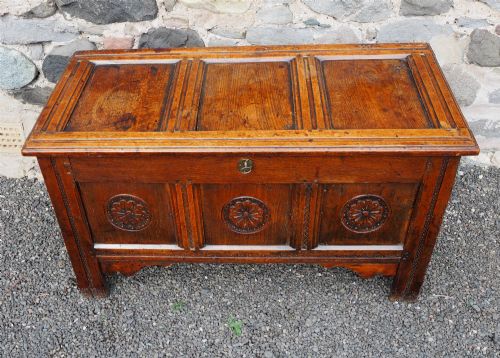
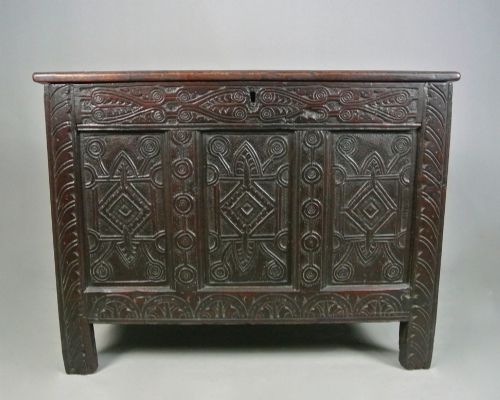
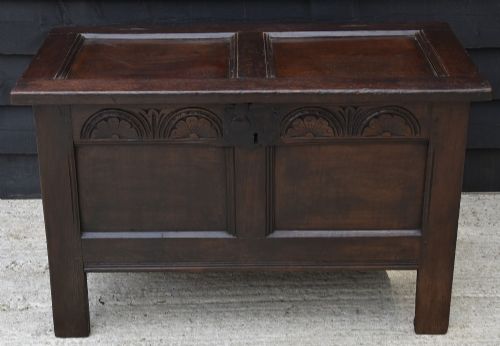
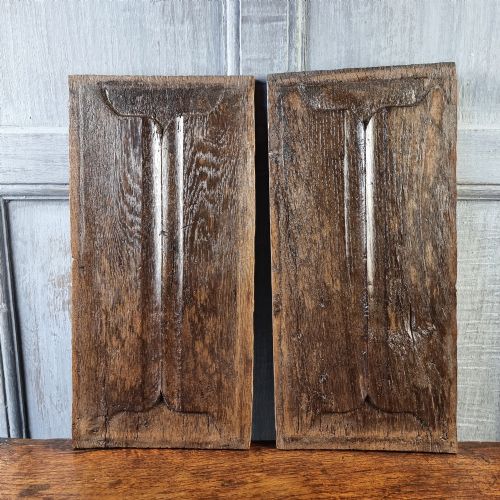
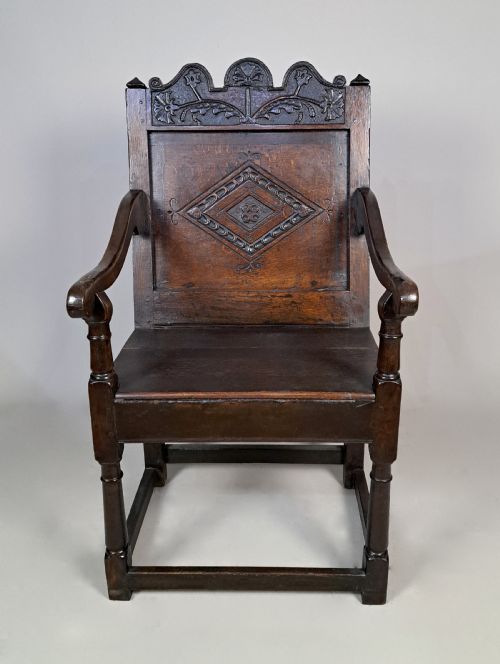
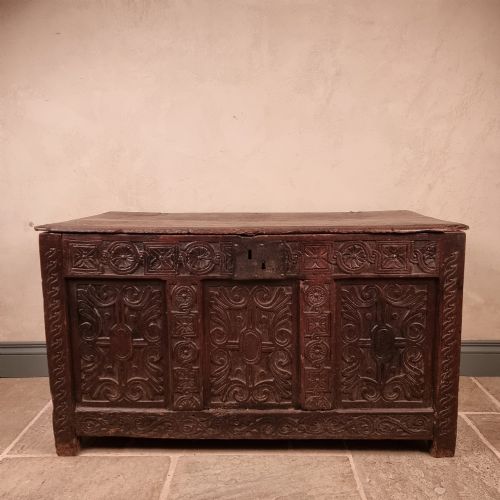
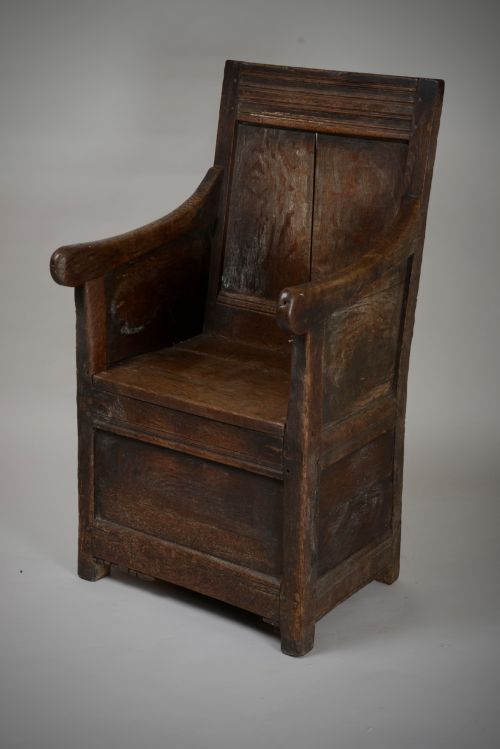
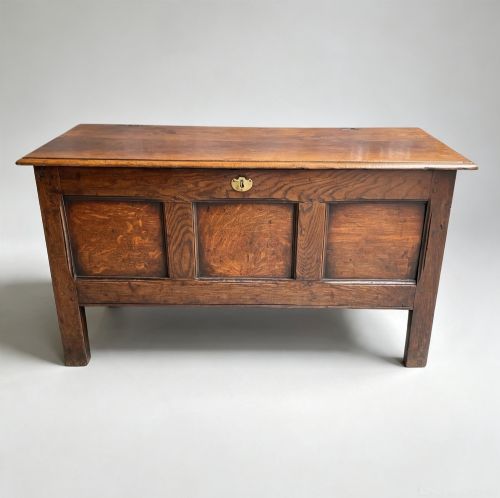
The versions most commonly met on this page include individual timber panels removed from larger structures, alongside integrated panels set into period items like coffers, mule chests, and wainscot armchairs.
Origins vary between English workshops, French provincial houses, and Flemish makers, each bringing distinct regional motifs to the surface work.
How they were made
Makers relied on solid oak timber, selected for its grain and durability, often worked alongside secondary woods like fruitwood or walnut for contrast and inlay work.
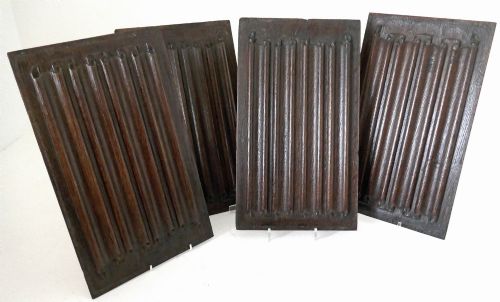
Carpenters and carvers shaped the timber using hand chisels and gouges to create deep relief patterns, linenfold designs, and figurative scenes directly into the board.
Listings demonstrate forms ranging from standalone wall panels and coffers to mule chests and wainscot armchairs spanning the 16th to 19th centuries.
What varies in quality
Depth and crispness of the chisel work separate proficient regional output from exceptional sculptural carving, particularly in figurative subjects like portraits or cherubs.
The integrity of the timber, surface patina, and the degree of original joinery intact around the panel determine the historical weight of the piece.
The Early Oak Carved Panel Glossary
- Linenfold
- A style of wood carving that imitates folded linen, commonly found on 16th-century panels. This treatment gives flat timber a textured, draped appearance.
- Coffer
- A large wooden chest used for storage, frequently featuring panelled construction and carved fronts. These boxes often served multiple purposes in early domestic interiors.
- Wainscot
- A type of heavy wooden armchair constructed with panelled backrests and solid seats. These chairs date predominantly to the 17th century and reflect substantial joinery methods.
- Mule chest
- A storage chest equipped with one or more drawers at the base beneath the main compartment. They combine the storage of a traditional coffer with the accessibility of drawer space.
- Tracery
- Openwork ornamental patterns reminiscent of Gothic architecture, often carved in low relief on early panels. This design element links furniture decoration to stone church windows.
Early Oak Carved Panel: Frequently Asked Questions
Where were carved oak panels originally placed?
These panels functioned primarily as architectural elements set into wall panelling or integrated directly into the structural framework of heavy furniture such as cupboards, beds, and chests.
Over time, many individual panels were detached from their original pieces to be displayed independently as decorative wall art.
How do you clean an antique oak panel?
Maintenance requires only a soft, dry cloth to remove dust from the carved recesses without disturbing the historic surface wax or dry timber.
Modern liquid polishes and aggressive cleaning agents should be avoided entirely to preserve the natural patina built up over centuries.
Can these panels be mounted on modern walls?
Mounting requires professional framing or bracket support that respects the weight of solid oak without straining the aged timber or historic joints.
Placement should avoid direct sunlight and major temperature fluctuations to prevent the wood from warping or splitting.
What motifs appear on early carved panels?
Early examples frequently display floral patterns, geometric strapwork, linenfold textures, and symbolic or religious figures such as saints and mythical green men.
Regional workshops often influenced the choice of subject, with Flemish and French pieces showing distinct figurative details compared to English output.