

Early Georgian Dining Chairs
Early georgian dining chairs are seating built for the dining room in walnut, mahogany, and oak, offering formal elegance or country utility.
Early Georgian Dining Chairs
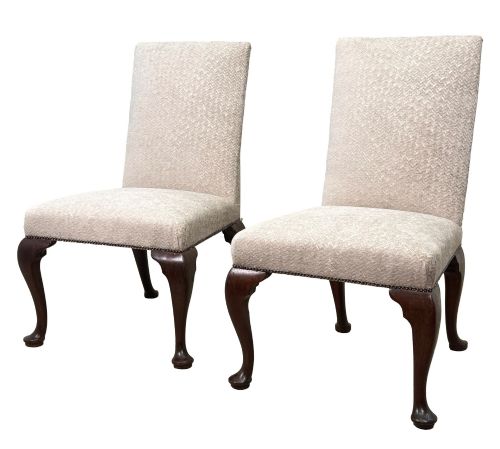
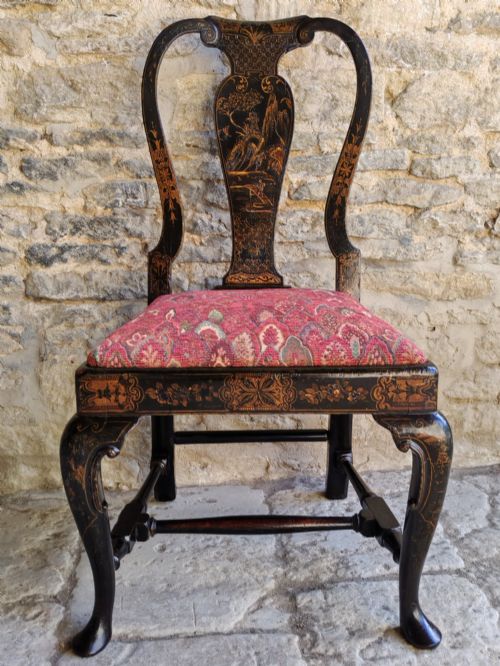
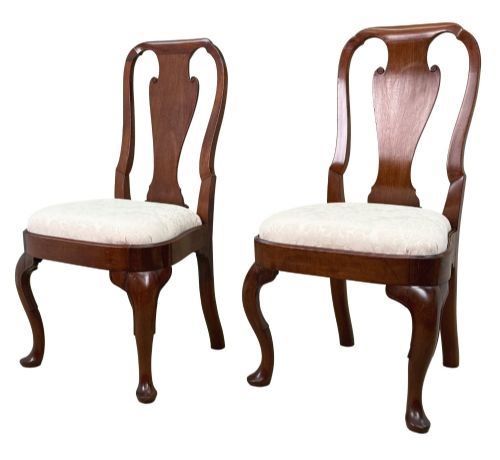
Early georgian dining chairs span the 18th century, incorporating walnut, mahogany, and oak frames with upholstered, rush, or drop-in seats. The buyer searching for early georgian dining chairs encounters side chairs, armchairs, and carver chairs built in formal styles or English country vernacular traditions.
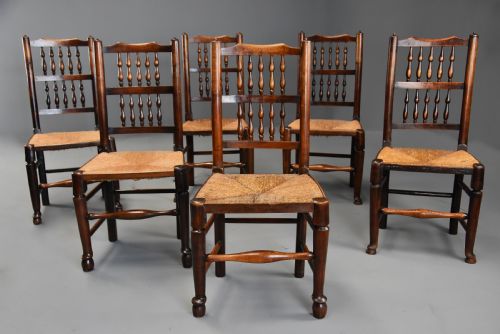
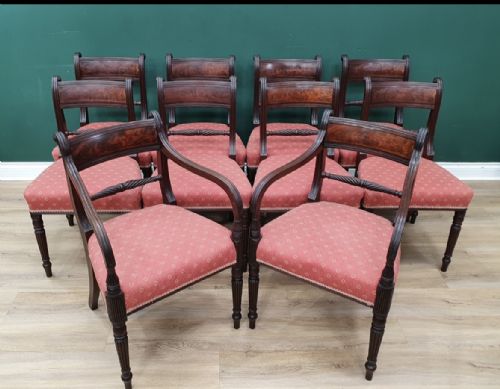
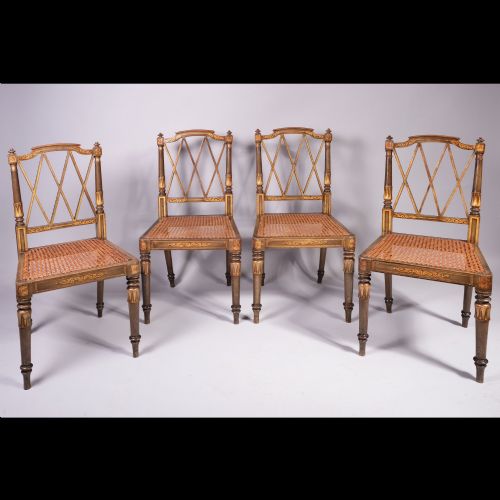
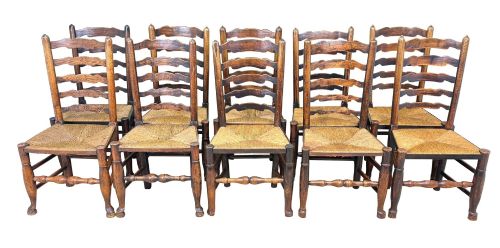
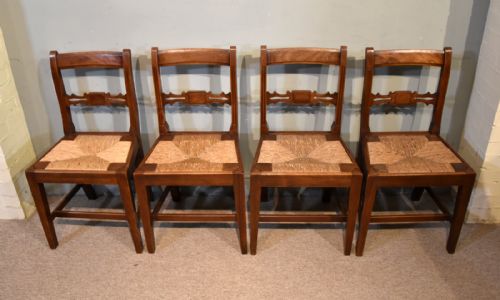
The selection includes matched and complete sets alongside pairs of side chairs from the 18th century. Walnut and mahogany examples demonstrate the refined taste of the period, while elm, ash, and fruitwood pieces illustrate the work of country makers.
How they were made
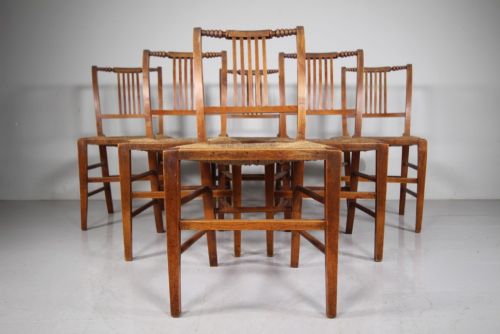
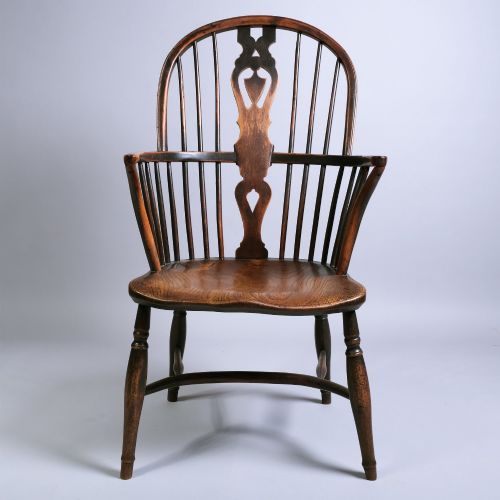
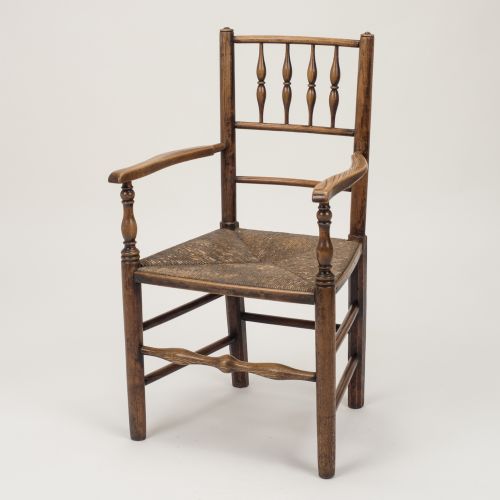
Makers utilised hardwoods like mahogany, walnut, oak, and yew alongside country timbers such as elm, ash, and fruitwood. Joinery methods included pegged mortise and tenon joints for sturdy frames and spindle backs.
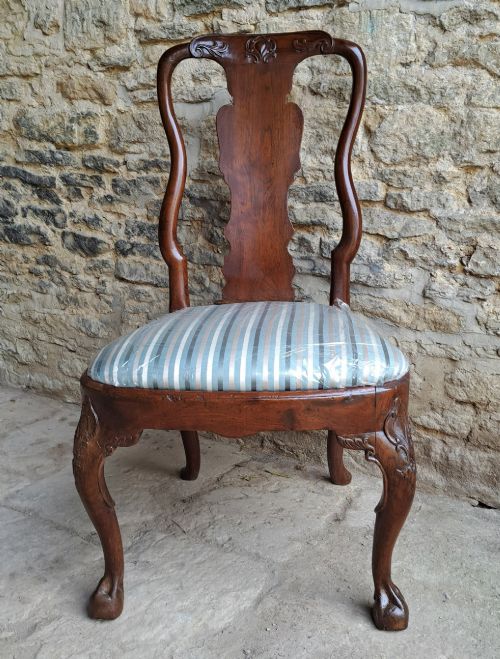
Seats incorporated rush matting, textile upholstery, wool work, and drop-in frames covered in fabric or silk. Turning, carving, and painted finishes decorated the wood structure.
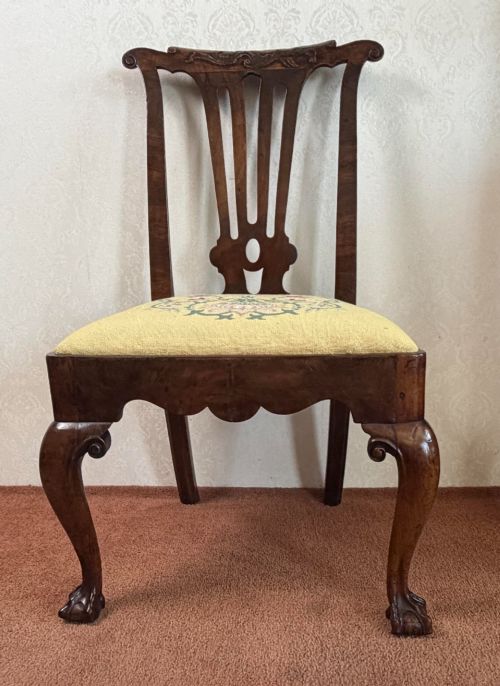
Some chairs retain their original wool work seats, offering a direct touch from hands that stitched them centuries ago.
What varies in quality
Quality rests in the crispness of the carved details and the choice of timber, particularly the figuring in mahogany and walnut. Superior pieces display harmonious proportions and original surface patination.
Construction integrity distinguishes the better examples, with tight joints and well-balanced frames surviving from the period. The coherence of a matched set influences the desirability of multiple chairs.
The Early Georgian Dining Chairs Glossary
- Carver chair
- An armchair designed for use at the dining table, often placed at the head of the table. These provide arm supports and matched styling to the accompanying side chairs.
- Drop-in seat
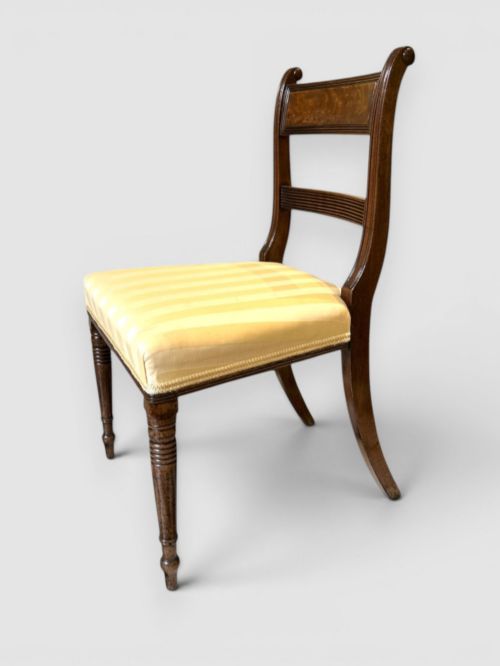
- A removable seat frame upholstered separately and dropped into a recess in the chair rails. This construction allowed easier reupholstery over time.
- Rush seat
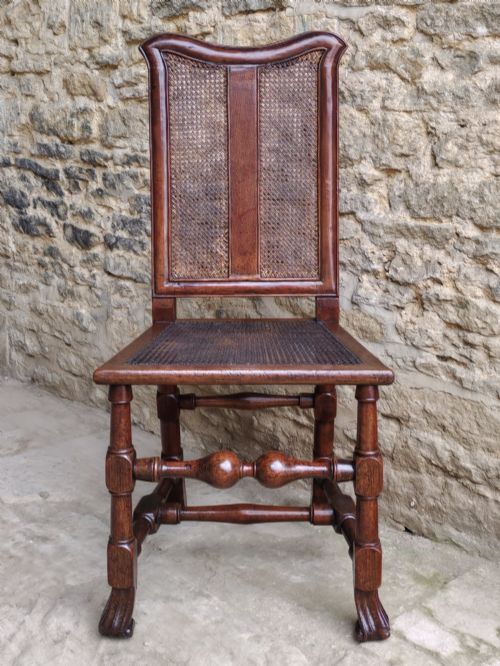
- A seating surface woven from dried marsh rushes or reeds. Country makers frequently used this material for kitchen and dining chairs.
- Spindle back
- A chair back constructed with vertical turned wooden rods or spindles. This style appears frequently in vernacular country seating.
- Vernacular
- Objects built by regional craftsmen following local traditions rather than high-style metropolitan patterns. These pieces utilise accessible local timbers like elm and ash.
Early Georgian Dining Chairs: Frequently Asked Questions
How do I care for antique wood chairs?
Keep wooden chairs away from direct heat sources and drastic humidity changes to prevent timber splitting. Apply a suitable wax polish periodically to nourish the surface.
Avoid sitting heavily on antique joints that have loosened over decades of use. Promptly address any movement in the frame by consulting a professional restorer.
Were these chairs used daily?
Dining chairs served households for meals and social gatherings, enduring regular daily wear. Formal walnut and mahogany sets remained in dining parlours.
Country vernacular chairs saw heavy service in farmhouses and kitchens. Their robust construction in elm and ash suited this utilitarian purpose.
How do I identify a matched set?
Matched sets consist of chairs gathered together because they share similar proportions, timbers, and decorative turning. Minor variations in shade or construction reveal individual hand crafting.
Original sets sharing the same workshop origin display uniform wear and matching joinery details. Assemblages often combine side chairs and carvers of the same era.
What is a crinoline stretcher?
A crinoline stretcher is a curved under-framing brace linking the legs of a chair together. It provides structural rigidity and often supports the sitter's feet.
This feature appears commonly on Windsor armchairs and country seating from the 18th and 19th centuries. The hoop shape adds both strength and decorative grace.