
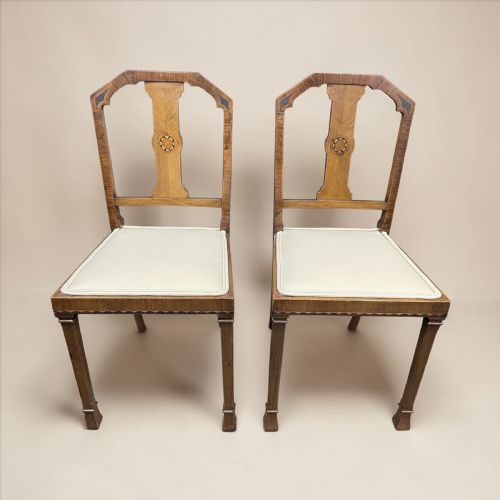


Inlaid Walnut Side Chairs
These inlaid walnut side chairs bring rich timber tones and intricate marquetry directly into a room, offering both practical seating and distinct historic character.
Inlaid Walnut Side Chairs
Inlaid walnut side chairs combine the warm, figured grain of walnut timber with contrasting marquetry, parquetry or bone details set into the wood. Buyers searching for inlaid walnut side chairs encounter forms ranging from high-backed eighteenth-century Dutch dining sets to compact nineteenth-century Victorian and Edwardian examples.
The selection on this page spans several distinct historic eras, including George I, Victorian, Edwardian and Art Deco periods. Regional varieties such as Dutch, Italian and English workmanship appear frequently among the listings.
Most pieces function primarily as dining chairs, hall chairs or occasional accent seating. Pairs and larger sets predominate, alongside single decorative examples featuring elaborate inlay.
Materials and Technique
Cabinet makers utilised solid walnut or applied fine walnut veneers over secondary timbers to create the primary structure of these chairs. Craftspeople then cut intricate patterns into the wooden surfaces to receive contrasting light timbers, bone or ivory inlay.
Marquetry and stringing techniques defined the decorative surfaces, often depicting floral motifs, scrolling foliage or geometric banding. Artisans frequently secured structural joints with traditional pegging while finishing the wood with hand-polished wax or shellac.
One nineteenth-century walnut chair includes a built-in musical mechanism to serenade guests while they sit.
Assessing Quality
Quality rests primarily on the crispness and complexity of the inlay work, where tightly fitted marquetry and precise botanical or geometric cuts distinguish finer workshop output. The depth of figure in the walnut veneer and the proportion of the carved elements further elevate certain examples above standard production.
Structural integrity and the retention of original surfaces dictate value amongst period pieces. Chairs that preserve their early polish, tight joinery and intact bone or timber inlay without extensive replacement sections command greater appreciation from collectors.
Shoolbred·Lamb of Manchester
The Inlaid Walnut Side Chairs Glossary
- Marquetry
- Decorative veneer patterns applied to a wooden structure to form pictures or ornamental designs. Craftsmen cut thin sheets of contrasting wood or bone to fit precisely into recessed channels.
- Veneer
- A thin layer of superior timber applied over a base of cheaper wood. This technique allowed cabinet makers to display striking grain patterns while maintaining structural stability.
- Stringing
- Thin inlaid lines of contrasting material used to outline panels or frame edges on furniture. It provides a subtle linear contrast against dark walnut surfaces.
- Crest rail
- The uppermost horizontal member of a chair back. It often receives the most elaborate carving or inlay work on formal seating.
Inlaid Walnut Side Chairs: Frequently Asked Questions
How do I spot replacement inlay?
Replacement sections of marquetry often show slight colour discrepancies and modern adhesives under close inspection. Older inlay patinates uniformly with the surrounding walnut over decades of exposure to light and air.
Original work reveals tiny gaps filled with traditional hide glue and matches the wear patterns of the adjacent timber. Modern repairs tend to sit either fractionally proud of the surface or slightly recessed due to shrinkage.
Were these chairs used daily?
Many examples served as formal dining chairs or drawing-room seating for high-status households. Their delicate marquetry suggests they functioned as much to display wealth and taste as to provide utility.
Robust dining sets endured regular household use, while heavily inlaid or bone-decorated chairs often remained in parlours or bedrooms as accent pieces.
Can I mix different periods?
Pairing eighteenth-century side chairs with Edwardian or Art Deco examples creates a layered interior that highlights shifts in design philosophy. Walnut provides a unifying tonal warmth that helps bridge different centuries of craftsmanship.
Matching heights and proportions ensures the seating remains visually balanced around a table or along a hallway wall.