




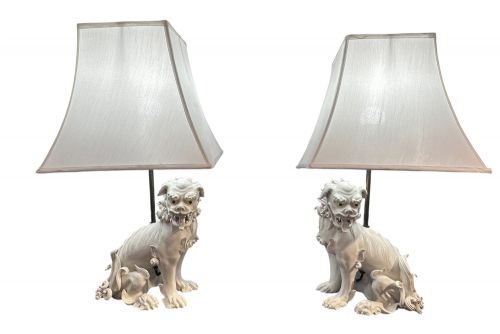


Early 20th Century Porcelain
Early 20th century porcelain brings together Edwardian refinement, Art Deco geometry, and intricate hand-painted detail from European and Asian kilns.
Early 20th Century Porcelain
When searching for early 20th century porcelain, buyers encounter a diverse range of items spanning tableware, decorative figures, and lighting. The pieces recorded here reflect European factories such as Meissen, Royal Worcester, and Sevres, alongside Asian workshops producing Chinese export wares and Japanese Satsuma.
Table lamps, decorative plates, and figurines dominate the selection, often drawing on Edwardian elegance, Art Nouveau curves, and Chinoiserie motifs. The surviving inventory bridges traditional craftsmanship and the rising industrial output of the period.
Origin and form dictate the character of each piece, whether it is a delicate Dresden pug figurine or a monumental Chinese Canton vase. Collectors find that these items capture the shifting aesthetic priorities of the decades leading up to and following the First World War.
Materials and methods of production
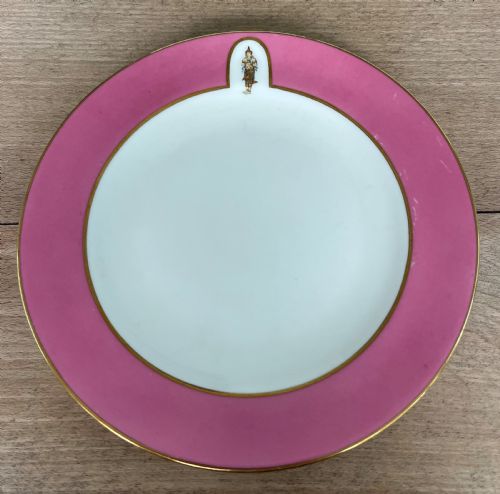
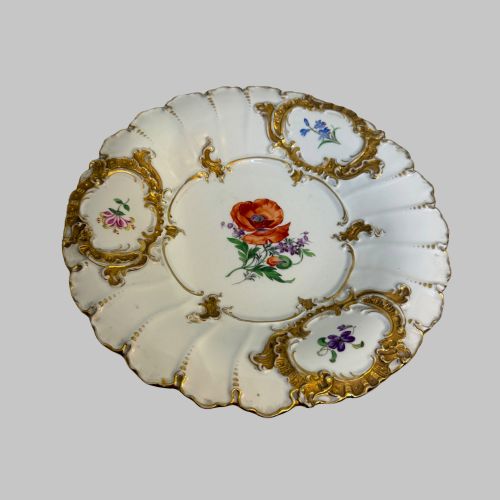
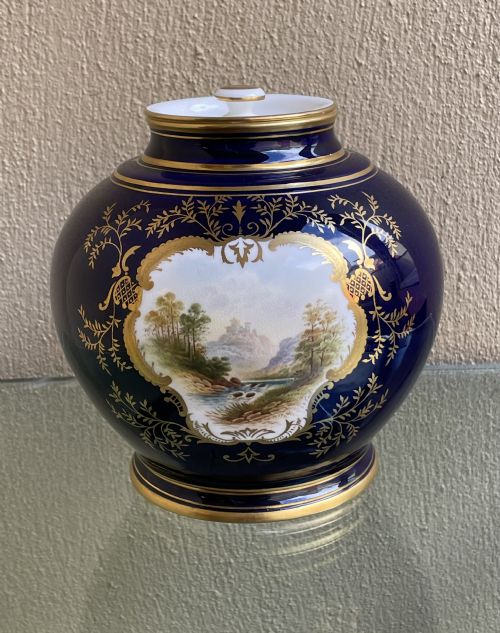
Makers utilised high-fired ceramic pastes, applying translucent glazes and detailed enamel paints to create durable yet refined surfaces. Gold leaf and intricate gilding frequently highlight handles, rims, and pictorial motifs.
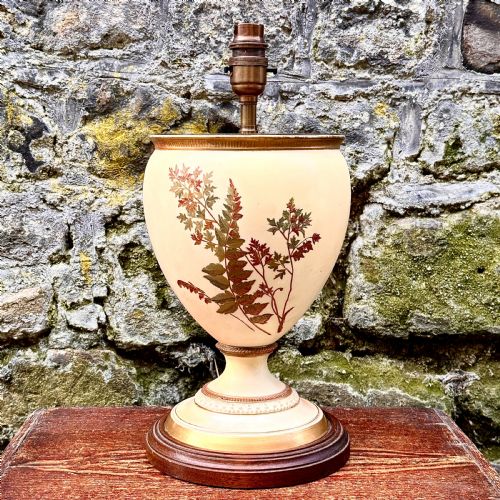
Many items incorporate mixed media, mounting porcelain bodies in brass, ormolu, or carved wood to form functional lamps and decorative stands. Hand-painting remains common, executed by named artists and factory workshops alike.
Listings feature porcelain, enamel, gold leaf, brass, earthenware, glaze, and wood across European and Asian items.
Distinctions in standard and execution
The quality of early 20th century porcelain rests upon the crispness of the moulding and the skill of the enamel painting. Pieces produced by established factories like Meissen or supervised by known designers display superior brushwork and glaze stability.
The precision of applied gilding and the balance of the overall form separate standard domestic items from exhibition pieces. Marks stamped or painted to the base provide evidence of factory origin and kiln temperature control.
Royal Worcester·Cauldon Ltd·Meissen·Paul Scheurich·Coalport·E O Ball·Royal Dux·Daisy Makeig-Jones·Ernst Wahliss·Oldest Volkstedt Factory·Sitzendorf·Ackermann Fritze Volkstedt·Alexandra Porcelain Works
The Early 20th Century Porcelain Glossary
- Blanc de Chine
- A white porcelain produced in Dehua, China, known for its milky glaze and smooth finish. It is frequently seen on figures of Guanyin and temple lion lamps.
- Gilding
- The application of gold leaf or powdered gold to the surface of porcelain. This decorative technique accentuates borders, handles, and painted motifs.
- Famille rose
- A palette of opaque enamel colours dominated by pink or rose, used extensively on Chinese export porcelain. The style developed in the eighteenth century and continued into twentieth-century production.
- Imari
- A style of Japanese porcelain decorated in underglaze blue, iron red, and gold. These pieces were widely exported and imitated by European factories.
- Bisque
- Unglazed porcelain fired to a porous state, often used for detailed figurines and portrait busts. It has a matte texture resembling marble.
Early 20th Century Porcelain: Frequently Asked Questions
How do I date early 20th century porcelain?
Dating relies on factory marks, printed stamps, and stylistic cues such as Art Nouveau or Art Deco forms. Comparing the base markings against established factory archives confirms the production era.
Changes in glaze chemistry and painting techniques also assist in narrowing down the manufacturing decade between nineteen hundred and nineteen thirty.
Are these porcelain lamps original?
Many porcelain vases and figures from this period were converted into table lamps either during manufacture or later in their history. Rewiring is common to meet modern electrical safety standards.
The porcelain body itself remains the primary antique element, while the fittings and wiring are frequently updated.
What is the difference between earthenware and porcelain?
Porcelain is fired at much higher temperatures, resulting in a vitrified, non-porous material that is often translucent. Earthenware is opaque, more porous, and requires a complete glaze to hold liquids.
Early twentieth-century makers utilised both, with porcelain reserved for finer tableware and decorative figures.