
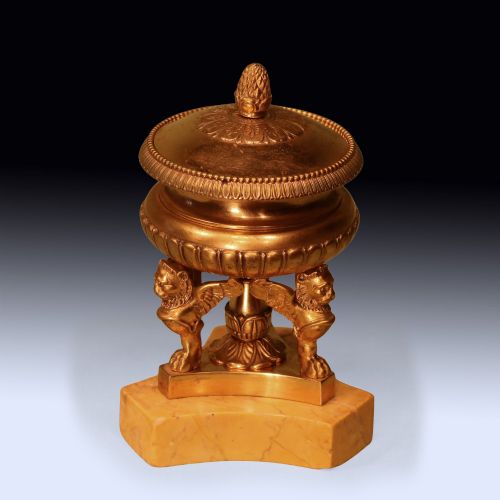


Early 19th Century Urns
Early 19th century urns bring classical proportion and rich materiality into a room, offering the decorative presence that defined Regency and Empire interiors.
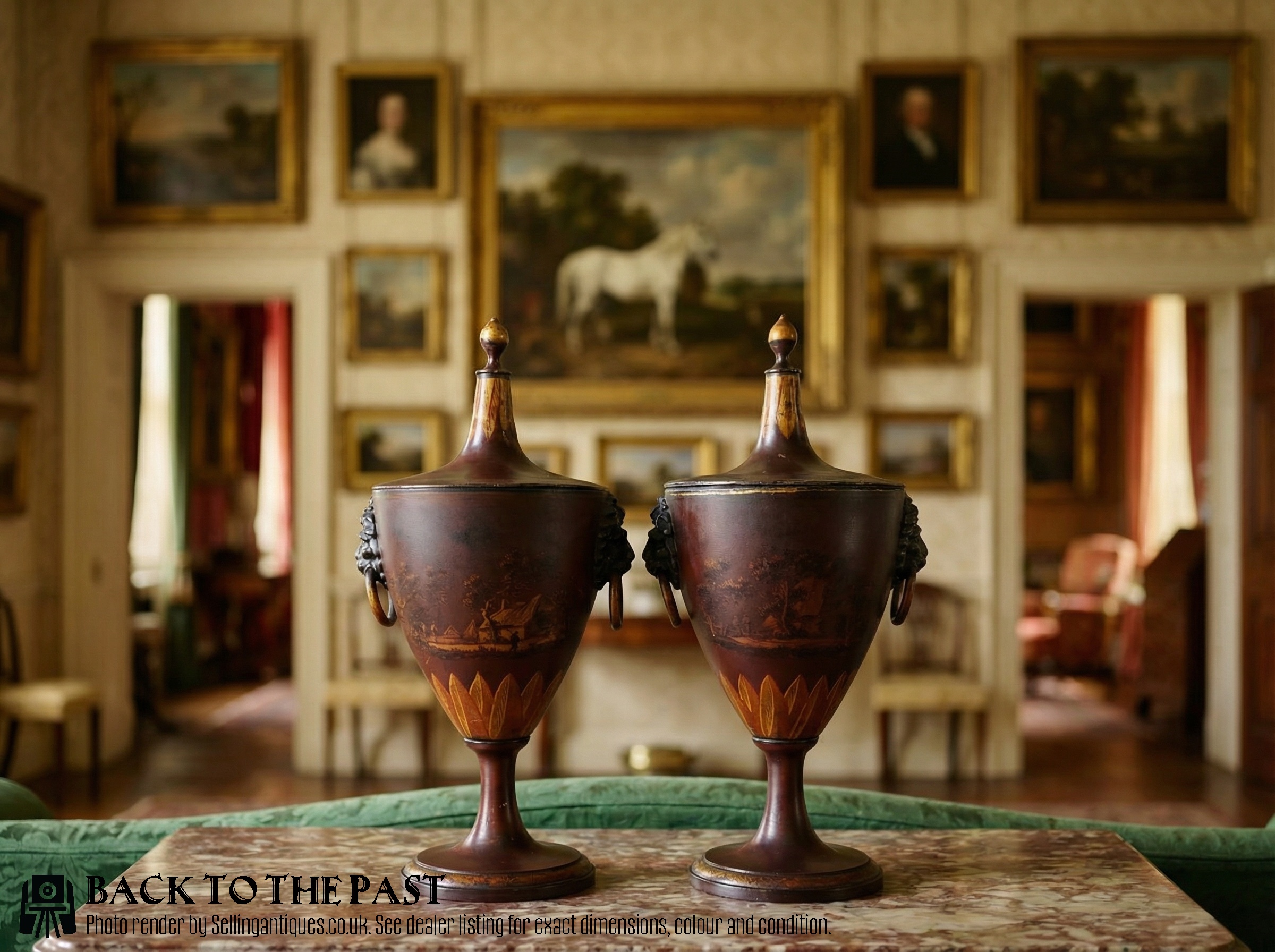
Early 19th Century Urns
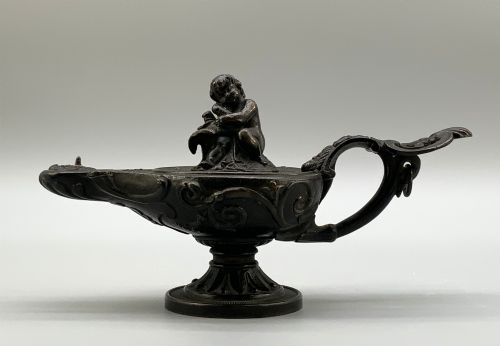
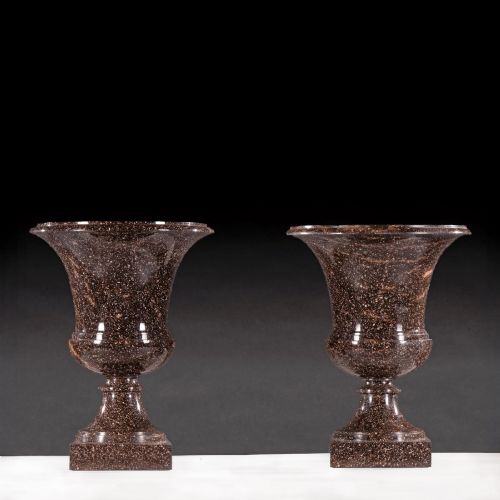
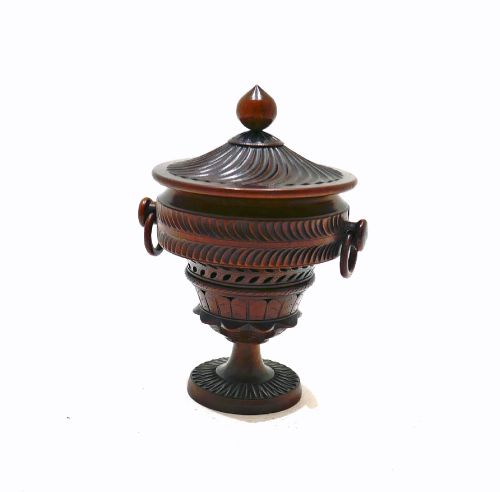
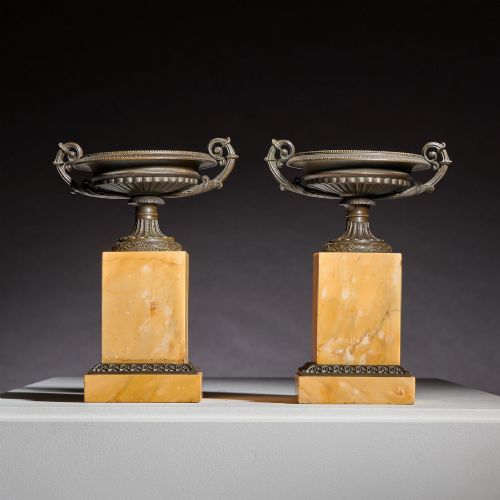
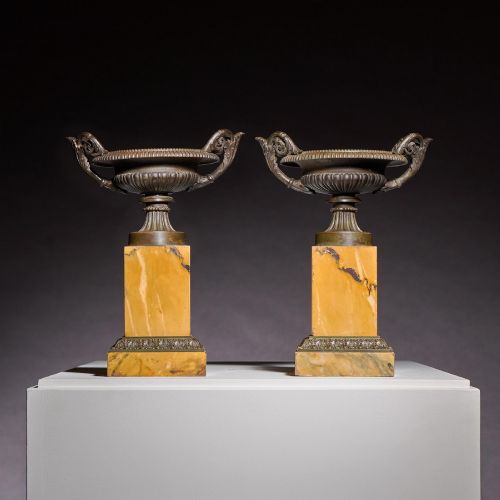
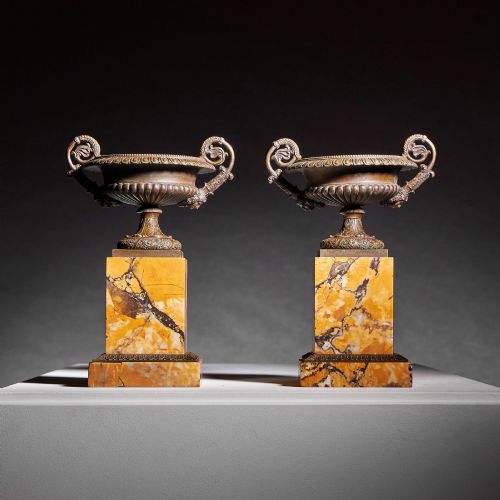
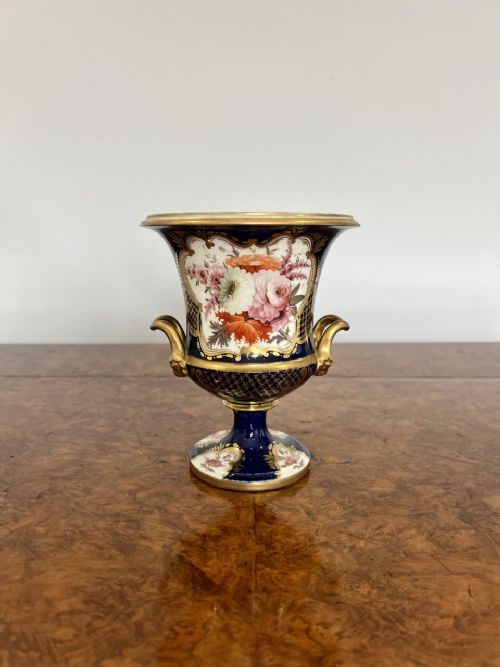
When hunting for early 19th century urns, collectors encounter pieces shaped by Neoclassical tastes, French Empire designs, and Grand Tour souvenirs brought back from Italy. The most frequent examples on this page include campana-shaped vessels, bronze and marble tazzas, and toleware chestnut urns produced across Britain and continental Europe.
Many of these objects served functional roles in period dining rooms and drawing rooms as wine coolers, oil lamps, or lidded vessels, while others existed purely for display. Their forms draw directly upon classical antiquity, reinterpreted through the lens of nineteenth-century craftsmanship and design philosophies.
Materials and Construction
The makers of early 19th century urns relied heavily on combinations of cast bronze, carved marble such as Siena or white varieties, and gilded elements like ormolu or gold leaf. Toleware and tin-ware pieces employed painted and japanned surfaces to emulate more costly oriental lacquer or bronze work.
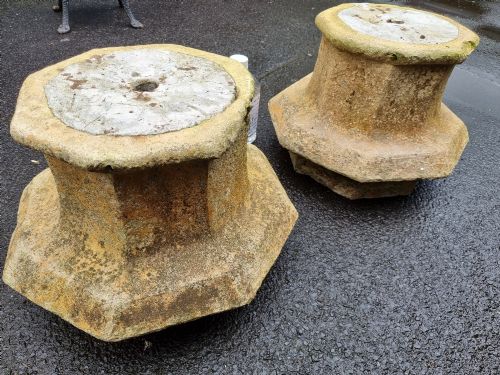
Foundries and workshops also utilised porcelain, earthenware, and porphyry, turning and casting components with precision before assembling them on dedicated plinths or bases. The integration of contrasting textures, such as cold polished stone against warm patinated metal, defines the physical execution of these items.
Early 19th Century Urns Retail Price Guide 2026
Typical asking prices for early 19th century urns among the pieces listed under this phrase on Sellingantiques today, from the lower quarter to the upper quarter. They describe what is for sale here now, not the wider market.
Some chestnut urns secretly kept warm roasted nuts ready for late-night parlour games.
Distinctions in Quality
The standard of an early 19th century urn rests largely on the crispness of its casting and the quality of its chasing, particularly in bronze and ormolu mounts where sharp detail denotes superior workshop output. Pieces with finely figured marbles, well-matched pairs, and intact original gilding or japanning stand apart from simpler utilitarian productions.
Proportion and architectural balance also govern worth, as master casters and stonemasons carefully calibrated the relationship between body, handles, and base. Furthermore, provenance tied to specific European stylistic centres or documented manufactories elevates the standing of an individual object.
Miles Mason·Spode
The Early 19th Century Urns Glossary
- Campana
- A bell-shaped vessel form derived from ancient Roman pottery and metalwork. This silhouette is typical of classical wine coolers and decorative urns.
- Ormolu
- Finely ground high-carat gold applied to a bronze base using a mercury amalgamation process. This technique created a rich, durable golden finish on decorative mounts.
- Tazza
- A shallow bowl or vase raised on a stem and foot, modelled after ancient vessels used for drinking or libations. They appear frequently in bronze and marble among Grand Tour souvenirs.
- Toleware
- Enamelled or japanned metalware, usually tin or iron, painted with decorative motifs. It was widely utilised for domestic accessories and chestnut urns.
- Grand Tour
- A traditional trip of Europe undertaken by upper-class young men of the period to European capitals and classical antiquities. Souvenirs included bronze and alabaster copies of ancient works.
Early 19th Century Urns: Frequently Asked Questions
What were early 19th century urns used for?
Many of these objects functioned as wine or champagne coolers on dining sideboards, holding ice and bottles during formal meals. Others served as ornamental table vases, mantel garnitures, or oil lamps.
In addition, lidded chestnut urns kept food warm or stored provisions, while stone and bronze examples were displayed on pedestals purely to signal classical erudition.
How do you style early 19th century urns at home?
These pieces suit placement on architectural mantelshelves, console tables, or dedicated pedestals where their sculptural silhouettes can be viewed from multiple angles. Pairs work well balanced symmetrically on either side of a mirror or architectural feature.
Their rich mix of bronze, marble, and gilt finishes adds gravitas to both traditional period rooms and modern eclectic interiors.
How do I tell Regency urns apart from later copies?
Authentic period examples exhibit the material weight, patination, and hand-chased metalwork characteristic of early nineteenth-century foundry methods. Castings show natural wear patterns and construction techniques appropriate to the era before mass industrial production took over.
Stylistic cues also align closely with Regency, Empire, and neoclassical pattern books of the time rather than later Victorian revivals.