




Early 19th Century Credenza
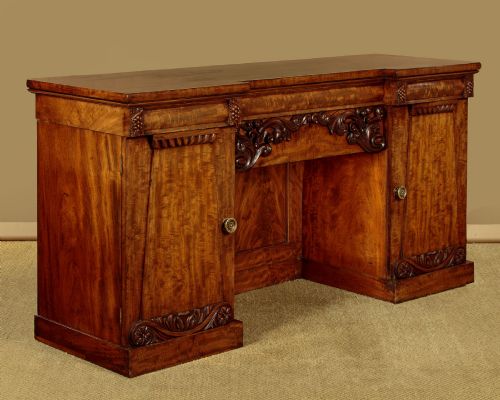
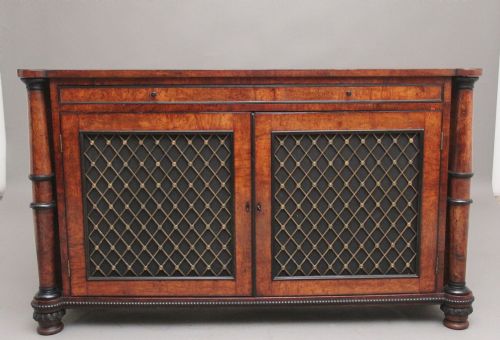
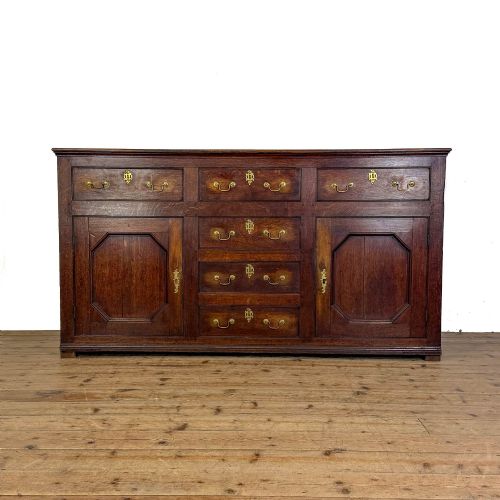
An early 19th century credenza or related side cabinet brings architectural presence and rich timber figure to a room.

Early 19th Century Credenza
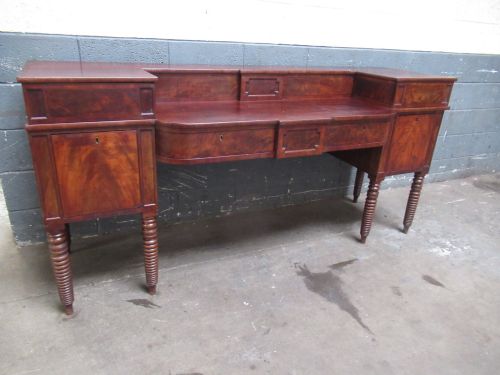
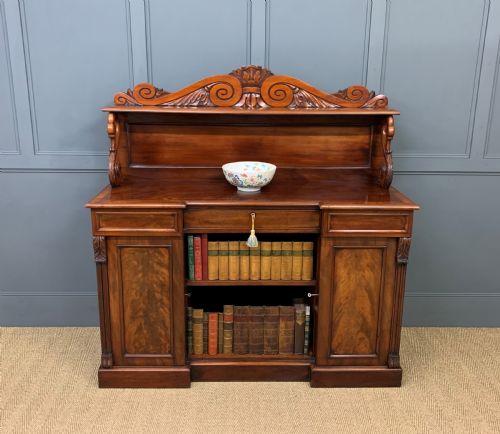
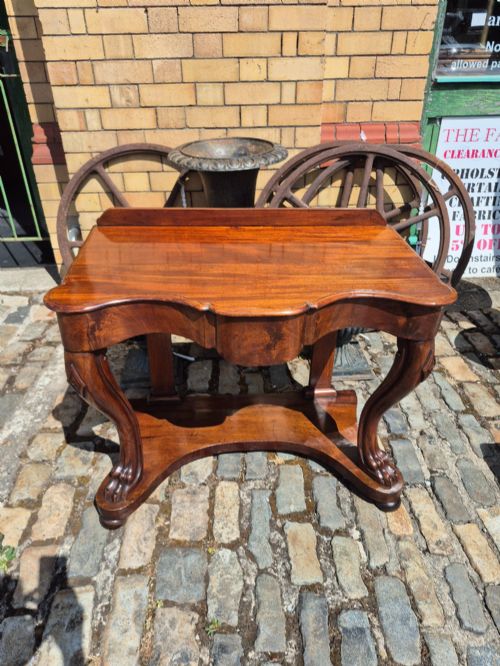
An early 19th century credenza and its close relatives, such as sideboards, chiffoniers, and side cabinets, represent the finest storage furniture of the Georgian, Regency, and early Victorian eras. These pieces served to display silver and serve food in formal dining rooms or hold books and collections in libraries.
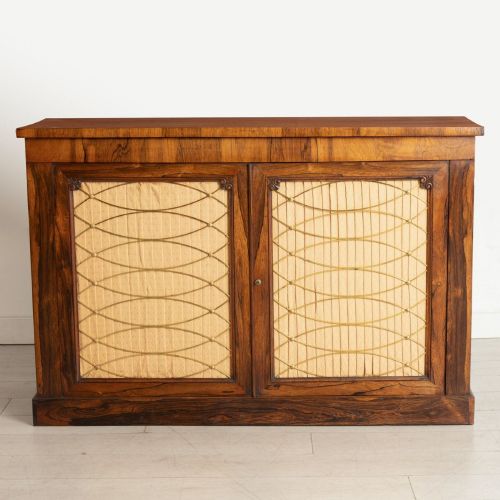
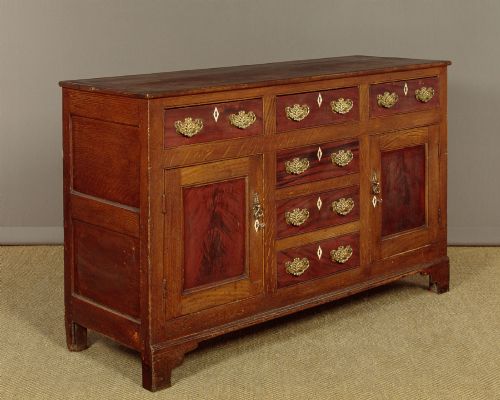
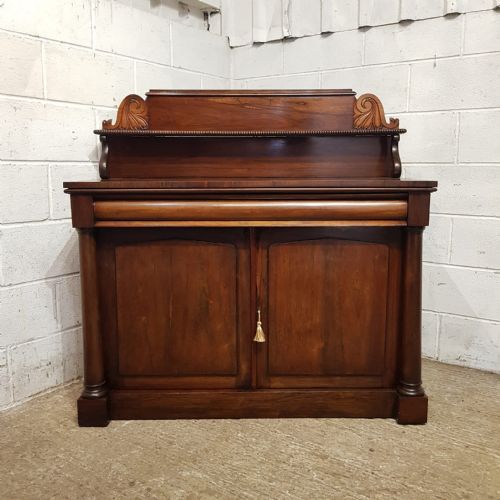
The version most commonly met on this page is the mahogany or rosewood chiffonier or side cabinet, often fitted with enclosed lower cupboards and sometimes an upper shelf tier. Cabinet makers during this period also utilised oak, walnut, and pollard oak, resulting in diverse regional and stylistic expressions.
Pieces span several stylistic movements from strict Regency classicism to early Victorian and French provincial forms. Buyers encounter Scottish and English mahogany sideboards alongside French cherrywood buffets and Dutch travelling cabinets.
Materials and construction
Cabinet makers relied heavily on dense timbers like mahogany and rosewood, frequently applying flame mahogany veneers to accentuate the natural grain patterns. Structural carcases often utilised secondary woods such as oak and pine, joined with traditional framing methods.
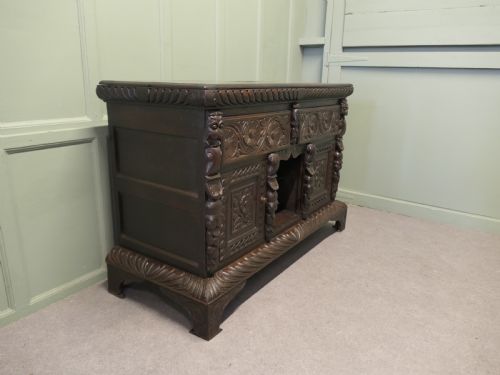
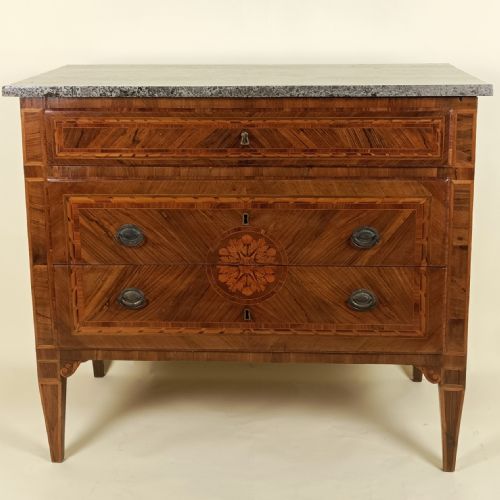
Decorative elements incorporated brass inlays, marquetry, and carved wooden details, while select pieces featured marble tops or glass panel doors. Polishing techniques enhanced the deep lustre of the wood surfaces, protecting the timber while highlighting figures like burr elm and satinwood.
Listings feature woods including rosewood, mahogany, oak, pollard oak, walnut, cherrywood, and satinwood.
Qualities of craftsmanship
The distinction between standard utility items and exceptional pieces rests upon the selection of timber figures and the precision of the joinery. Superior examples display symmetrical flame mahogany or rosewood veneers that wrap harmoniously across doors and drawer fronts.
Refinement in carving, the weight and detail of original brass mounts, and the integration of secondary woods like pollard oak define the upper tier of the range. Proportion and scale also dictate quality, particularly in smaller credenzas and chiffoniers designed for specific room dimensions.
Gillows·Holland & Sons
The Early 19th Century Credenza Glossary
- Chiffonier
- A compact sideboard or cabinet popular in the Regency and early Victorian periods. These often include a small bookshelf superstructure on top.
- Flame mahogany
- A veneer cut from the fork of a mahogany tree where the grain twists to create a distinctive flickering flame pattern. Cabinet makers prized this figure for principal display surfaces.
- Regency
- A British design period spanning the early decades of the nineteenth century. It draws heavily on classical Greek and Roman motifs.
- Marquetry
- The art of applying decorative veneer pieces of different woods to a structure to form intricate pictures or geometric patterns. Craftsmen utilised contrasting timbers like satinwood and ebony for visual depth.
Early 19th Century Credenza: Frequently Asked Questions
What is an early 19th century credenza?
An early 19th century credenza is a low cabinet designed for storage and display, originating from a period that includes the Regency and early Victorian eras. These items typically feature enclosed cupboards and rich timber construction.
They function as statement side pieces in modern dining rooms, hallways, or living spaces, providing practical surface area and enclosed storage.
How do I tell a chiffonier from a sideboard?
A chiffonier is generally smaller and often includes a low shelf superstructure supported by pillars at the back. Sideboards tend to be longer and lack the upper tier.
Both forms served dining and entertaining functions in nineteenth-century homes, though chiffoniers adapted well to smaller reception rooms.
Which woods were used in these cabinets?
Cabinet makers predominantly used mahogany and rosewood, often enhanced with flame mahogany veneers. Regional workshops also utilised oak, walnut, cherrywood, and pollard oak.
Secondary woods like pine and oak appear in internal carcases and drawer linings.
How do I care for a rosewood surface?
Protect antique rosewood and mahogany by keeping furniture away from direct sunlight and maintaining stable indoor humidity. Avoid silicone polishes and use traditional beeswax sparingly.
Dust regularly with a soft, dry cloth to preserve the natural lustre of the timber.